
Review · ALICE SPRINGS TOURS
From Alice Springs/Yulara: 4-Day Red Centre 4WD Camping Tour
Uluru is the headline, but the real strength of this four-day trip is how much more of Central Australia you see after the famous red rock. You move from Uluru and Kata Tjuta to Kings Canyon, then take the rougher Mereenie Loop towards the West MacDonnell Ranges. That gives you a far fuller picture of the Red Centre than a quick airport visit and one sunset.
I like the mix of big-name sights and less-visited places, especially the Valley of the Winds, Ormiston Gorge, Ellery Creek Big Hole, and Simpsons Gap. I also like that the guides do more than drive. Guides such as Mikki, Lorrie, Adam, Shearna, Damian, and Red have been praised for their storytelling, calm handling of problems, and ability to explain Aboriginal culture, geology, astronomy, and local history.
The trade-off is simple: this is active camping, not a soft hotel tour. You’ll walk around 12 to 15 kilometres across the four days, often on steep rocky ground in direct sun and high humidity. The camps are comfortable by bush standards, but you should be ready for dust, flies, campfires, basic facilities, and long road sections.
Key points to know before booking
- Uluru is explored on foot: You visit Mutitjulu Waterhole, Kuniya Piti, Kantju Gorge, and Aboriginal rock art sites rather than simply stopping for a photograph.
- Kata Tjuta gives you two walking options: The Valley of the Winds or Walpa Gorge lets the guide match the route to conditions and fitness.
- Kings Canyon is a major highlight: The Watarrka rim walk brings you close to 100-metre cliff faces, sandstone chasms, and wide canyon views.
- The Mereenie Loop adds real outback travel: This route takes you away from the most direct roads and towards the West MacDonnell Ranges.
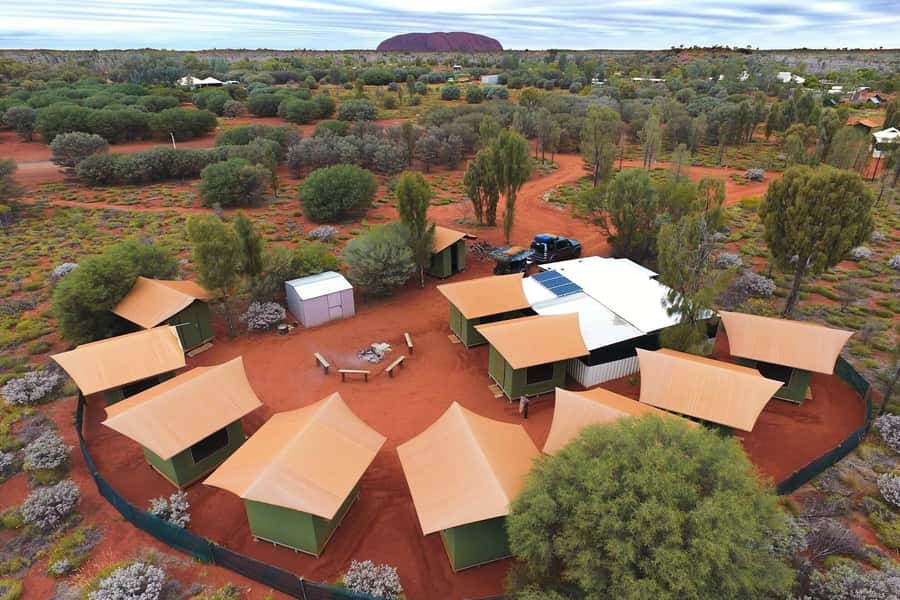
- Camping is part of the experience: You sleep in permanent safari-style camps, using either a canvas bush swag or a safari tent setup.
- The guide makes a big difference: The strongest part of the trip is the blend of driving, camp organization, safety advice, local stories, and practical help.
Why four days works better than a quick Uluru visit
The Red Centre is vast, and distances can make a short visit feel rushed. This tour uses four days to connect the main sights in a sensible loop from Alice Springs to Uluru, Kings Canyon, and back to Alice Springs.
You can join from Alice Springs or from Yulara and Uluru Airport, but the pickup arrangements differ by booking. If you arrive at Ayers Rock Airport, you need to eat lunch before joining the group after lunch. The tour then returns you to Alice Springs at the end, so it works best if you are planning a one-way trip across the region rather than returning to Yulara.
Transport is by an air-conditioned small-group mini-coach. That matters in Central Australia, where the heat can make a long road day tiring. The vehicle is not a private expedition truck, but it gives you a practical balance between comfort, access, and a group atmosphere.
The itinerary is full. You are not simply sitting on a bus between lookouts. Most days include a walk of two to six kilometres, with the longest combined walking distance reaching roughly 12 to 15 kilometres over the trip. A guide may shorten or adjust a walk for safety, but you still need a medium to high level of fitness.
A few more Alice Springs half-days to weigh up
- Uluru: 4-Day Rock to Rock Adventure Tour
★ 4.9 · 141 reviews - 4 Day Uluru Kings Canyon West MacDonnell NP from Alice Springs
★ 4.5 · 59 reviews - Freedom 3/4 Day Hervey Bay Premium Whale Watching Cruise
★ 5.0 · 919 reviews
Day 1: Mt Connor, Uluru, and Mutitjulu Waterhole
The first day begins with the long run towards Uluru. One useful early stop is Mt Connor, often called the false Uluru. It helps you understand how easily the Red Centre’s isolated rock formations can be confused from a distance, and it gives you an early sense of the scale of the country.
Curtin Springs provides a practical toilet stop before lunch and the move towards camp. If you are joining at Ayers Rock Airport, remember that lunch is your responsibility before you meet the group. It is a small detail, but missing it could leave you hungry during the afternoon.
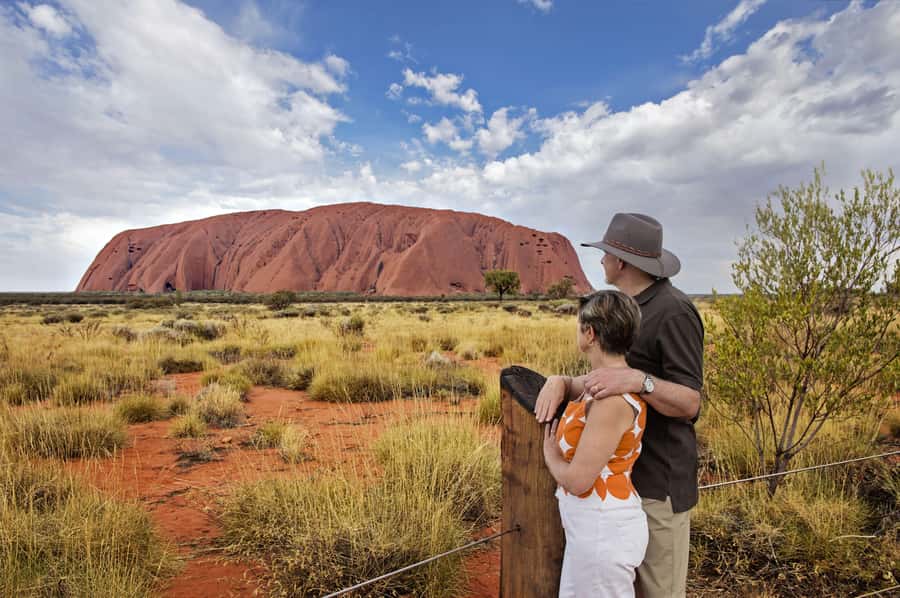
At Uluru-Kata Tjuta National Park, the visit turns from roadside sightseeing into a walk around the base area. The route towards Kuniya Piti continues to Mutitjulu Waterhole, where the guide explains Aboriginal rock art sites, family caves, an elders’ cave, and the cultural meaning of the area.
The waterhole is one of the more rewarding Uluru stops because it shows the rock as a place of water, shelter, food, ceremony, and story. You are not only looking at a huge sandstone formation. You are learning how people have used and understood this place over a very long period.
Kantju Gorge and the nearby rock walls add another side to Uluru. The area includes Central Australia’s highest waterfall, although its appearance depends heavily on rain. In dry conditions you may see the gorge and rock features without a flowing fall. After rainfall, the same place can look dramatically different.
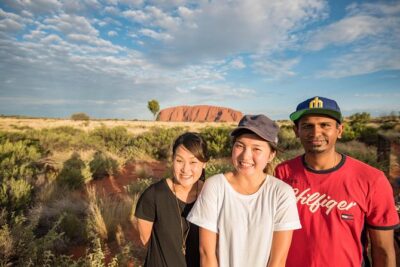
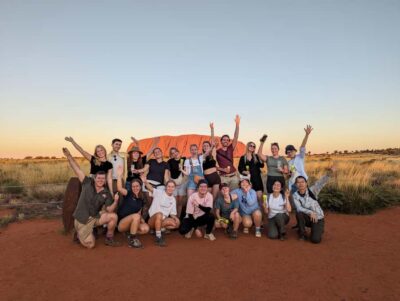
The day finishes with a sunset view and a campsite dinner. Sunset at Uluru is beautiful, but do not expect to sit alone with the rock. This is a popular place, and the value comes from seeing the changing light after spending the afternoon walking and hearing the cultural explanation.
Day 2: Sunrise at Uluru and the rock walls of Kata Tjuta
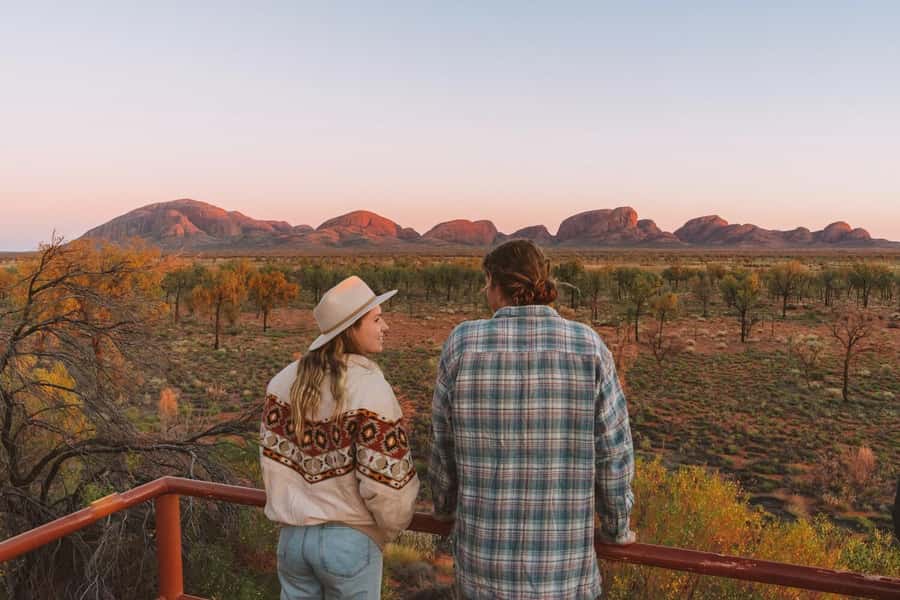
Day two starts early with a light breakfast and a sunrise in the national park. Early starts are not a minor feature of this trip. They help you avoid the worst heat during the walks, but they also mean you need to manage your sleep and energy carefully.
After Uluru, the group heads to Kata Tjuta, where the rounded domes create a very different view from Uluru’s single monolith. Kata Tjuta means many heads, and the formations make the name easy to understand. The rock is a conglomerate, made from large stones bound together, which gives the walls a rough, varied texture.
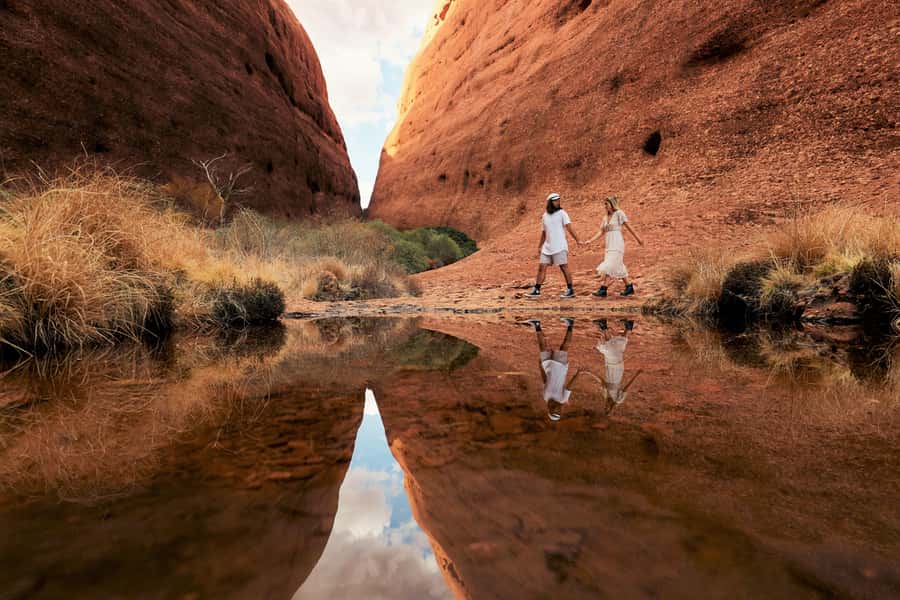
The main walk is usually the Valley of the Winds, with Walpa Gorge as an alternative depending on conditions and group fitness. The Valley of the Winds is the more demanding choice, with rocky ground and sections that require steady footing. Walpa Gorge is shorter, but it still brings you between large rock walls and into the heart of Kata Tjuta.
I like this part of the tour because the two walking choices make the day more workable for mixed groups. You should not read that as an easy option, though. Direct sun, heat, uneven paths, and the need to keep moving can make even a shorter route tiring.
The group then continues towards Kings Canyon for an outback sunset and a campfire meal. This is a long day, and the sunset stop works as both a scenic moment and a chance to slow down after the morning walk. Meals are included, with breakfast, lunch, and dinner arranged across the trip, though anyone with special dietary needs should bring extra snacks because food choices are limited in remote areas.
Day 3: Kings Canyon and the Mereenie Loop
Kings Canyon is the strongest reason to choose this trip over a basic Uluru package. In Watarrka National Park, the canyon cuts through red sandstone with cliff faces reaching around 100 metres. The scale feels different from Uluru and Kata Tjuta: here you are looking into a great split in the rock rather than at one isolated formation.
The main walking section takes you into the canyon area and onto the most suitable part of the route for the season. Expect rocky sections, sun, and a walk that can feel strenuous. The reward is a series of canyon views, sandstone walls, and high viewpoints that show how much depth the Red Centre has beyond its famous monoliths.
The area is also important to the Ulpanyali and Lilla people. A good guide helps you understand that this is not simply a dramatic walking track. It is a place with cultural meaning, and the commentary adds weight to the scenery without reducing it to a photo stop.
After Kings Canyon, you have a longer rest in the vehicle before heading north on the Mereenie Loop Tourist Drive. This is the off-road flavor of the tour. Conditions can affect the route, and this is one reason the guide’s judgment matters.
The trip has operated through challenging weather. Heavy rain has caused road closures, mud, and a bogged vehicle, while another journey required a flat-tire change. Those incidents are not guaranteed, and they should not be treated as part of the advertised schedule, but they show that the Red Centre can change plans quickly. A calm guide, careful driving, and a flexible group are valuable here.
The day ends near the West MacDonnell Ranges with stargazing. Away from city lights, the night sky is a fitting finish to a long road day. Bring warm layers if you are visiting in a cooler season, but also remember that daytime conditions can be hot. The supplied information does not specify the exact overnight temperature, so pack for changeable desert conditions rather than one fixed forecast.
Same base, a completely different day out:
- From Alice Springs: Day Trip to Uluru with BBQ Dinner
★ 4.6 · 761 reviews - Ayers Rock Day Trip from Alice Springs Including BBQ Dinner
★ 4.5 · 639 reviews - Early Morning Ballooning in Alice Springs
★ 5.0 · 426 reviews - West MacDonnell Ranges Day Trip from Alice Springs
★ 4.5 · 364 reviews
Day 4: Standley Chasm, Ellery Creek, and Simpsons Gap
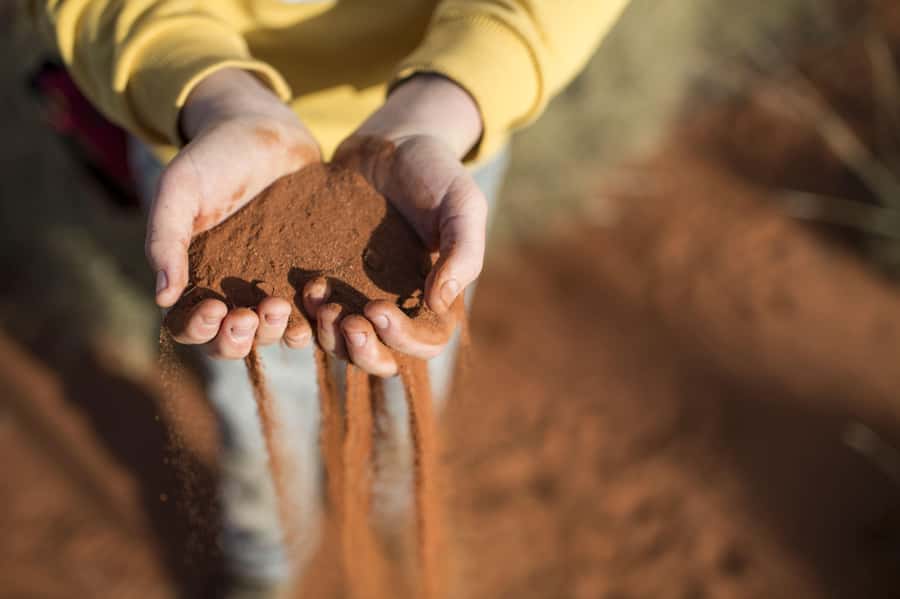
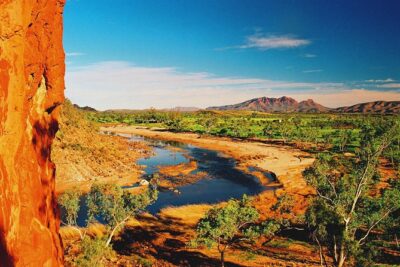
The final day moves through the Tjoritja, or West MacDonnell Ranges. Standley Chasm, traditionally known as Angkerle Atwatye, is a narrow gorge about three metres wide and 80 metres high. The sheer walls make this a very different sight from the broad views at Kings Canyon.
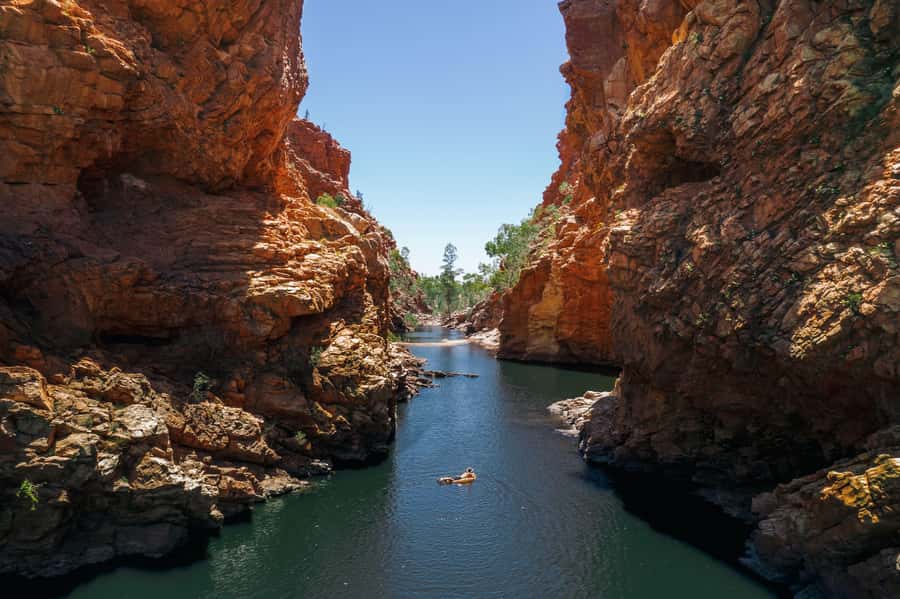
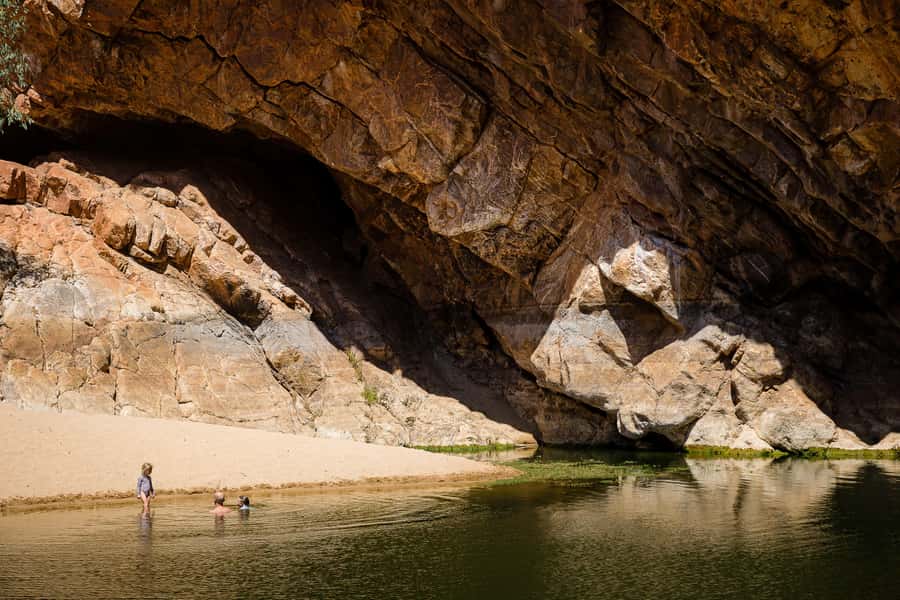
You then continue to Ellery Creek Big Hole, also known traditionally as Udepata. Tall red cliffs surround the sandy creek area, and the stop adds water and softer shapes to the trip. Swimming is not specifically guaranteed by the tour details, so bring swimwear only if your guide and conditions allow the activity.
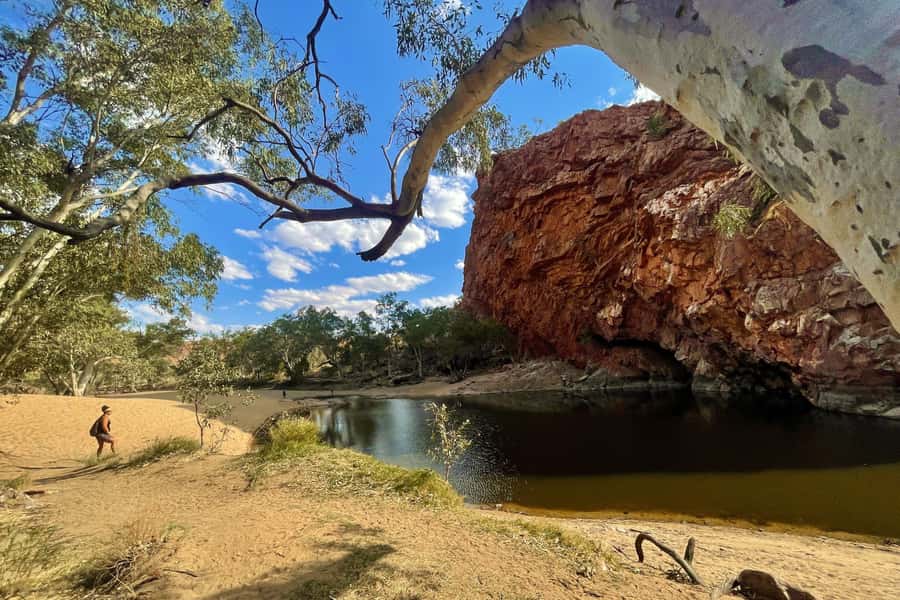
Ormiston Gorge brings another set of towering red walls. The West MacDonnell section is valuable because it gives you repeated changes of scale: narrow chasm, open creek, enclosed gorge, and finally the gap at Simpsons Gap.
Simpsons Gap is linked to several Aboriginal dreaming trails and stories. It is a fitting final stop because the visit brings together the natural features and cultural context that run through the tour. You then return at a relaxed pace to Alice Springs, with hotel drop-off and your evening free.
The final day is less intense than the Uluru to Kings Canyon stretch, but it is still active. If your legs are tired, the sequence of shorter stops helps. You get more variety without another single major hike dominating the schedule.
Camping, food, and what the $830 price covers
At $830 per person, this is not the cheapest way to see Uluru. It is a strong value if you want transport, park entry, guided walks, three nights of accommodation, and meals handled in one package.
The price includes three nights in permanent safari-style tent camps at Uluru, Kings Creek, and the West MacDonnell Ranges. You choose between a canvas-covered Australian bush swag and a safari tent arrangement with a mattress, fitted and top sheets, pillow, and pillowcase. A sleeping bag is not included, but you can hire one onboard for $40, including cleaning, or bring your own.
The camps are not hotels. Expect dirt, flies, outdoor living, and campfires. At the same time, the permanent setups are more comfortable than carrying a tent and sleeping mat through the outback. The mix suits you if you want a real camping feel without handling every piece of camp equipment yourself.
Three breakfasts, four lunches, and three dinners are included. The group helps prepare food at camp, which makes the evenings social and gives the trip a shared rhythm. Onboard drinking water is supplied, but bring your own refillable bottle. Extra snacks are a smart idea, especially if you have food allergies or special dietary needs.
The strongest value comes from the guide and logistics. You would otherwise need to arrange a suitable vehicle, park fees, remote accommodation, food, and a route linking Uluru, Kata Tjuta, Kings Canyon, and the West MacDonnell Ranges. The tour combines those pieces and adds local commentary.
The guide can shape the whole four days
The guide is not a minor detail on this trip. You spend hours together in a small vehicle, then share walks, meals, and camp tasks. A calm, engaging leader can make the long drives feel purposeful and keep the group steady when weather or vehicle problems interrupt the plan.
Mikki has been praised for handling heavy rain, mud, and changing routes without creating panic. Her storytelling and positive attitude helped turn a difficult journey into a memorable one. Lorrie has been noted for bringing the group together and dealing well with an unexpected flat tire.
Adam and Shearna have also received strong praise for clear explanations and good organization. Damian created a relaxed flow through the days, while Red was particularly admired for linking Australian nature with astronomy, astrophysics, and geopolitics.
Guide assignments can change, so you cannot book around one specific person. What you can expect is an accredited outback driver guide and host who provides English commentary and manages safety, timing, meals, and route decisions.
Who should book this Red Centre tour?
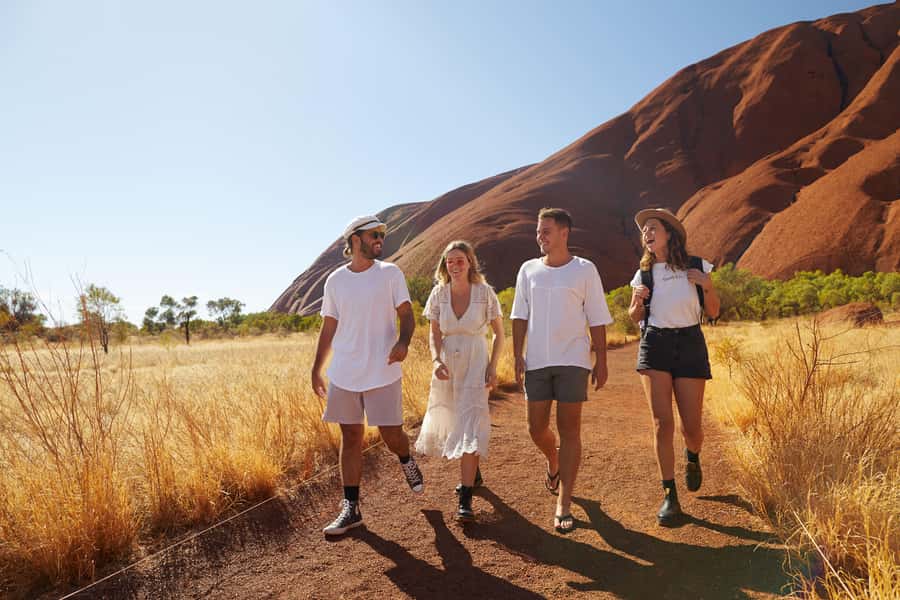
I would choose this trip if you want the main icons but also want to walk, camp, and see the country between them. It suits active adults, solo travelers who like a ready-made group, families with children aged eight and older, and people who want more context than a self-drive itinerary may provide.
It is also a good budget choice for the outback. You sacrifice privacy and flexibility, but you avoid the large costs and planning demands of a remote road trip. The air-conditioned vehicle is a welcome feature during hot periods.
I would not choose it if you want hotel rooms, private meals, short walking distances, or a timetable that cannot change. The tour is not suitable for pregnant women, people with mobility impairments, wheelchair users, people using walkers or strollers, or anyone with a low level of fitness.
Children aged eight to 17 must stay with an adult or legal guardian. High heels, oversized luggage, alcohol, drugs, electric wheelchairs, and non-folding wheelchairs are not allowed. Anyone over 70 needs a doctor’s certificate submitted 30 days before travel.
What to pack for the heat, hikes, and camp
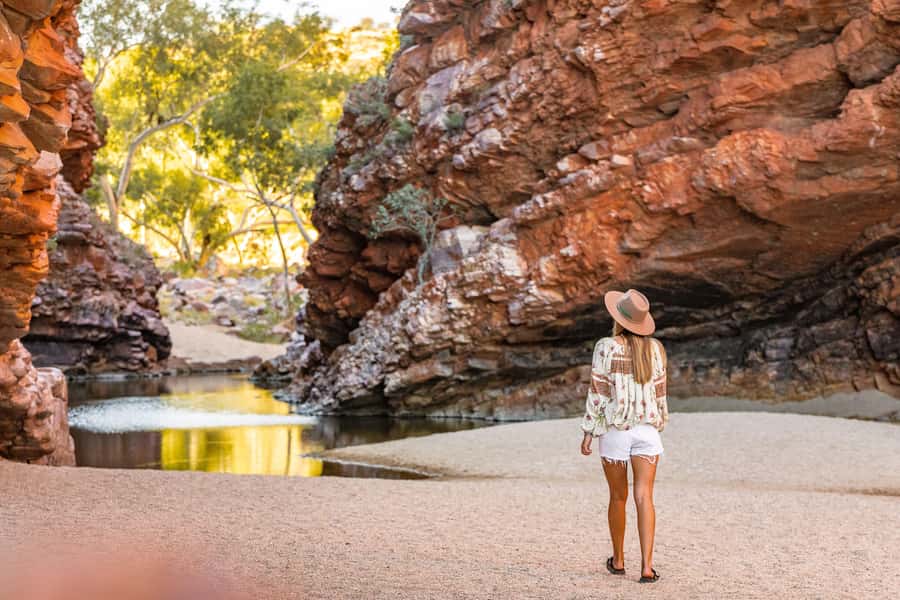
Bring sturdy walking shoes, sun protection, light clothing, a refillable water bottle, swimwear if you want the option for water stops, and a sleeping bag or the $40 hire fee. The advice to bring proper walking boots is worth taking seriously. Some routes include steep, rocky sections, and casual shoes can make the walks less secure.
Pack a small amount of personal spending money and keep luggage compact. Oversized bags are not accepted, and the details provided do not include a separate large-luggage storage plan.
You should also carry snacks if you have allergies or a special diet. Meals are included, but remote outback options are limited. Tell the operator about food allergies, phone contact details, flight information, and birth dates when you book.
Should you book it?
Book this tour if you want a proper Red Centre circuit, not just a photograph of Uluru. The combination of Uluru’s cultural sites, Kata Tjuta’s walks, Kings Canyon’s rim views, the Mereenie Loop, and the West MacDonnell Ranges gives you an unusually broad four-day introduction to Central Australia.
Skip it if you need easy access, private accommodation, or lots of free time. For fit visitors who can handle early starts, rough paths, shared meals, and basic camping, the $830 price is fair. The average rating of 4.6 from 68 ratings also fits my assessment: the scenery is superb, but the guide, group spirit, and willingness to accept the outback’s surprises are what make this trip work.
FAQ
Where does the tour start and finish?
You can depart from Alice Springs or Yulara, including Uluru Airport depending on the option booked. The tour finishes with drop-off in Alice Springs.
How long is the tour?
The experience lasts 84 hours, or four days.
Which major sights are included?
The tour visits Uluru, Mutitjulu Waterhole, Kuniya Piti, Kantju Gorge, Kata Tjuta, Kings Canyon, the Mereenie Loop, Standley Chasm, Ellery Creek Big Hole, Ormiston Gorge, and Simpsons Gap.
How much walking is involved?
Walking sections range from about two to six kilometres each day. The total included walking is approximately 12 to 15 kilometres, often over steep rocky ground, in direct sunlight, and sometimes in high humidity.
Is camping included?
Yes. Three nights of permanent safari-style tent camping are included at Uluru, Kings Creek, and the West MacDonnell Ranges. You can use a bush swag or a safari tent setup with bedding and a mattress. Sleeping bags are available to hire for $40.
Are meals included?
The tour includes three breakfasts, four lunches, and three dinners. You should bring extra snacks if you have special dietary needs because food choices are limited in remote areas.
Is the tour suitable for children or people with limited mobility?
Children under eight cannot join, and those aged eight to 17 must be accompanied by an adult or legal guardian. The tour is not suitable for pregnant women, wheelchair users, people using walkers or strollers, people with mobility impairments, or people with a low level of fitness.
Just added around Alice Springs
- Alice Springs to Uluru (Ayers Rock) Coach Transfer★ 4.5 · 39 reviews
- West MacDonnell Ranges & Standley Chasm Day Trip from Alice Springs★ 5.0 · 67 reviews
- Alice Springs Desert Park Nocturnal Tour★ 5.0 · 45 reviews
- Alice Town And Country Half Day Sunset Tour – Small Group★ 4.5 · 24 reviews
- Alice Springs Desert Park General Entry Ticket★ 5.0 · 150 reviews
- 3 Day Red Centre Kata Tjuta Kings Canyon Outback ex.Alice Springs★ 5.0 · 69 reviews
- West MacDonnell Ranges Half day Tour -Small Group★ 4.5 · 99 reviews
- 4 Day Uluru Kings Canyon West MacDonnell NP from Alice Springs★ 4.5 · 59 reviews
Alice Springs Tours, compared.

Ayers Rock Day Trip from Alice Springs Including BBQ Dinner
Read our review →
West MacDonnell Ranges Day Trip from Alice Springs
Read our review →
Uluru, Kata Tjuta and Kings Canyon Camping Safari from Alice Springs
Read our review →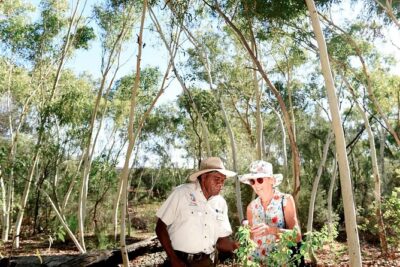
Browse the lists this tour appears in