
Review · HOBART TOURS
Hobart History, People & Places – 2 hour city walk
Hobart’s best stories often sit above eye level or hide behind plain walls. This two-hour walk connects the waterfront, Hunter Street, city parks, the seat of government, and Salamanca Place while explaining how Tasmania’s capital took shape. I especially like the use of old maps and photographs, which help you see past and present Hobart at once.
I also like the small-group format, usually capped at eight people, because it gives you room to ask questions. Guides such as Lisa, Deb, and Jan are praised for clear storytelling and a good sense of humor. The main consideration is that this is a pavement walk in all weather, so cruise passengers should allow plenty of time and arrive ready for wind or rain.
Key reasons to consider this Hobart walk

- Hunter Street and the waterfront: See one of central Hobart’s oldest working areas and hear how the harbor shaped the city.
- Stories behind ordinary buildings: Georgian and Victorian facades become clues to colonial Hobart, rather than scenery you simply pass.
- A gentle two-hour route: The pace allows time for photos, questions, and occasional seats or perches.
- Parks with surprising histories: One park brings amusing statues and local stories, while another has a lesser-known dark past.
- A useful first-day introduction: Finish at Salamanca Place, close to cafes, markets, and more central Hobart sights.
- Strong value at $27.26: You get a local guide and a focused introduction without paying for transport or a long half-day outing.
Starting beside the Henry Jones Art Hotel
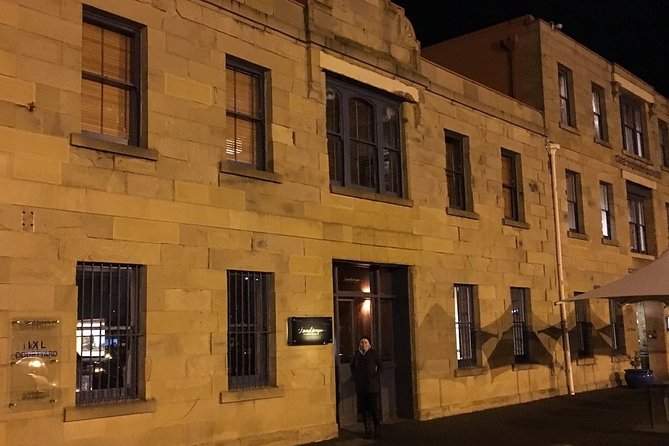
The walk begins at 25 Hunter Street, outside the Henry Jones Art Hotel. This is a practical meeting point if you are staying near the waterfront, arriving by public transport, or exploring central Hobart on foot.
There is no hotel pickup, so you need to make your own way to the start. The end point is Salamanca Place, not the starting point, which makes the tour useful as a short one-way introduction rather than a loop back to your accommodation.
Your guide sets the tone early by placing Hobart in its colonial setting. You hear about the British settlement, the difficulties faced by early settlers, and the successes that helped the town grow. The story also includes the Indigenous people of the area and their response to British invasion, an important part of the city’s past that should not be reduced to a footnote.
This historical balance matters. Hobart’s old buildings can look charming at first glance, but the city’s origins also involve displacement, punishment, labor, and unequal power. A good guide helps you hold both sides of that story in view.
More history-led days in Hobart:
- Derwent River Historic Harbour Cruise From Hobart
★ 4.5 · 570 reviews - Tasman Island Cruises and Port Arthur Historic Site Day Tour from Hobart
★ 5.0 · 477 reviews - Tasman Peninsula Tour, Cruise & Port Arthur Historic Site
★ 4.9 · 339 reviews
Hunter Street and Hobart’s waterfront
Hunter Street is one of the most rewarding early sections because it shows how Hobart developed around the water. Instead of simply pointing out old facades, the guide explains the role of the waterfront in the city’s growth and draws attention to details you might otherwise walk past.
This is where the tour’s visual aids become useful. Lisa, one of the regular guides, has used historical photographs and maps to show how particular areas looked in earlier periods. You can compare the modern city with older images while standing in the same place, which gives the waterfront a stronger sense of time.
The route also includes stories connected with Hunter Island. The exact historical details may be less familiar than the headline attractions, and that is part of the appeal. You are not only seeing the postcard version of Hobart. You are hearing about places whose names and past roles are easy to miss.
Allow time for photographs here. The walk is not a race, and the guide leaves room to stop, look, and ask questions. That relaxed rhythm is one reason the two-hour length works well. You get a useful amount of context without spending an entire morning on your feet.
Georgian and Victorian buildings with a story
Central Hobart has a generous collection of heritage-listed buildings, including examples of Georgian and Victorian design. The value of seeing them with a guide is not architectural jargon. It is learning what the buildings tell you about the city that built them.
You will be shown details in the stonework, proportions, and facades. These features become evidence of Hobart’s colonial roots and later growth. A building that might look like a handsome old shell begins to suggest who held power, how the town was organized, and how public life changed.
The tour moves through streets and buildings rather than treating the city as a collection of isolated monuments. That approach suits Hobart, where the past often appears in a row of buildings, a street alignment, or a small detail on a wall.
The guide’s storytelling is central. Lisa is frequently described as approachable, clear, and able to answer questions without overwhelming the group. Deb is also praised for combining strong historical detail with humor, while Jan is noted for taking time to explain the city’s past. Your guide may vary, but the experience is designed around a local person rather than an audio device or a fixed script.
The seat of power, church, court, and prison
As the walk continues inland, the focus turns toward the institutions that shaped early Hobart. The route works its way to the seat of power, with churches, courts, and prison history forming part of the story.
This section gives useful context to the settlement’s social order. Hobart was not only a port and a group of old sandstone buildings. It was also a place where government, religion, law, and punishment affected daily life.
You will hear about the troubles and successes of British settlers, along with Tasmania’s convict history and the founding of Hobart. If you have only a short stay, this is an efficient way to understand why the city has such a strong connection with colonial administration and penal history.
The subject matter can be serious, but the walk does not appear to treat history as a list of dates. Guides use stories and images to make the information easier to follow. That matters if you are visiting with children or with family members who prefer people and events to formal museum displays.
More walking tours in Hobart:
- Maria Island Cruise and Guided Walk Day Tour with Lunch and Drinks
★ 5.0 · 617 reviews - Old Hobart Pub Walking Tour
★ 4.5 · 91 reviews - Hobart Historic Walking Tour
★ 5.0 · 64 reviews - Grand Hobart Walking Tour
★ 5.0 · 28 reviews
City parks, statues, and a darker local story
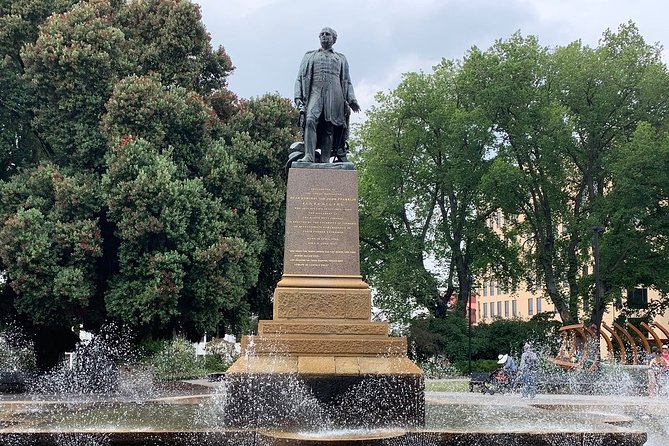
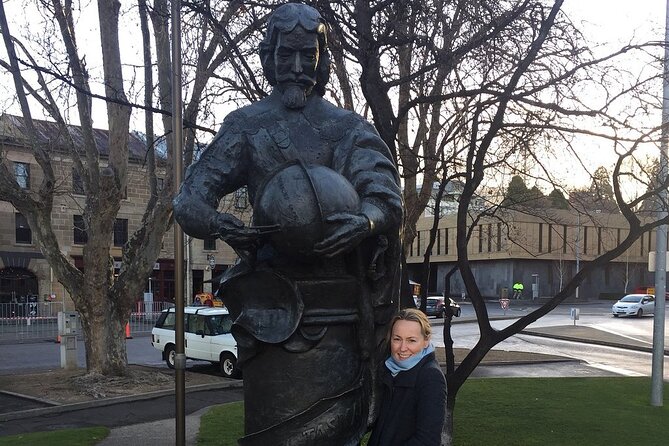
The route passes through a city-center park where statues become part of the lesson. You are encouraged to look closely at the figures and hear the stories behind them. Some are amusing, some are surprising, and some show how public memory can change over time.
This is a good example of the tour’s practical value. You can walk through a park on your own and enjoy the open space, but you may not know why a statue is there or what local story surrounds it. The guide turns a rest stop into a short history lesson.
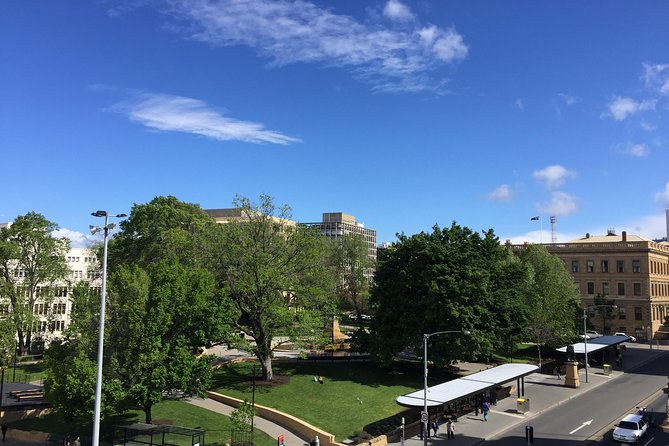
The walk then reaches another pleasant park with a darker secret. The details are presented as one of the lesser-known parts of the route, including a story that many local people may not know. That shift in mood keeps the tour from becoming a predictable march through grand buildings.
There are places to sit or perch along the way, which helps if you need a pause. Still, you should think of this as an active walking experience. It lasts about two hours and follows city pavements, so comfortable shoes are sensible.
Finishing at Salamanca Place

The walk ends at Salamanca Place, one of Hobart’s best-known historic areas. Its sandstone warehouses and waterfront setting make a strong final chapter after the earlier discussion of trade, government, settlement, and public life.
Salamanca is especially famous for its Saturday markets, described as the oldest markets in Australia. If your tour takes place on a Saturday, you may want to plan extra time after the walk to explore them. If it is another day, the location still works well as a base for continuing your afternoon.
The guide can also point you toward favorite cafes for coffee after the tour. Food and drinks are not included, so this is an optional extra, but the finishing point makes it easy to continue your day without arranging another transfer.
Ending here is better than returning to the starting point for many visitors. You can move on to Salamanca Place, the waterfront, or nearby central attractions. The tradeoff is that you need to plan your route back to your hotel yourself.
What the pace and group size mean
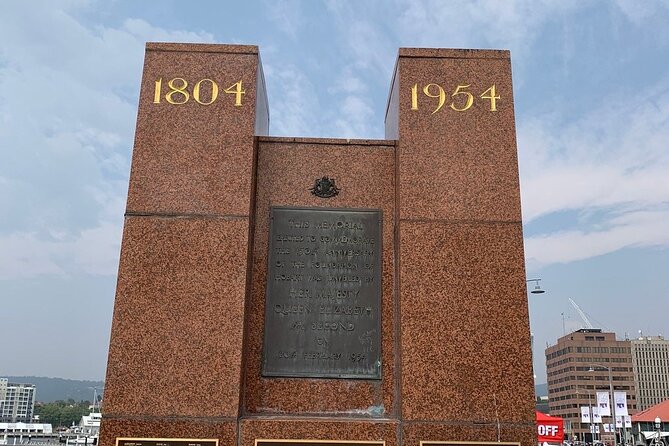
The tour is marketed as an intimate walk, with a maximum group size of eight in the main description. Additional operating information gives a maximum of 10 people, so the exact number may vary, but it remains far smaller than a large coach group.
That size is useful in several ways. You can hear the guide more easily, ask about a building that catches your eye, and stay connected to the group at street corners. A small group also gives the experience a personal feel, particularly when the guide uses photographs and answers questions about local history.
The pace is gentle rather than strenuous. Several reviews describe it as easy and comfortable, with enough time for photographs and questions. You should not expect a rapid checklist of every Hobart attraction. The strength is the amount of explanation attached to a compact route.
The walk is wheelchair accessible, and most people can take part. Since it follows city pavements, the practical experience will still depend on your comfort with two hours outdoors and on the conditions that day. Service animals are allowed.
Price, timing, and weather planning
At $27.26 per person, this is a modestly priced way to get oriented in Hobart. The fee covers a professional local guide, and the route links several important parts of central Hobart without adding transport costs.
The value is strongest if you are new to the city and want a framework for the rest of your stay. Afterward, buildings, parks, and waterfront areas are easier to place. You may also notice details you would have missed before, which makes later independent sightseeing more rewarding.
It is less suitable if you want food, entry to attractions, or hotel transport included. Nothing beyond the guided walk is covered. You are paying for interpretation, local stories, and a planned route, not a full sightseeing package.
Dress for changing weather. The walk operates in all weather conditions, although poor weather can lead to cancellation with the choice of another date or a full refund. A rain layer and comfortable footwear are sensible, even if the forecast looks mild.
If you are arriving by cruise ship, take the timing rule seriously. No refund is given if you miss the tour because your ship arrives late or fails to arrive. I would only book a departure that leaves a generous margin after disembarkation.
Who will get the most from this tour
This walk suits first-time visitors who want a fast, story-led introduction to Hobart. It is also a good fit for history fans, architecture lovers, families, and anyone who prefers a human guide to exploring from a phone screen.
Families should note that children must be accompanied by an adult. The gentle pace and visual aids can help younger visitors follow the stories, though the colonial and convict material may be more interesting to older children.
It also works well as a first activity in Hobart. Take the tour early in your stay, then return to the waterfront, Salamanca Place, or the buildings that caught your attention. The route gives you a useful mental map in only two hours.
You may want to skip it if you dislike walking, need a fully indoor activity, or already have a strong grasp of Hobart’s colonial history. You should also avoid tight scheduling around a cruise departure or another fixed appointment, since the tour runs outdoors and lasts approximately two hours.
The guide makes the difference
The strongest feature is the quality of the storytelling. Lisa is repeatedly praised for bringing Hobart’s past to life, answering questions, and keeping the pace comfortable. Her use of maps, photos, and unusual local details helps turn a basic city walk into something more personal.
Deb is described as informative and funny, while Jan is praised for taking time to explain the city’s history. These comments point to an experience that depends on the individual guide, but that is also its appeal. You are not following a generic route with the same feel as a large sightseeing group.
A guide who can explain both the attractive heritage buildings and the difficult parts of colonization gives the walk weight. The best moments are likely to be the ones where you realize a familiar street or statue has a past you never suspected.
Should you book the Hobart History, People & Places walk?
I would book it if you want to understand Hobart quickly and prefer local stories over a simple photo stop. The $27.26 price is fair for a two-hour guided route, especially with a small group, an easy pace, and a finish at Salamanca Place.
Book early in your stay if possible. That way, you can use the guide’s explanations to shape the rest of your time in the city. Leave room in your schedule for weather, arrive early at Hunter Street, and wear shoes suited to pavement.
Skip it only if your schedule is too tight for a two-hour walk, you need indoor shelter, or your cruise arrival is uncertain. For most visitors with a free morning or afternoon, this is a practical and personable way to get your bearings and see Hobart with sharper eyes.
FAQ
How long does the Hobart History, People & Places walk last?
The walking tour lasts approximately two hours.
Where does the tour begin?
The tour begins outside the Henry Jones Art Hotel at 25 Hunter Street, Hobart TAS 7000, Australia.
Where does the tour finish?
The walk ends at Salamanca Place, Salamanca Place, Hobart TAS 7000, Australia.
What places are included on the route?
The route includes Hunter Street, the Hobart waterfront, Salamanca Place, city parks, heritage buildings, and areas connected with the church, court, prison, and seat of government.
Is the tour wheelchair accessible?
Yes. The tour is wheelchair accessible and follows city pavements. Places to sit or perch are available along the route.
What happens if the weather is poor?
The tour operates in all weather conditions, so you should dress appropriately. If the experience is canceled because of poor weather, you will be offered another date or a full refund.
Can I cancel for a full refund?
Yes. You can cancel at least 24 hours before the experience start time for a full refund. Cancellations or changes made less than 24 hours in advance are not accepted for a refund.
More 2-Hour Experiences in Hobart
- From Hobart: Mt Wellington Pinnacle 2 Hour Small Group Tour
★ 4.6 · 20 reviews - Melbourne: 2-Hour City Highlights River Cruise
★ 4.1 · 1,804 reviews - Surfers Paradise: 2 Hour Surf Experience on the Gold Coast
★ 4.9 · 1,132 reviews - Bondi Beach: 2-Hour Surf Lesson Experience for Any Level
★ 4.9 · 935 reviews
Just added around Hobart
- Shore Excursion-Hobart Wanderer★ 5.0 · 87 reviews
- Old Hobart Pub Walking Tour★ 4.5 · 91 reviews
- kunanyi/Mt Wellington Tour and MONA Admission★ 4.5 · 69 reviews
- kunanyi/Mt Wellington Ultimate Experience Tour from Hobart★ 4.5 · 83 reviews
- Mt Field National Park and Russell Falls from Hobart★ 5.0 · 49 reviews
- Maria Island Ferry – Hobart Bus Connection (Return Service)★ 5.0 · 23 reviews
- Hobart: Mt. Field, Mt Wellington & Wildlife – Active Day Tour★ 5.0 · 112 reviews
- Hobart Sightseeing Cruise including Iron Pot Lighthouse★ 5.0 · 184 reviews
Hobart Tours, compared.

Bruny Island Food, Sightseeing, Guided Lighthouse Tour & Lunch
Read our review →
Full-Day Guided Bruny Island Tour from Hobart
Read our review →
kunanyi/Mt Wellington Explorer Bus- Return Tour (2.5 hours)
Read our review →
Bruny Island Food, Sightseeing & Lighthouse Day Tour
Read our review →

Bruny Island Traveller – Gourmet Tasting and Sightseeing Day Trip from Hobart
Read our review →

Browse the lists this tour appears in