
Review · HOBART TOURS
Hobart Historic Walking Tour
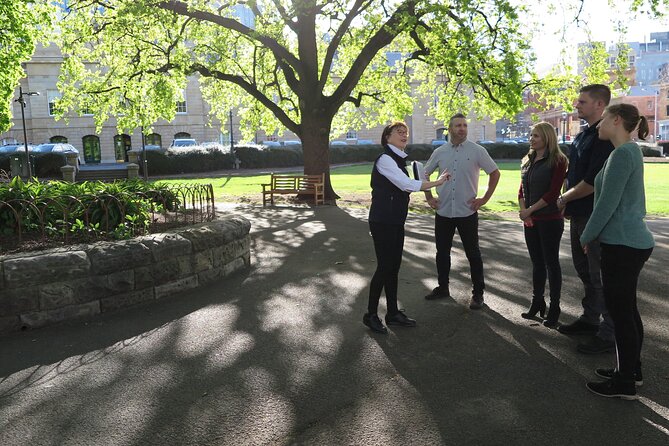
Hobart’s old center is compact, but its streets hold a surprising amount of drama: colonial power struggles, convict lives, government decisions, old headstones, and sandstone buildings that have outlasted generations. This 90-minute walking tour gives you a clear introduction without asking you to spend half a day on your feet.
I like the small group size, capped at 12, because it gives you a better chance to hear the guide and ask questions. I also like the route’s useful finish at Salamanca Place, where you can continue exploring on your own after learning what you are looking at.
The main consideration is pace and sound. Most people find the walk easy, but one person felt it covered less ground than expected, while another missed some commentary when the guide was facing a building rather than the group. Hobart’s weather can also change plans, since the tour needs suitable conditions.
Key points at a glance
- Compact introduction: Cover central Hobart’s early settlement, colonial government, buildings, and key characters in about 90 minutes.
- Small groups: A maximum of 12 people makes this more personal than a large coach-style city tour.
- Strong local guides: Guides including Sara, Christine, Brendon, Maggie, Diane, Di, Bill, Dave, and Brendan are praised for clear explanations, humor, maps, and detailed answers.
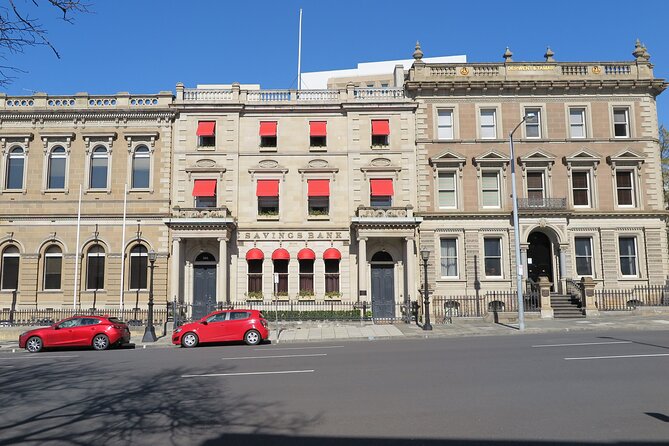
- Sandstone and stories: Look closely at heritage-listed buildings and learn how their uses changed over time.
- St David’s Park: Hear about its monuments and memorial wall, including the use of old headstones.
- Useful ending: Finish at Salamanca Place, a practical base for more sightseeing, food, or a drink.
Why this is a smart first look at Hobart
The best city walks help you read a place. This one is not simply a stroll past attractive facades. It explains who shaped early Hobart, how colonial government worked, and why particular buildings mattered.
That context is valuable because central Hobart can look quiet and straightforward at first glance. Once you know which buildings were tied to government, settlement, religion, or public life, the city feels less like a collection of old walls and more like a record of decisions and conflicts.
The walk is especially useful on your first afternoon in Hobart. You begin at the Tasmanian Travel & Information Centre on Davey Street at 2pm, then finish at Salamanca Place. You can use the route to get your bearings before returning to places that caught your eye.
I would choose this tour early in a Hobart visit rather than on the final morning. The guide’s explanations can help you decide how to spend the rest of your time, and the finish at Salamanca Place puts you close to one of the city’s best-known historic areas.
More history-led days in Hobart:
- Derwent River Historic Harbour Cruise From Hobart
★ 4.5 · 570 reviews - Tasman Island Cruises and Port Arthur Historic Site Day Tour from Hobart
★ 5.0 · 477 reviews - Tasman Peninsula Tour, Cruise & Port Arthur Historic Site
★ 4.9 · 339 reviews
The 90-minute route through central Hobart
The tour provides an introduction to the city’s past and its present layout. You move through the area of Hobart’s first settlement, stopping at heritage-listed buildings and sites connected with early characters and major issues.
The route is not designed as a long-distance march. One person expected to cover more ground and found the distance shorter than anticipated. That is a drawback if you want a broad tour of every major Hobart sight, but it is an advantage if you want concentrated detail without tiring yourself out.
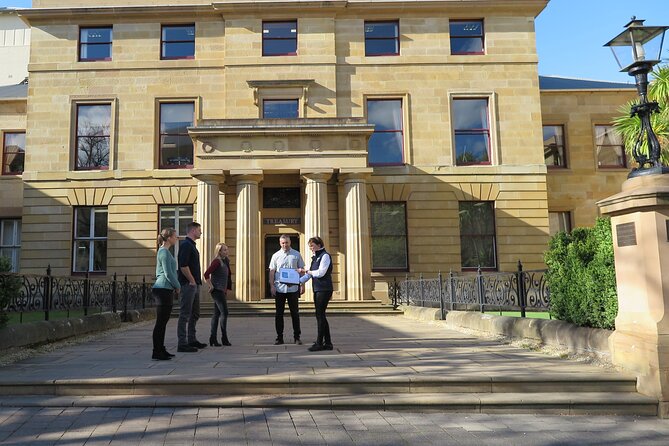
You will spend time looking at buildings rather than rushing from one landmark to the next. Guides explain what each building was used for and point out features that are easy to miss when you are walking alone. The experience works best if you enjoy stopping, listening, and asking questions.
Several guides use maps or old pictures to make the city’s earlier layout easier to understand. That is useful in a place where streets and buildings have changed, but traces of the original settlement remain.
Sandstone buildings and the stories behind them
Hobart’s sandstone architecture is one of the walk’s clearest pleasures. The buildings are attractive, but the guide adds the part you cannot get from a photograph: who used them, what role they played, and how they fit into the young settlement.
You will hear about the early government and the people who held power. The tour also covers convict stories, which gives the old center a more complicated character than a simple parade of handsome colonial buildings.
I particularly like this approach because it connects architecture with ordinary life. A facade is easier to remember when you know whether it served government, public, religious, or practical purposes. The guide also gives you useful clues for exploring independently later.
The strongest guides bring personality to the material. Sara is praised for combining detailed information with humor. Diane is described as passionate about Hobart and able to make the city feel alive through entertaining details. Bill is noted for maintaining an easy pace and answering questions thoroughly.
Those differences matter. The basic route may be the same, but the quality of a walking tour depends heavily on the person leading it. The available feedback names several guides, including Dave, Maggie, Di, Christine, Brendan, and Brendon, and repeatedly points to clear delivery, enthusiasm, and strong command of the subject.
St David’s Park and the memorial wall
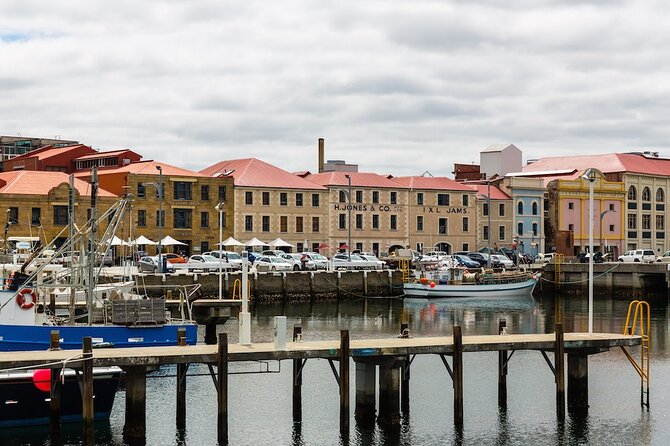
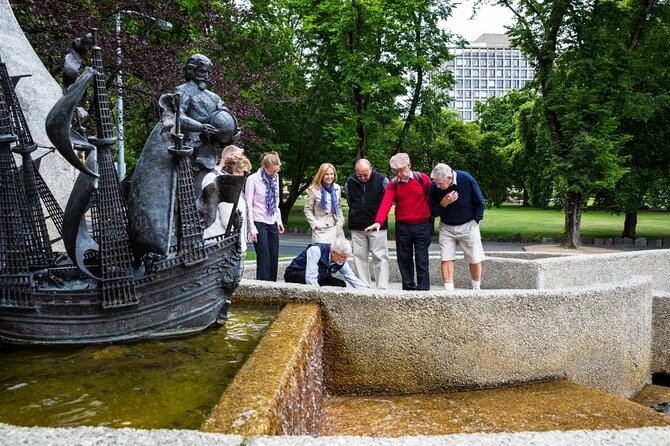
St David’s Park adds a more reflective stop to the walk. Here, you learn about the monuments and a memorial wall built using old headstones.
That detail gives the stop real weight. It links the physical park to Hobart’s earlier residents and to the ways a city reuses, preserves, or changes its memorial spaces. It is also a good example of how the tour moves beyond famous facades and explains the layers beneath them.
The park should suit anyone who enjoys small historical details. You are not simply told that the area is old. You learn how its monuments and materials connect to Hobart’s past.
This is also one of the places where the guide’s storytelling style matters most. The subject can be presented as a list of dates, or it can be tied to the people and choices behind the site. The guides praised for humor and personal interest appear to make these stops easier to remember.
More walking tours in Hobart:
- Maria Island Cruise and Guided Walk Day Tour with Lunch and Drinks
★ 5.0 · 617 reviews - Hobart History, People & Places – 2 hour city walk
★ 5.0 · 224 reviews - Old Hobart Pub Walking Tour
★ 4.5 · 91 reviews - Grand Hobart Walking Tour
★ 5.0 · 28 reviews
Colonial power, convict stories, and missing context
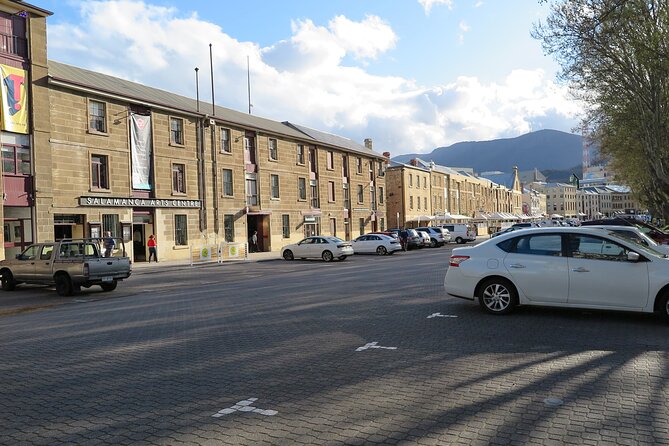
The tour focuses on colonial heritage and convict history. You will hear about early settlement, the ruling government of the day, and the characters and problems that influenced Hobart’s development.
That focus is a good fit for anyone who wants a clear grounding in the city’s colonial period. It also gives you a useful framework for understanding the old center, where government, commerce, public life, and settlement history sit close together.
There is one important limitation to keep in mind. One person noted that the tour did not mention the original inhabitants of Hobart. That omission matters, since the colonial story did not begin with European settlement. If Indigenous Tasmanian history is important to your understanding of place, you may want to seek out additional information alongside this tour.
I would not treat that point as a reason to dismiss the walk entirely, but I would factor it into your expectations. This experience is mainly an introduction to Hobart’s colonial and convict-era development, not a full account of every community connected to the area.
The guides make the difference
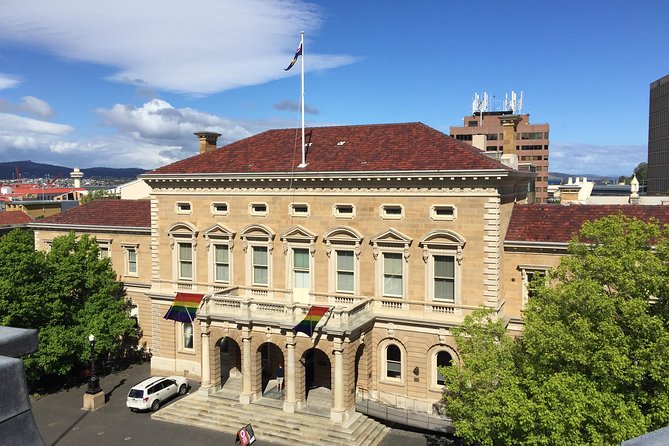
A walking tour lives or dies by its guide, and this one has a strong record in that department. The most praised qualities are clear speech, humor, personal enthusiasm, and the ability to handle questions.
Brendon is described as a source of detailed information about early Hobart. Christine is praised for an interesting route taken at a comfortable pace for different age groups. Maggie is singled out for her command of the city’s history and architecture.
Diane receives particular praise for making the city come to life. Di uses maps and pictures, which can help if you prefer visual evidence to a long spoken explanation. Dave is described as passionate and friendly, and Bill is praised for answering questions while keeping the walk comfortable.
You should still pay attention to where the guide is standing. One person found it hard to hear when the guide spoke toward a building instead of facing the group. On a walking tour, this is a practical issue, not a minor complaint. Stay near the guide when possible, and do not hesitate to ask for a repeat if traffic, wind, or distance gets in the way.
The small group limit helps here. With no more than 12 people, the guide can generally keep the group together and respond to questions without turning the tour into a public lecture.
A gentle pace, with a few practical limits
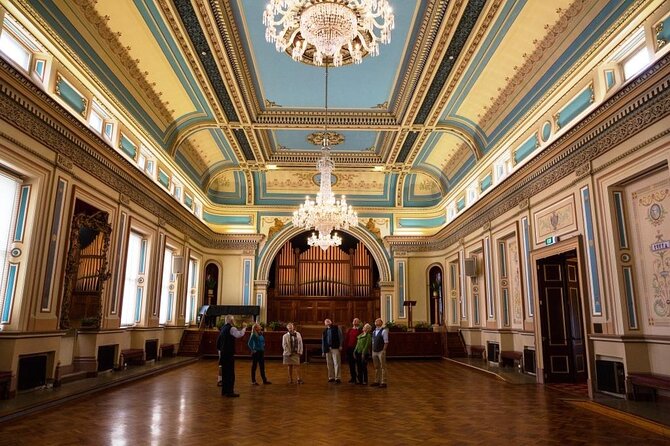
Most people can take part, and the walk is described as moving at an easy or sensible pace. A 90-minute duration keeps it manageable for first-time visitors, older participants, and anyone who wants a short activity between other plans.
You will be outdoors, so wear shoes suited to walking and check the forecast. The tour requires good weather, and poor conditions may lead to a new date or a full refund. Food and drinks are not included, so plan to eat before or after the walk.
There is no hotel pickup or drop-off. That is not much of a problem in this case, since the meeting point is at the Tasmanian Travel & Information Centre, near public transportation, and the end point is Salamanca Place.
Children must be accompanied by an adult. Service animals are allowed. Most people can participate, but you should still consider your own comfort with standing outdoors and walking between several city stops.
What the $27.26 price gives you
At $27.26 per person, this is a reasonably priced orientation tour, especially if you are new to Hobart. You are paying for a local guide, a small group, and a concentrated explanation of buildings and sites that would be easy to pass without understanding.
The value is not in the distance covered. If you measure tours by how many streets or attractions they include, you may find this route modest. The value comes from the interpretation: the stories behind the buildings, the government decisions, the convict connections, and the details at St David’s Park.
For history fans, the price is easier to justify because the commentary is the main event. For casual sightseers, it is still a good buy if you want a quick introduction before exploring Salamanca Place and central Hobart independently.
The tour has a 4.8 rating from 64 reviews, with 97 percent recommending it. Those figures point to a consistently well-received experience, but they should not hide the practical caveats: commentary can be harder to hear if you are standing too far back, the route may feel short, and the Indigenous history of the area is not covered in the stated material.
Who should book this Hobart walk
I would recommend it to first-time visitors who want to understand Hobart before exploring alone. It is also a natural choice for people who like architecture, colonial stories, government history, and convict-era subjects.
It suits you if you prefer a small group and a guide who can answer questions. The named guides have different styles, but the strongest pattern is a blend of facts, personal interest, and humor.
The tour may be less suitable if you want a wide-ranging city tour that reaches far beyond the central historic area. It may also disappoint if you expect a full account of Tasmanian Indigenous history, since that subject is not included in the information provided.
Families can join, provided children have an adult with them. The manageable duration is helpful, though young children who do not enjoy listening at several building stops may find the format slow.
Meeting at Davey Street and finishing at Salamanca Place
The meeting point is the Tasmanian Travel & Information Centre, 20 Davey Street, Hobart. The start time is 2pm, so you have the morning and early afternoon free for another activity.
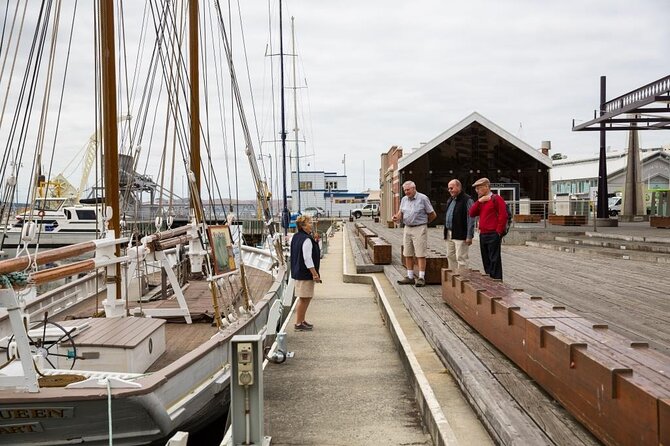
The final stop is Salamanca Place. This is a useful arrangement because you do not need to return to the starting point to continue your day. After the walk, you can explore the area at your own pace, find food or a drink, or use the historic orientation to choose your next stop.
A mobile ticket makes entry simple. Confirmation arrives when you book, and the maximum group size is 12.
Free cancellation is available if you cancel at least 24 hours before the start time. A later cancellation is not refunded, and changes inside that period are not accepted. If bad weather or too few bookings cause the operator to cancel, you are offered another date or experience, or a full refund.
FAQ
How long is the Hobart Historic Walking Tour?
The tour lasts approximately 90 minutes.
Where does the tour start?
It starts at the Tasmanian Travel & Information Centre, 20 Davey Street, Hobart, Tasmania 7000.
What time does the tour begin?
The scheduled start time is 2pm.
Where does the tour finish?
The walk ends at Salamanca Place, Hobart.
How many people can join the tour?
The group has a maximum of 12 travelers.
Is hotel pickup included?
No. Hotel pickup and drop-off are not included, though the meeting point is near public transportation.
Can I cancel for a full refund?
Yes, if you cancel at least 24 hours before the experience start time. Poor weather or failure to meet the minimum number of participants may also result in a choice of another date or a full refund.
Should you book the Hobart Historic Walking Tour?
Book it if you want a short, well-priced introduction to central Hobart, especially on your first day. The small group, strong guide feedback, sandstone buildings, St David’s Park, and finish at Salamanca Place make it a practical way to get oriented.
Go in expecting a focused colonial and convict-history walk, not a complete tour of the whole city or Tasmania’s full cultural story. If you keep that scope in mind, this is a useful and friendly starting point, with enough detail to make your later wandering through Hobart far more rewarding.
Just added around Hobart
- Shore Excursion-Hobart Wanderer★ 5.0 · 87 reviews
- Old Hobart Pub Walking Tour★ 4.5 · 91 reviews
- kunanyi/Mt Wellington Tour and MONA Admission★ 4.5 · 69 reviews
- kunanyi/Mt Wellington Ultimate Experience Tour from Hobart★ 4.5 · 83 reviews
- Mt Field National Park and Russell Falls from Hobart★ 5.0 · 49 reviews
- Maria Island Ferry – Hobart Bus Connection (Return Service)★ 5.0 · 23 reviews
- Hobart: Mt. Field, Mt Wellington & Wildlife – Active Day Tour★ 5.0 · 112 reviews
- Hobart Sightseeing Cruise including Iron Pot Lighthouse★ 5.0 · 184 reviews
Hobart Tours, compared.

Bruny Island Food, Sightseeing, Guided Lighthouse Tour & Lunch
Read our review →
Full-Day Guided Bruny Island Tour from Hobart
Read our review →
kunanyi/Mt Wellington Explorer Bus- Return Tour (2.5 hours)
Read our review →
Bruny Island Food, Sightseeing & Lighthouse Day Tour
Read our review →

Bruny Island Traveller – Gourmet Tasting and Sightseeing Day Trip from Hobart
Read our review →

Browse the lists this tour appears in