
Review · ABORIGINAL CULTURE TOURS
From Darwin: Tiwi Islands Aboriginal Culture Tour with Lunch
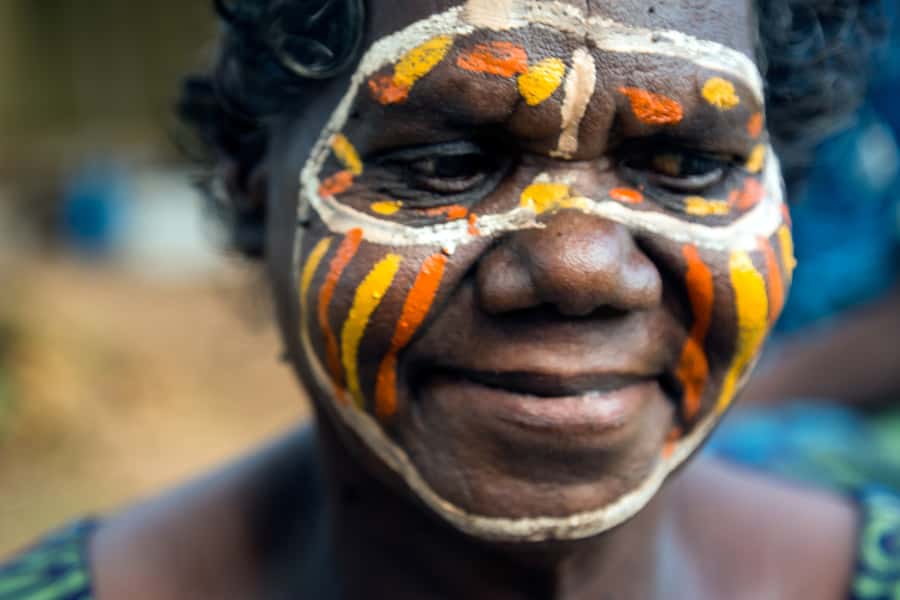
The heart of this day is not a scenic boat ride or a checklist of sights. It is time spent in Wurrumiyanga, a modern Tiwi community where local guides explain family traditions, ceremony, art, and the meeting of Tiwi culture with Christianity. The museum, church precinct, arts centre, and cemetery each add a different piece to the story.
I like the local guiding and the chance to see artists working rather than simply viewing finished pieces behind glass. I also like the generous food stop, with a proper lunch plus billy tea and damper. The main drawback is the long ferry ride, and the return crossing can be rough in poor conditions.
Key points to know before you go
- A 2.5-hour ferry each way: The Tiwi Mantawi carries you from Cullen Bay to Bathurst Island, making the crossing a major part of this full-day outing.
- Wurrumiyanga is the focus: You visit the museum, Early Mission Precinct, church area, Arts and Crafts Centre, and cemetery with local interpretation.
- Ceremony has real meaning: A smoking ceremony and totem dances are presented as cultural practices, not staged entertainment.
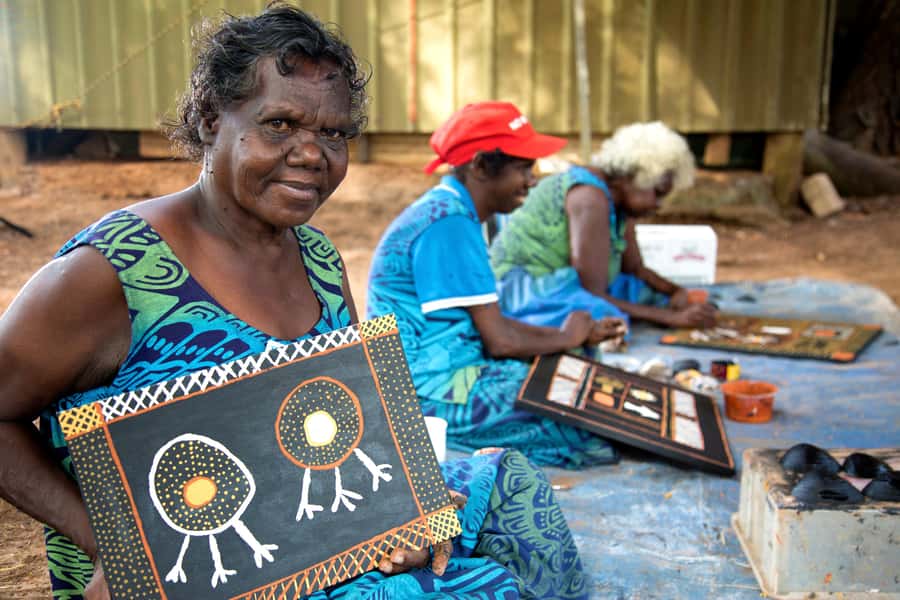
- Art is part of community life: You can watch Tiwi women paint and work on crafts, then buy paintings, fabrics, and other handmade pieces.
- Food is included: Lunch, billy tea, and damper make the day easier, though bring water, sunscreen, and cash for purchases.
- Plan your own start: You must reach Cullen Bay Ferry Terminal by 7:20 AM. There is no hotel pickup or drop-off.
Why Bathurst Island is worth the early start
The Tiwi Islands sit off the coast of Darwin, but the trip feels like a clear change of pace. This tour takes you to Bathurst Island, one of the two main Tiwi Islands, and into Wurrumiyanga, the community formerly known as Nguiu.
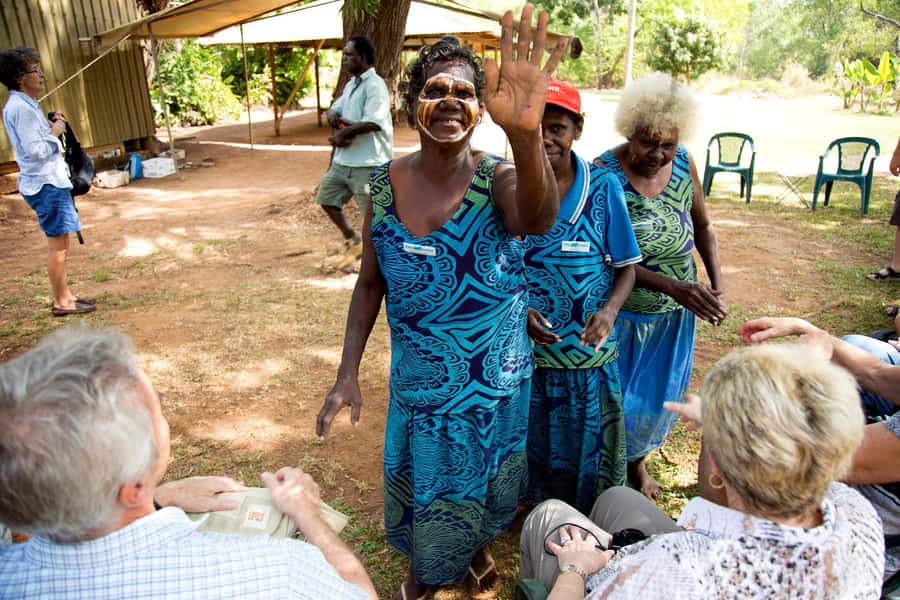
You are not simply driven past a remote settlement. The day is built around meeting people who live there and hearing them explain their own customs. That matters because Tiwi traditions can be difficult to understand from a museum label alone. A guide can explain why a dance, design, burial post, or smoking ceremony carries meaning.
The Tiwi people have a strong artistic tradition, but this is not only an art tour. You also learn about social customs, the mission period, Christianity, burial rituals, and present-day community life. The result is a more rounded introduction to Tiwi culture than you would get from a short gallery visit in Darwin.
The tour costs $329 per person. That is a serious outlay, especially for families, but it includes the return ferry, island transport, local guiding, lunch, and a full day of access to places that are not part of an ordinary Darwin sightseeing circuit. I would judge the price mainly against the ferry fare, the length of the day, and the quality of the cultural program. If you want only a quick Aboriginal art stop, it is expensive. If you want a guided introduction to the Tiwi Islands, the package makes more sense.
More Aboriginal-led experiences in Australia:
- From Perth: Wave Rock, York and Aboriginal Cultural Tour
★ 4.6 · 498 reviews - Wave Rock, York and Aboriginal Cultural Day Tour from Perth
★ 4.5 · 393 reviews - Aboriginal Heritage Walk – Royal Botanic Gardens Victoria, Melbourne Gardens
★ 5.0 · 314 reviews
Getting to Cullen Bay for the 8 AM ferry
Your day begins at Cullen Bay Ferry Terminal, about five minutes by car from Darwin CBD. You need to be there by 7:20 AM for check-in, and the ferry leaves at 8 AM.
There is no hotel collection, so allow time to reach Cullen Bay yourself. The terminal is small and the ferry is easy to spot, but you still need to go to the upper platform and show your itinerary at the ticket booth. Sealink staff check it and issue your ferry ticket.
One detail is easy to miss: the AAT Kings guide does not meet you in Darwin. The local guide meets you after you arrive on Bathurst Island. This is not a problem once you know it, but it means the ferry check-in is your responsibility. Keep your booking information handy and do not assume someone from the tour company will be waiting at the terminal.
The ferry crossing takes about two and a half hours. On a calm day, it gives you time to settle in and watch the coast recede. It is also a long stretch of travel before the cultural program begins, so bring water, sunscreen, and something light to read if you need a break.
The morning crossing has been described as comfortable, while the return trip can be rough. If you are prone to seasickness, plan accordingly. The ferry is not a short transfer tacked onto the tour. It takes roughly five hours of the day in total, and that should be part of your decision.
Arriving in Wurrumiyanga on Bathurst Island
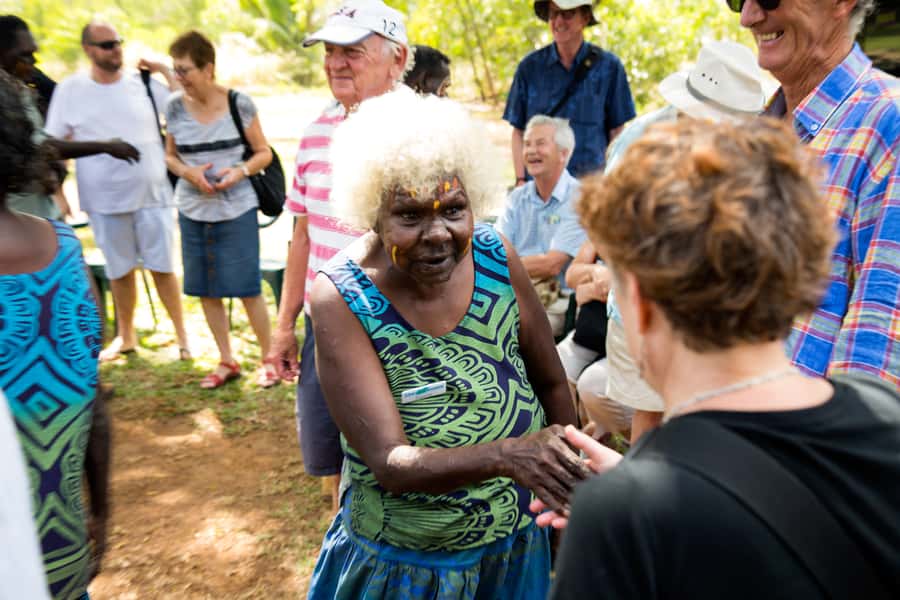
Once you arrive, a local Tiwi guide takes over. The guide is the key to the whole experience. Past tours have included guides such as Romolo, Fred or Freddie, John, Jason, Leon, and Trevor, along with respected elders and community figures.
The best guides do more than recite dates. They explain the community with humour and personal stories, and they make complicated customs easier to follow. One previous program included Bernard, an elder, former schoolteacher, and social reformer whose stories added a strong personal voice to the day. You may not meet the same people on every departure, but the format places local Tiwi voices at the centre.
The community itself is relatively basic. That is worth stating plainly. This is not a polished resort island or a theme park version of Aboriginal culture. You will see working community spaces, modest facilities, and a slower rhythm than in Darwin. For many people, that is precisely the point. You get a look at a real place rather than a carefully manufactured attraction.
The tour also places the Tiwi Islands within the wider Northern Territory economy. The region is connected with cattle and farming, and the island community has its own modern concerns alongside its cultural traditions. The day is not frozen in the past.
The museum and Tiwi Dreamtime stories
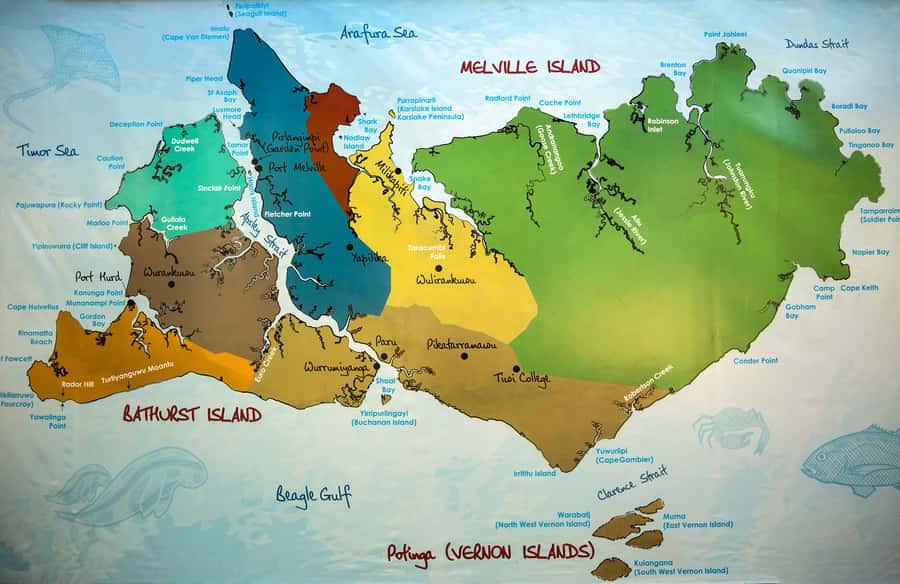
The museum is an important early stop because it gives you some cultural footing before the ceremonies and art demonstrations. You see traditional art and hear Tiwi Dreamtime stories, which provide a framework for understanding the symbols and practices discussed later.
These stories are not just old tales added for atmosphere. They help explain how Tiwi people understand place, ancestry, animals, ceremony, and responsibility. Listen for connections between what you see in the museum and what the guide later points out in the community.
This is also where a good guide makes a large difference. Some cultural ideas have no neat English equivalent, and a rushed explanation can leave you with only a collection of exotic-sounding terms. The local guides are valued for making the material clear, personal, and often funny without stripping it of importance.
You should come ready to listen rather than compare everything with your own customs. The purpose is not to decide if a tradition resembles something familiar. It is to understand how Tiwi society gives that tradition meaning.
More lunch stops in Australia:
- All Inclusive Blue Mountain,Scenic World,Lunch,Koalas,ferry
★ 5.0 · 7,832 reviews - Blue Mountain: Small-Group Tour with Lunch & Scenic World
★ 4.8 · 3,009 reviews - Bruny Island Food, Sightseeing, Guided Lighthouse Tour & Lunch
★ 5.0 · 2,989 reviews - From Sydney: Blue Mountains Tour with Waterfall Walk & Lunch
★ 4.8 · 2,400 reviews
The Early Mission Precinct and the church
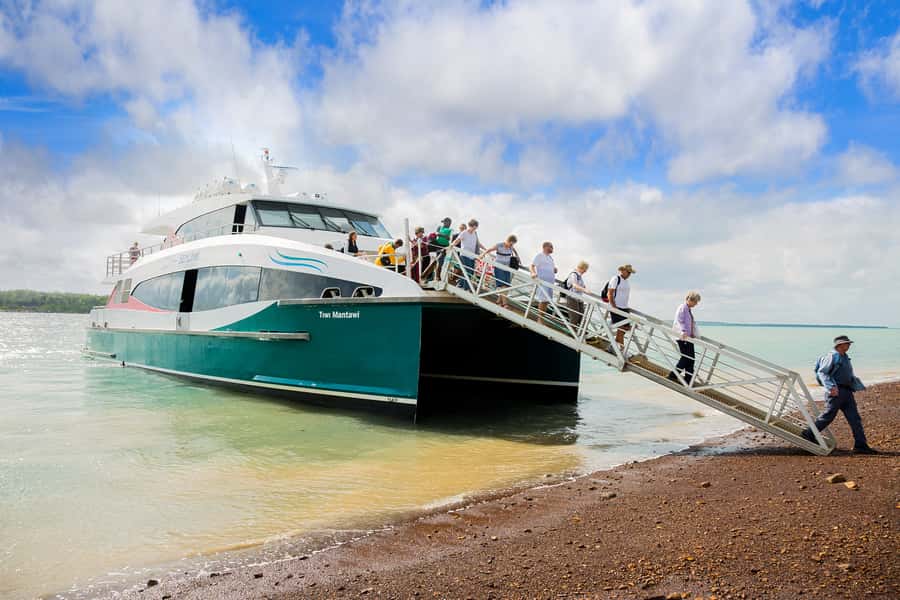
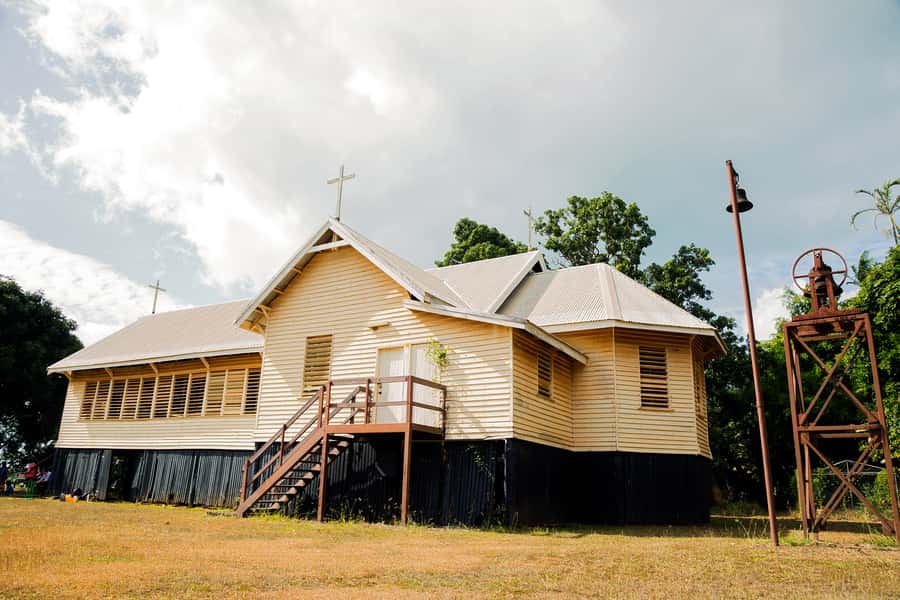
The Early Mission Precinct shows another side of the island story. Here you learn about the mission and the way Christianity became part of Tiwi life.
This section is valuable because it avoids presenting Tiwi culture as something untouched by modern history. Mission life brought major changes, and the relationship between Christian practice and older Tiwi beliefs is complex. The tour explains how these strands have come together in the community.
The church is often one of the most interesting places on the route. It reflects local artistic and cultural identity while also showing the influence of Christian missions. You are not asked to treat the mission period as a simple success story. Instead, the visit gives you context for understanding why the community looks and worships as it does today.
The history stop may be more rewarding if you have already spent time with Aboriginal history elsewhere in the Northern Territory. If not, do not worry. The guide connects the details to the places around you and gives you a useful first introduction.
Smoking ceremony and totem dances
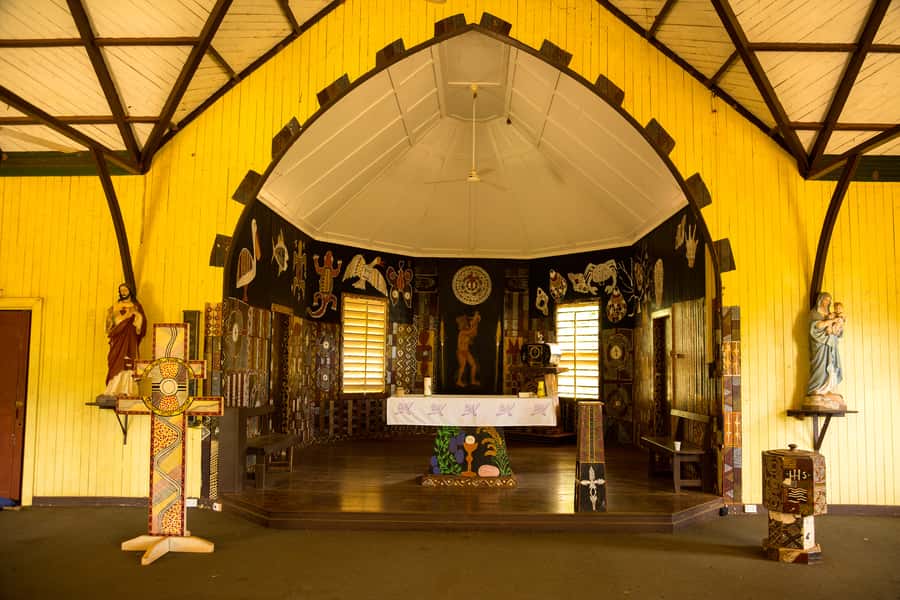
The smoking ceremony is one of the most memorable parts of the day. It is used to bless visitors, and the guide explains its cultural significance rather than leaving you to guess what is happening.
Treat this as a ceremony, not a photo opportunity. Follow the guide’s instructions, watch quietly, and ask questions at the appropriate time. Cultural visits work best when you allow the people hosting you to set the pace.
Totem dances add movement and sound to the program. They help show that Tiwi culture is not confined to paintings or museum displays. Dance connects people with identity, family, and ceremony, and the guide explains those connections as you watch.
The dances are a highlight, but they are also a reminder to keep your expectations respectful. You are being welcomed into an introduction to cultural practices, not given permission to treat every moment as a performance for tourists.
Watching Tiwi artists at work
At the Arts and Crafts Centre, you can watch artists create paintings and other traditional works. This is more useful than seeing only finished products because you get a sense of how much time, care, and skill goes into each piece.
The art centre also gives you a chance to buy work directly from the community. Available items can include paintings, handmade crafts, and screen-printed fabrics. Bring cash, as it is specifically recommended for the day, and remember that stock changes.
Do not assume every visit includes a hands-on craft lesson. One person expected to try screen printing and was disappointed that the activity did not happen. The advertised experience is watching the artists work and having the opportunity to buy art, not a guaranteed workshop.
That distinction matters when you judge the price. If you want to make your own souvenir, this may not be the right tour. If you want to meet artists, see the working centre, and purchase authentic Tiwi work at island prices, it offers more.
Buying directly can also make the souvenir more meaningful. You know where the work was made and have heard something about the people and culture behind it. Take your time, ask what you are looking at, and choose something because you genuinely like it.
Pukamani burial traditions and the cemetery
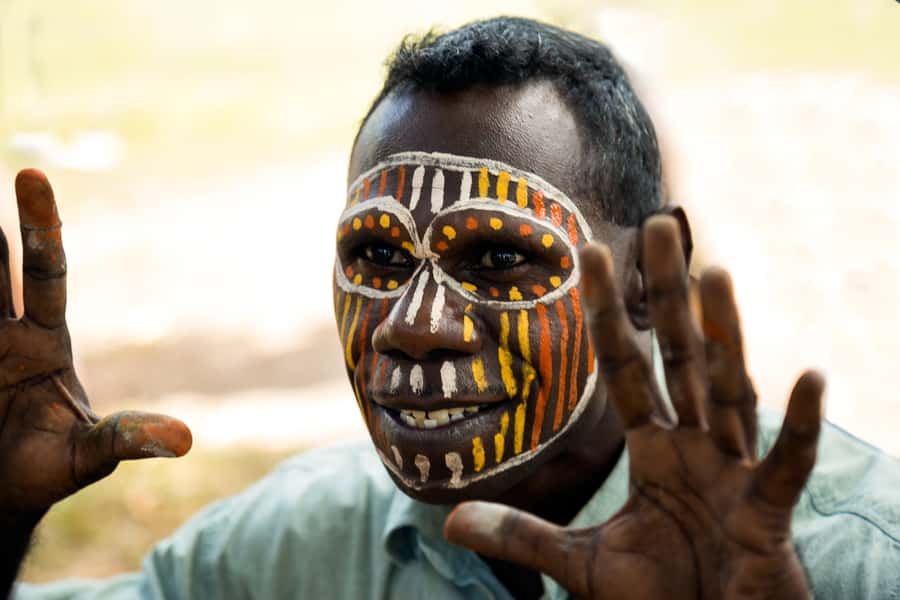
The tour includes an explanation of the Pukamani burial ceremony, one of the central traditions of Tiwi culture. You may also visit the cemetery, which gives the discussion a physical setting.
This is a serious part of the day, and the guide explains the rituals with care. Pukamani ceremonies involve mourning, art, family, and obligations to the dead. The burial posts and related designs are not simply decorative objects. They carry cultural meaning and mark relationships between people, place, and spirit.
The cemetery stop can be especially thought-provoking because it shifts the tour away from the lighter parts of art buying and lunch. It asks you to consider how a community remembers its dead and passes knowledge to the living.
Take the guide’s lead on photography and behaviour. Some places and ceremonies have rules that visitors need to respect. If you are unsure, ask before taking pictures.
Lunch, billy tea, and damper
Food is included, and the lunch has been a consistent strength of the day. It is described as generous and delicious, with fresh salad among the dishes served on at least one departure.
You also receive billy tea and damper. This simple snack suits the setting and gives you a chance to pause between the cultural visits. Billy tea is prepared in a traditional camp-style billy, while damper is a plain Australian bread often served with tea.
The meal is not the main reason to book, but it improves the value of a long day. You do not need to search for food on the island, and a proper lunch gives you a break from the heat and walking.
Bring your own water as well as sunscreen. Cash is useful for the art centre. The Northern Territory sun can be strong, and much of the day involves moving between community sites rather than sitting in air-conditioned rooms.
The return ferry and the shape of the day
The group returns to the ferry landing for a 3:15 PM departure back to Darwin. With the morning and afternoon crossings included, this is a long day of about 10 hours.
The schedule is full but not frantic. The tour moves from the museum to the mission precinct, ceremonies, art centre, lunch, and cultural explanations before returning to the ferry. Several people have found the pace relaxed, but you should still expect a structured group outing rather than free time to wander.
The return crossing may be less comfortable than the trip out. Seas can become rough, and this is the main practical weakness of the experience. You might also find the ferry check-in less tidy if several people arrive at once. Allow time, follow the Sealink staff, and keep the early start in mind.
The long crossing is easier to accept if you see it as part of the island experience. Still, if you have only one free day in Darwin and dislike boats, you may prefer a mainland cultural tour.
Who should book the Tiwi Islands tour?
I would recommend this for you if local voices, Aboriginal culture, art, and history matter more than a packed list of scenic stops. It suits adults, couples, families with older children, and anyone who wants context rather than a quick photo stop.
It is especially useful if you are visiting Darwin without a longer Northern Territory itinerary. The tour gives you an organised way to reach Bathurst Island, meet Tiwi people, and see several important community sites in one day.
You should think twice if you need hotel pickup, use a wheelchair, want a hands-on art class, or strongly dislike long ferry crossings. The activity is not suitable for wheelchair users, and the craft activity is not guaranteed.
Book at least a day ahead if you want the flexibility of free cancellation up to 24 hours before departure. You can also reserve now and pay later, which helps when your Darwin plans are still taking shape.
Final verdict: a worthwhile cultural day from Darwin
The strongest part of this experience is the access to local Tiwi guides. The art, museum, church, smoking ceremony, totem dances, Pukamani discussion, and lunch all work better because people from the community explain them.
At $329, the tour is not cheap. The ferry alone takes much of the day, and the return journey can be rough. But the price includes transport, guiding, food, and a rare chance to visit Wurrumiyanga with cultural interpretation rather than trying to find your way around independently.
I would book it if you want a respectful, well-organised introduction to Tiwi life and can handle the early start and long boat ride. I would skip it if your priority is a short excursion, guaranteed screen printing, or a polished resort-style outing. For the right visitor, this is the kind of day that leaves you with a better understanding of the place, not just another photograph.
FAQ
Where does the Tiwi Islands tour depart from?
The tour departs from Cullen Bay Ferry Terminal, about five minutes by car from Darwin CBD. You must arrive by 7:20 AM for check-in before the 8 AM ferry.
Is hotel pickup included?
No. You need to make your own way to Cullen Bay Ferry Terminal. Hotel pickup and drop-off are not included.
How long is the ferry ride to Bathurst Island?
The ferry ride from Darwin to Bathurst Island takes about 2.5 hours each way. The return ferry leaves Bathurst Island at 3:15 PM.
What is included in the $329 price?
The price includes the return ferry, air-conditioned coach transport on the island, a local English-speaking guide, lunch, billy tea, and damper.
Can I buy Tiwi art and crafts?
Yes. You visit the Arts and Crafts Centre, see artists working, and can purchase Tiwi paintings, crafts, and screen-printed fabrics. Bring cash, as it is recommended for the day.
Is the tour suitable for wheelchair users?
No. The activity is listed as unsuitable for wheelchair users.
Just added around Australia
- 7-Day Super Value Tour of Tasmania: Explore Tasmania’s West and East Coasts★ 5.0 · 77 reviews
- Hobart: Bruny Island Adventure: Hiking, Highlights & Local tastes★ 4.0 · 23 reviews
- Cascades Female Factory Historic Site [official]★ 4.5 · 110 reviews
- A Day At Wineglass Bay★ 5.0 · 33 reviews
- 5-Day Best of Tasmania Tour from Hobart★ 5.0 · 184 reviews
- 6-Day Tasmanian Explorer Adventure Tour from Hobart★ 5.0 · 66 reviews
- 4 Day Wild Tasmania Tour / Wildlife, Nature, Hiking / Inc. Accom★ 5.0 · 126 reviews
- Bonorong Wildlife Park and Richmond Afternoon Tour from Hobart★ 4.5 · 113 reviews
Aboriginal Culture Tours, compared.


Wave Rock, York and Aboriginal Cultural Day Tour from Perth
Read our review →
Aboriginal Heritage Walk – Royal Botanic Gardens Victoria, Melbourne Gardens
Read our review →

Great Barrier Reef with Cultural Guides-Dreamtime Dive & Snorkel
Read our review →

Dampier Peninsula & Aboriginal Communities from Broome (Optional Scenic Flight)
Read our review →
Kuranda Pamagirri Aboriginal Premium Full-Day Tour
Read our review →Browse the lists this tour appears in