

Review · MELBOURNE TOURS
Melbourne Cricket Ground (MCG) Tour
The most memorable part of the MCG Tour is not simply seeing the huge oval from the stands. It is being taken into the club rooms, media spaces, library, and player areas that ordinary ticket holders cannot enter. You also get onto the arena itself, a fine moment for anyone who has watched cricket or Australian rules football here.
I like the access to the MCC Long Room and the old library, founded in 1873. I also like the City Terrace, where Melbourne opens out beyond the stadium. The main consideration is that some areas can close for events or preparation work, and guide quality can vary. One group also found 25 people rather than the advertised maximum of 10.
Key points at a glance
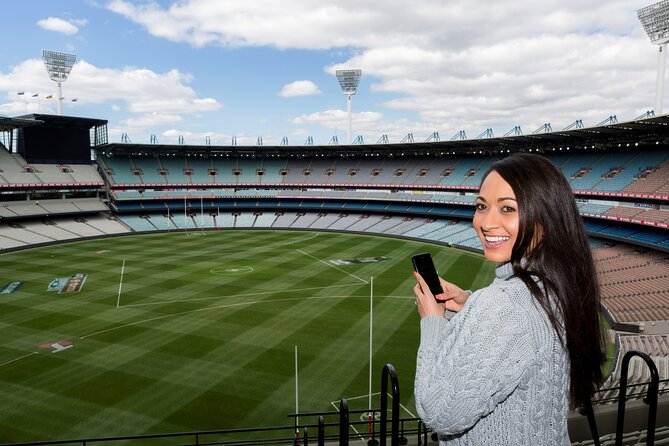
- Walk onto the MCG arena: Get close to the playing surface and see how the ground changes between cricket and AFL use.
- Visit the MCC Long Room: This famous members-only space gives the tour a sense of the club’s traditions and status.
- See working areas behind the scenes: The route can include player changing rooms, the cricketers’ viewing room, media centre, and members’ areas.
- Climb to the City Terrace: Take photos of Melbourne from inside one of the city’s best-known sporting buildings.
- Choose the museum upgrade: Add the Australian Sports Museum for a longer look at Australian sporting stories and objects.
- Expect a walking tour: The visit lasts about 75 minutes and calls for moderate fitness, with limited suitability for very small children.
Why the MCG feels bigger than a sports venue
The Melbourne Cricket Ground is one of those places where the building carries as much interest as the matches played inside it. From the outside, you see a giant stadium near the centre of Melbourne. Inside, the tour shows you a working club, a ceremonial members’ area, media rooms, changing spaces, and a ground that must switch between different sports.
That change of purpose is one of the most useful themes of the visit. The MCG is not presented as a frozen monument. It is still being prepared, altered, and used. One tour took place while the field was being converted for the AFL season, giving the group a look at the work needed to change the arena from cricket to football.
I find that detail more interesting than a simple list of famous matches. It helps you understand the practical side of the venue. The MCG has to serve modern sport while preserving old club customs, portraits, rooms, and records.
Your guide leads the visit, and the experience depends partly on who is holding the microphone. Guides including Marie, Don, Greg, Stephen, Barrie, Carol, Brian, Bryan, Clare, and Ian have been praised for their enthusiasm, clear explanations, and ability to answer questions. The best guides make the ground feel personal rather than merely large.
A few more Melbourne half-days to weigh up
- Great Ocean Road Small-Group Eco Tour from Melbourne
★ 5.0 · 6,607 reviews - From Melbourne: Great Ocean Road, 12 Apostles, Wildlife Tour
★ 4.7 · 6,020 reviews - Laid back, Yarra Valley Wine Tour: Wine, Cider, Gin, Beer + Choc
★ 5.0 · 4,552 reviews
Gate 3 is the starting point
The tour begins at Gate 3, which is also the entry point for the Australian Sports Museum. Your mobile ticket is useful here, and the venue is close to public transport, so you do not need hotel pickup or a private transfer.
Allow a little time to reach the entrance. The MCG is large, and the tour begins at a specific gate rather than at a general information desk. Departure times are offered throughout the day, although tours do not operate on selected public holidays and event days.
The tour lasts about 75 minutes. Some groups have taken closer to 90 minutes, particularly when the guide spends time answering questions or showing extra areas. You will be on your feet and walking through a large complex, so comfortable shoes and a moderate level of fitness make sense.
Children must be accompanied by an adult. The pace is manageable for many families, but one important warning came through clearly: this is not a natural fit for very small children who tire quickly. There is a fair amount of walking, and the subject matter is best suited to children with at least some interest in sport, stadiums, or unusual places normally closed to the public.
The arena gives you the clearest sense of scale
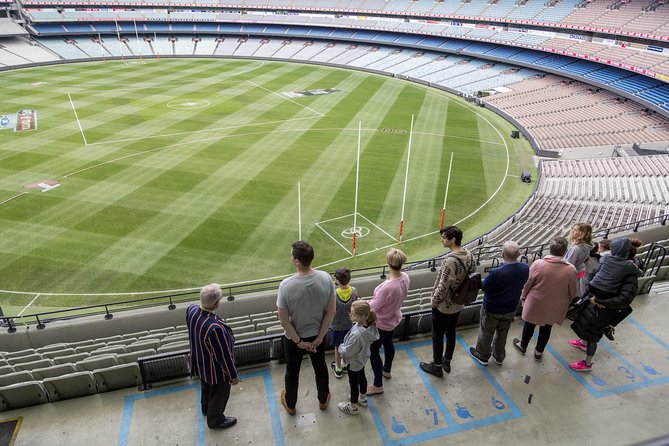
The route normally includes a walk onto or close to the arena. This is where the MCG’s size becomes real. From the seating bowl, the field can seem distant. At ground level, the surrounding stands rise around you and the playing area takes on a different character.
For cricket fans, this is the place to picture the long contests and major moments associated with the ground. For AFL fans, it shows the broad open area needed for football. For everyone else, it is simply an impressive look at how much space a major stadium requires.
The exact arena access can depend on what is happening that day. The field may be set up for an upcoming match, undergoing conversion work, or unavailable because of an event. The guide will adjust the route when needed, so do not treat every stop as guaranteed.
That flexibility is practical, but it can also explain why one visit feels different from another. A tour during a quiet period may offer a better look at certain rooms. A tour near a match or major event may feel more restricted.
The MCC Long Room shows the old club culture
The MCC Long Room is one of the tour’s signature stops. It is not simply another corridor with old furniture. It represents the Melbourne Cricket Club’s formal side, with a setting that feels removed from the ordinary noise of a stadium day.
The room helps explain why the MCG is tied so closely to club membership and ceremony. You can see the contrast between this traditional interior and the practical spaces used by players, media staff, and event crews.
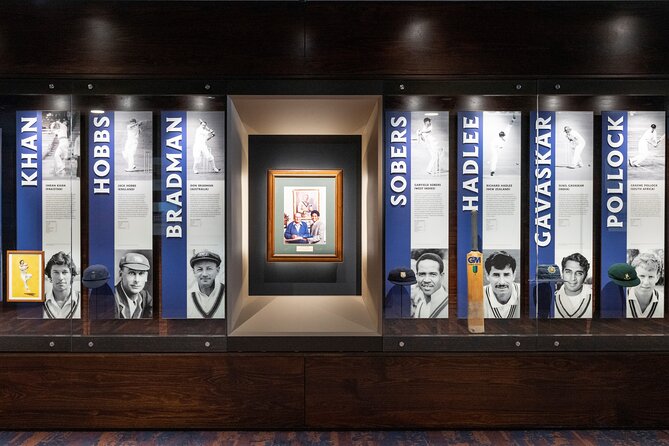
Your guide may also point out portraits and links to major figures in cricket. The itinerary includes portraits of Sir Donald Bradman and Sachin Tendulkar, two names with very different places in cricket’s story but enormous recognition among fans.
This stop works even if you are not devoted to cricket. The room offers a look at how sporting institutions create a sense of tradition. If you are hoping for a long series of match anecdotes, make that clear to your guide and ask questions. Some guides focus more on architecture and operations, while others bring in players, contests, and personal stories.
Same base, a completely different day out:
- Great Ocean Road Reverse Itinerary Boutique Tour – Max 11 Guests
★ 5.0 · 4,186 reviews - Penguin Parade, & Wildlife Encounters Eco Tour from Melbourne
★ 5.0 · 3,774 reviews - Melbourne: Yarra Valley Wine, Gin, Whisky and Chocolate Tour
★ 5.0 · 3,667 reviews - Great Ocean Road Tour w/ Deluxe Minibus & Top-Rated Guide
★ 4.8 · 2,644 reviews
The library and tapestry add quieter details

The MCC Library, founded in 1873, is one of the most distinctive parts of the route. It gives the tour a quieter, more historical pause after the scale of the arena and the formality of the Long Room.
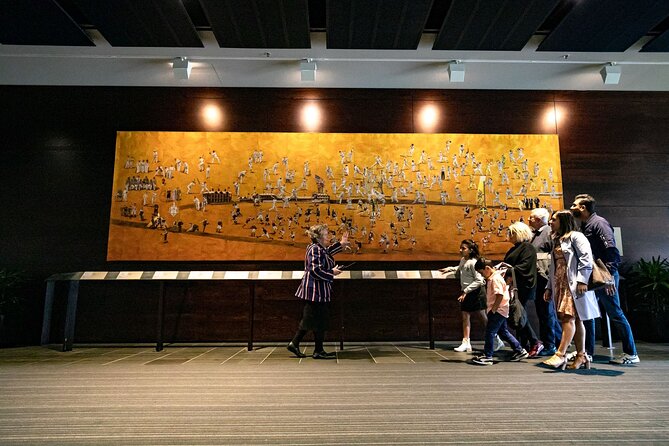
A sports library may sound niche, but it helps you see how cricket has been recorded and preserved over generations. The visit also includes the MCG tapestry, another detail that can be easy to miss if you only come for a match.
I like these smaller stops because they prevent the tour from becoming just a walk through large rooms. They show the institution behind the stadium. You are not only seeing where sport is played, but also some of the places where its records, images, and traditions are kept.
Access to the library and other rooms can change. The tour team notes that areas are subject to availability and alteration, so the route is not a fixed promise for every departure.
Changing rooms, viewing rooms, and media spaces

The behind-the-scenes portion may include the player changing rooms and the cricketers’ viewing room. This is the part many people imagine when they book a stadium tour, and it can be especially satisfying if you want to picture the minutes before a match.
The tour also covers the Ron Casey Media Centre, where the focus shifts from players to the machinery of sports coverage. You may gain a better sense of how a major match is presented to the public, from the stadium to broadcasters and press.
The Cricket Victoria Bill Lawry Centre is another named stop. Together, these rooms show several sides of the MCG: player preparation, media work, club membership, and public spectacle.
Keep your expectations sensible. One visitor found that the actual changing rooms were not available and felt the visit leaned more toward AFL than cricket. That can happen when access is limited or when the ground is being prepared for another event. The tour is broad rather than a guaranteed look at every active room.
The City Terrace is the best photo stop
The City Terrace gives you a different view of Melbourne. Instead of looking inward at the pitch and seats, you look outward toward the city skyline.
It is a good place to pause and take photographs, especially because the view puts the stadium in its urban setting. The MCG is close to central Melbourne and sits beside other major sporting facilities, so the terrace helps you understand how much sport is concentrated in this part of the city.
Do not rush this stop. The tour has a set duration, but a good guide usually allows a moment for photos. If photography matters to you, keep your phone ready rather than packed away at the bottom of a bag.
The guide can make or break the hour
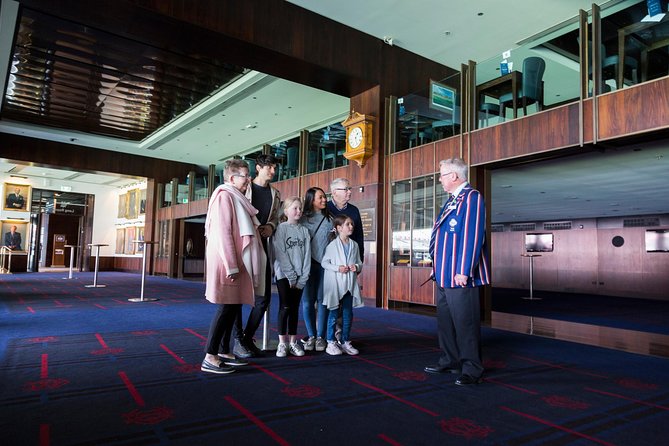
The strongest part of this experience is the guide. Many of the guides are Melbourne Cricket Club members or volunteers, and that connection can give the tour a personal feel. Barrie was praised for his command of photographs and history. Ian was noted for detailed answers, while Brian and Bryan were described as clear and easy to follow.
Marie, Don, Greg, Stephen, Carol, Clare, and other guides have also been praised for energy and warmth. One guide, Greg, was remembered for his fitness and enthusiasm, which matters on a walking tour through a large stadium.
Still, the quality is not automatic. One poor experience involved a guide who offered little about famous matches or players and did not connect well with an international group. Another person found it hard to hear the guide at times.
You can improve your odds by asking questions early. If you want more cricket, ask about the ground’s major matches, international players, or the difference between cricket and AFL preparation. If you are more interested in architecture and club life, say so. The tour has enough material for both, but the guide may choose the emphasis unless you steer the conversation.
Is the Australian Sports Museum upgrade worth it?
The basic ticket includes the guided MCG Tour. You can add admission to the Australian Sports Museum if you want more time with Australian sporting history.
The museum is a good match for anyone who wants more than the stadium itself. The guided tour gives you movement through rooms and working areas. The museum gives you time to look at displays and sporting material at your own pace.
One visitor described the museum as a highlight after an already detailed stadium visit. It may be especially useful if your group includes people with different interests. Someone who does not care much about cricket or AFL may find the museum offers a wider sporting picture.
The available information does not state how long you need for the museum or list every exhibit, so I would treat the upgrade as an optional addition rather than a required part of the tour. If your schedule is tight, the 75-minute stadium visit gives you the core experience. If you have time and enjoy Australian sport beyond one venue, the added ticket makes the day fuller.
Price and overall value at $26.54
At $26.54 per person, this is fairly priced for a 75-minute guided visit to a major stadium, particularly because the ticket includes access to areas unavailable during a normal match visit.
The value comes from access, not just duration. A self-guided look at the seats would not explain the MCC Long Room, library, media centre, player areas, or how the arena changes between sports. You are also paying for the guide’s stories and the chance to ask questions.
The price is strongest for sports fans, but it is not limited to them. The MCG’s club customs, architecture, city views, and event operations give the tour enough variety for a partner or family member who is only mildly interested in cricket.
The value drops if your main goal is guaranteed access to a particular room or a detailed account of one sport. Areas can close, and some guides may spend more time on general stadium facts than on cricket’s major international stories. Ask questions and consider the museum upgrade only if you want extra displays rather than more time inside the active stadium.
Who should book the MCG Tour?
I would recommend it first to cricket and AFL fans, especially anyone visiting Melbourne without a match ticket. It lets you see the ground in a way that a seat in the crowd cannot.
It also suits architecture fans, sports-history enthusiasts, families with older children, and people who enjoy places with a strong connection to local identity. You do not need to understand every rule of cricket to enjoy the Long Room, library, city view, and behind-the-scenes route.
I would think twice if you dislike walking, need a fully predictable route, or want an intimate group every time. The activity is listed for a maximum of 10 people, but one group was much larger. Access can also change on event days, so the tour is best approached as a guided look at the working MCG, not a promise to enter every room.
Should you book this tour?
Book it if you want the MCG to feel like more than a huge oval viewed from the stands. The arena walk, MCC Long Room, old library, player areas, media centre, and City Terrace give you a varied visit, and the price is sensible for the access provided.
I would book the museum upgrade if you have extra time or your group includes people who want a wider look at Australian sport. Before you go, check the departure time, arrive at Gate 3, wear comfortable shoes, and remember that the route can change.
The tour is at its best with a guide who enjoys telling stories and answering questions. If you get someone like Marie, Brian, Ian, or Clare, the hour can pass quickly. Even with a shorter or more factual presentation, the chance to enter the inner parts of the MCG makes this a strong choice for a Melbourne sports visit.
FAQ
Where does the MCG Tour begin?
The tour begins at Gate 3 of the Melbourne Cricket Ground. Entry to the Australian Sports Museum is also at Gate 3.
How long does the MCG Tour last?
The tour runs for approximately 75 minutes. Some visits may take around 90 minutes depending on the route and guide.
What is included in the ticket?
The ticket includes a guided tour of the Melbourne Cricket Ground. Food, drinks, and hotel pickup and drop-off are not included.
Can I visit the player changing rooms?
The route can include player changing rooms and the cricketers’ viewing room. Access to some areas depends on availability and may change because of events or stadium preparation.
Is the Australian Sports Museum included?
The museum is available as an optional upgrade. The basic guided MCG Tour does not include museum admission unless you choose the added ticket.
What can I see during the tour?
Stops can include the arena, MCC Long Room, MCC Library founded in 1873, MCG tapestry, player changing rooms, cricketers’ viewing room, Ron Casey Media Centre, Cricket Victoria Bill Lawry Centre, portraits of Sir Donald Bradman and Sachin Tendulkar, and City Terrace.
Is the tour suitable for children?
Children must be accompanied by an adult. The tour involves walking and is not considered suitable for very small children who may struggle with the distance.
How fit do I need to be?
A moderate level of physical fitness is recommended. The visit involves walking through the stadium for about 75 minutes.
Does the tour run every day?
Tours depart daily except on selected public holidays and event days. Departure times vary.
Can I cancel for a refund?
You can cancel at least 24 hours before the local start time for a full refund. Cancellations or changes made less than 24 hours before the start time are not refunded or accepted.
Just added around Melbourne
- Melbourne: 3-Hour Foodie Discovery Walking Tour★ 4.9 · 313 reviews
- Melbourne: Laneway Bar Tour Where Locals Drink★ 4.8 · 289 reviews
- Melbourne: Ghosts of Williamstown Guided Ghost Walking Tour★ 4.4 · 47 reviews
- Melbourne: Spirit Of Melbourne Yarra River Lunch Cruise★ 4.9 · 65 reviews
- Sorrento: Dolphins & Seals Snorkeling Cruise w/ Lunch★ 4.1 · 52 reviews
- Melbourne: Great Ocean Road Ultimate 12 Apostles with Lunch★ 4.5 · 272 reviews
- Premium Great Ocean Road Reverse Tour 13Pax Max Hotel PickUP★ 4.8 · 155 reviews
- Melbourne City Cruise with Tea, Coffee, and Commentary★ 4.3 · 189 reviews
Melbourne Tours, compared.

Laid back, Yarra Valley Wine Tour: Wine, Cider, Gin, Beer + Choc
Read our review →
Great Ocean Road Reverse Itinerary Boutique Tour – Max 11 Guests
Read our review →
Penguin Parade, & Wildlife Encounters Eco Tour from Melbourne
Read our review →
Great Ocean Road Tour w/ Deluxe Minibus & Top-Rated Guide
Read our review →
Melbourne Great Ocean Rd Reverse Tour London Bridge Wildlife
Read our review →
Great Ocean Road Extended–Top Stops&London Bridge
Read our review →Browse the lists this tour appears in