
Review · NATIONAL PARKS
Hobart: Maria Island National Park Active Full-Day Tour
Maria Island’s greatest attraction is its strange mix of wild animals and convict ruins. Wombats wander near old buildings, wallabies graze beside walking tracks, and the quiet Darlington settlement gives the island a feeling of suspended time. Add the Painted Cliffs and Fossil Cliffs, and this becomes much more than a simple day at the beach.
I like the way the tour combines two easy cliff walks with real interpretation from guides such as Heather, Nick, Trevor, Ben, and Lucas. I also like the small-group format, which lets the guide adjust the pace and stop for wildlife. The catch is the walking: expect about 10 kilometres over unpaved ground, hills, beaches, and exposed coastal paths.
Key reasons to choose this Maria Island day trip
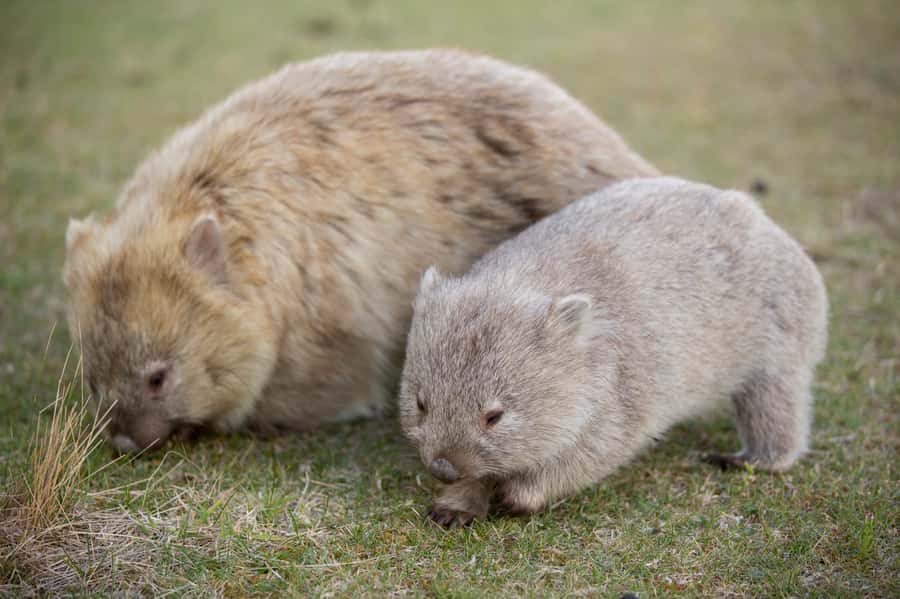
- Wombats in the wild: You have a strong chance of seeing wombats, wallabies, kangaroos, pademelons, Cape Barren geese, and many birds.
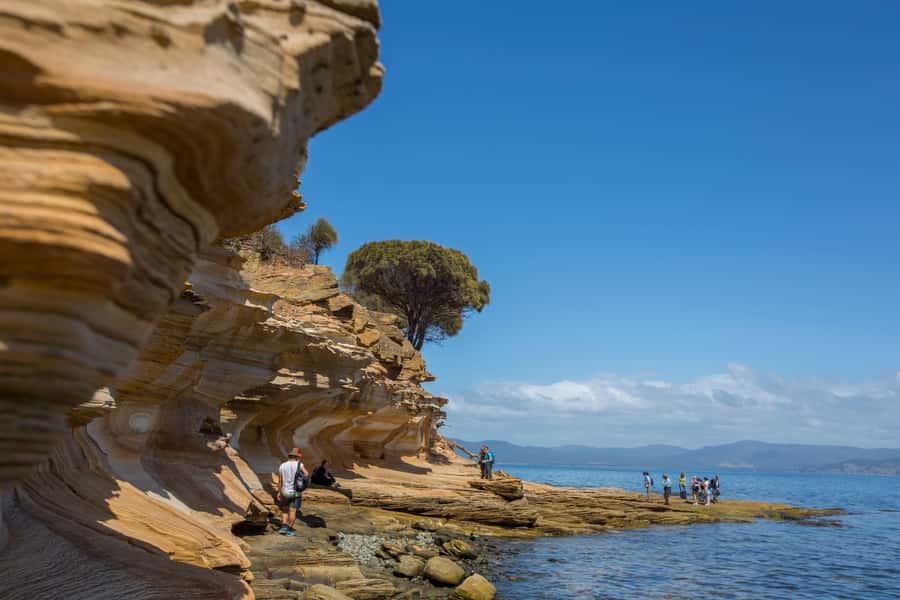
- Two distinct cliff walks: The Painted Cliffs reveal striped sandstone, while the Fossil Cliffs expose fossils around 300 million years old.
- Darlington convict settlement: Explore one of Australia’s best-preserved probation stations in a quiet setting with no vehicles.
- Small-group guiding: Guides including Heather, Hannah, Nick, Trevor, Ben, and Lucas have helped visitors understand the island’s plants, animals, geology, and past.
- A full day outdoors: The early start gives you time for the ferry, historic site, wildlife stops, and roughly 10km of walking.
- Bring your own food: Meals and drinks are not included, so pack lunch, snacks, and enough water for the day.
Why Maria Island feels so different
The trip begins about an hour east of Hobart, followed by a 30-minute ferry ride. That transfer is part of the experience, not just a way to reach the starting point. On the coach, you pass open Tasmanian countryside, with green paddocks, waterways, and grazing sheep and lambs. Then the ferry leaves the mainland behind.
Maria Island has no vehicles, which changes the pace immediately. You hear more wind, birds, and footsteps than engines. The island feels open and quiet, but not empty. Wombats, wallabies, kangaroos, pademelons, and Cape Barren geese move through the same spaces you are exploring.
Wildlife is one of the tour’s biggest draws, but it is still wildlife. You might see several wombats close by, as some groups have, or you might find wallabies and kangaroos but no wombats. Guides such as Ben and Heather are praised for spotting animals, yet no guide can guarantee an encounter. That uncertainty is part of the appeal, so bring patience and keep your distance.
The tour’s two walks give the day a useful shape. One focuses on the Painted Cliffs and the other on the Fossil Cliffs. Between them, you see old buildings, beaches, rock pools, forest, open hills, and broad sea views. You are not simply ticking off one viewpoint and returning to Hobart.
More national park days near Australia:
- Litchfield National Park and Jumping Crocodile Cruise
★ 5.0 · 2,119 reviews - Grampians National Park Small-Group Eco Tour from Melbourne
★ 5.0 · 761 reviews - From Port Arthur: Tasman Island Wilderness Cruise
★ 4.9 · 704 reviews
The early Hobart departure matters
From October 1 through April 30, meet at the Tasmanian Travel and Information Centre at 6:40am for a 6:45am departure. From May 1 through September 30, the meeting time is 7:55am, with departure at 8:00am.
In summer, the early start helps the group fit in the full walking program during longer daylight hours. It also means you need to be organised the night before. The bus leaves promptly because the ferry schedule controls the day, and it cannot wait for late arrivals.
The meeting point is at 20 Davey Street in Hobart. There is no parking at this general meeting point, so arriving by car requires a separate parking plan. The tour normally returns there around 5:00pm, making it easy to plan an evening in Hobart, though I would avoid booking a tight dinner reservation.
Winter uses a later departure and a more flexible plan. Shorter daylight hours mean the guide may adjust the walking options and timing to suit the group and conditions. That is sensible in Tasmania, where wind and rain can quickly change how exposed coastal paths feel.
The ferry crossing to Maria Island
The ferry takes about 30 minutes each way. It is short enough to avoid becoming tiring, but long enough to mark the change from city day trip to island outing.
The water can look remarkably blue in good weather, and the crossing gives you your first views back toward the coast. In wet or windy conditions, the ferry is less scenic and the island may feel much wilder. Pack a jacket even if Hobart begins with sunshine.
Return ferry tickets and the national park fee are included in the $152 price. That is important when judging value. You are paying for transport from central Hobart, the ferry, park access, an English-speaking guide, guided walks, and interpretation, not just a ride to Maria Island.
Darlington brings the past into focus
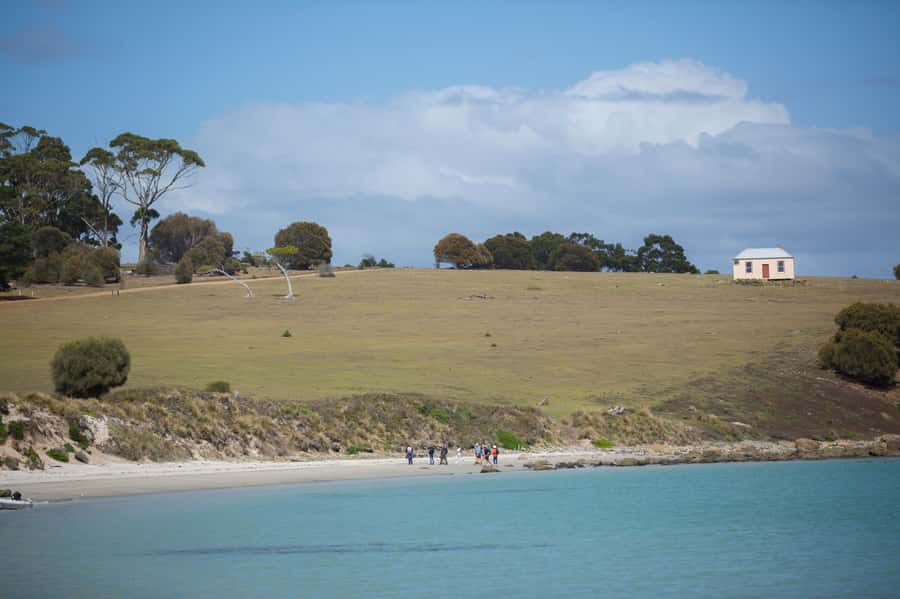
Darlington is the island’s historic heart. The settlement was a probationary convict camp, and its buildings are remarkably well preserved. It is also a UNESCO World Heritage convict site, so the visit adds serious historical weight to what could otherwise be treated as a wildlife and scenery outing.
The value here comes from the setting. You are not looking at a collection of ruins surrounded by modern development. The buildings sit within a quiet island environment where wildlife continues to move around the old settlement. That contrast helps you picture how isolated convict life must have been.
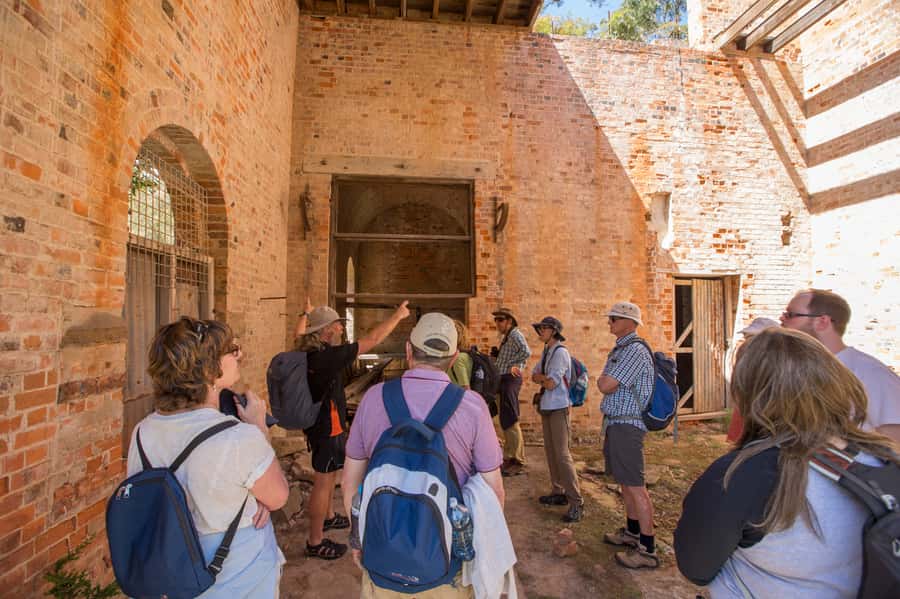
Your guide provides context as you walk among the buildings. Guides such as Trevor and Nick have been singled out for clear storytelling, while Lucas has been praised for explaining the island’s history alongside its wildlife and geology. The quality of the day depends partly on how well your guide connects these subjects, and this tour is strongest when those threads are presented together.
Darlington is also a useful place to slow down before the longer walks. Take time to look at the buildings, notice the spacing of the settlement, and consider how different this place feels from a normal historic town. It is not a museum visit with a packed indoor schedule. The island itself is part of the story.
A few more Australia half-days to weigh up
- From Sydney: Blue Mountains Full-Day Trip
★ 4.5 · 4,471 reviews - Airlie Beach: Whitehaven Full-Day Eco-Cruise with Buffet
★ 4.8 · 2,644 reviews - From Perth: Rottnest Island Full-Day Bike and Ferry Trip
★ 4.7 · 2,548 reviews - From Hervey Bay: K’gari, Fraser Island Full-Day Coach Tour
★ 4.6 · 2,328 reviews
Painted Cliffs: colour, sandstone, and tide pools
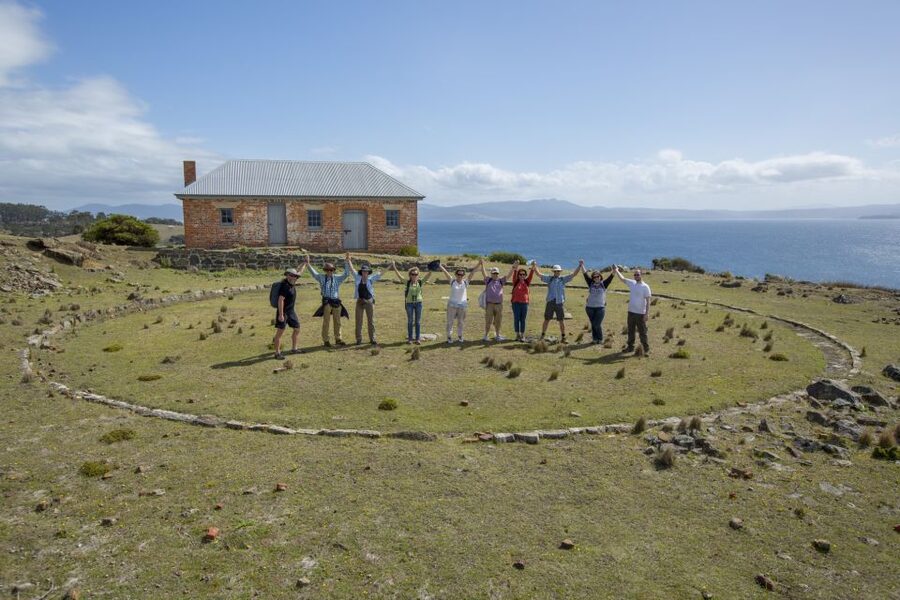
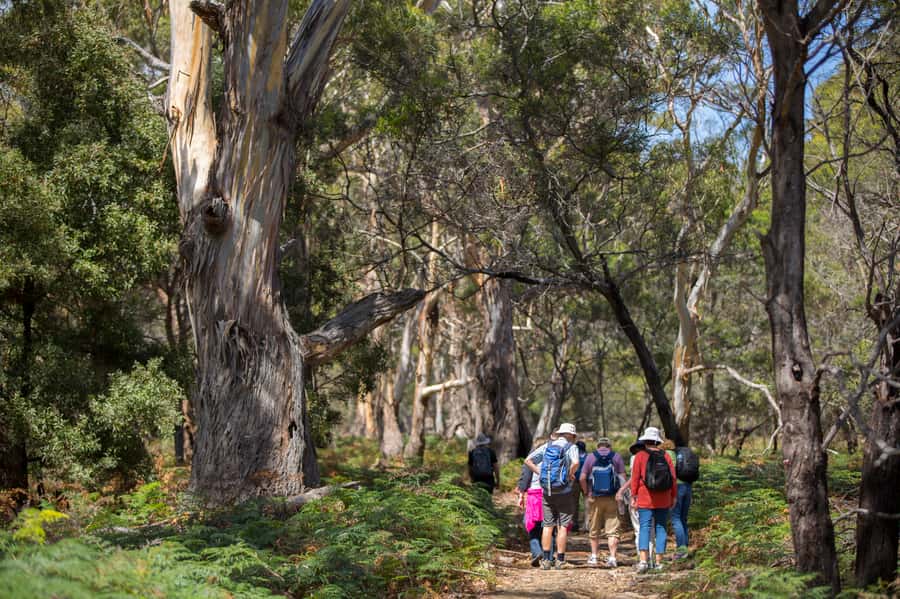
The walk to the Painted Cliffs covers about 4.5 kilometres round trip. It is described as easy, but easy does not mean paved or completely flat. Expect unsealed ground, small hills, and sections where comfortable walking shoes matter.
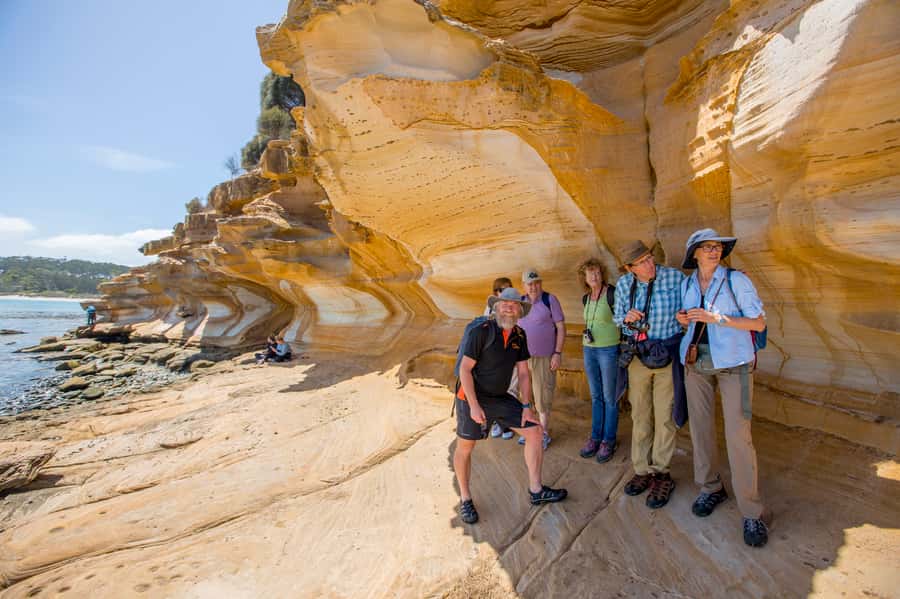
The cliffs are made of colourful, naturally marked sandstone. Their bands and swirls become most striking from close range, so this is not a stop where you simply take one photograph and leave. The rock formations change as you move along the shore, and the low coastal setting gives you time to study details.
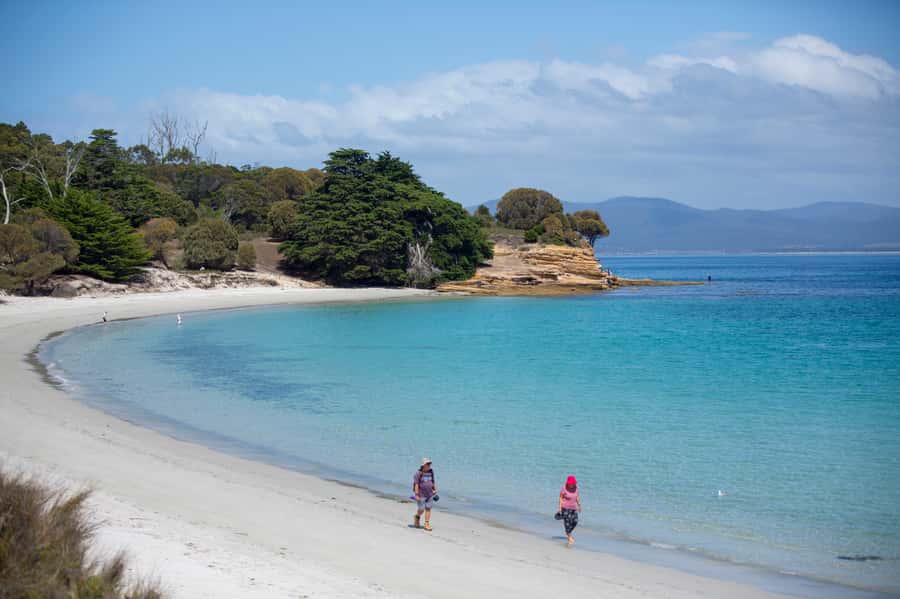
The walk can also include beaches and rock pools. If conditions and timing allow, you may have opportunities to pause near the water and look closely at the shoreline. Keep your daypack light, since you will carry everything between stops.
This part of the route is a good match for people who want scenery without a strenuous mountain hike. It still requires steady movement over natural ground, and wet weather can make any unpaved walk feel harder. Wear closed-toe shoes with a secure sole, not casual sandals.
Fossil Cliffs and 300 million years of geology
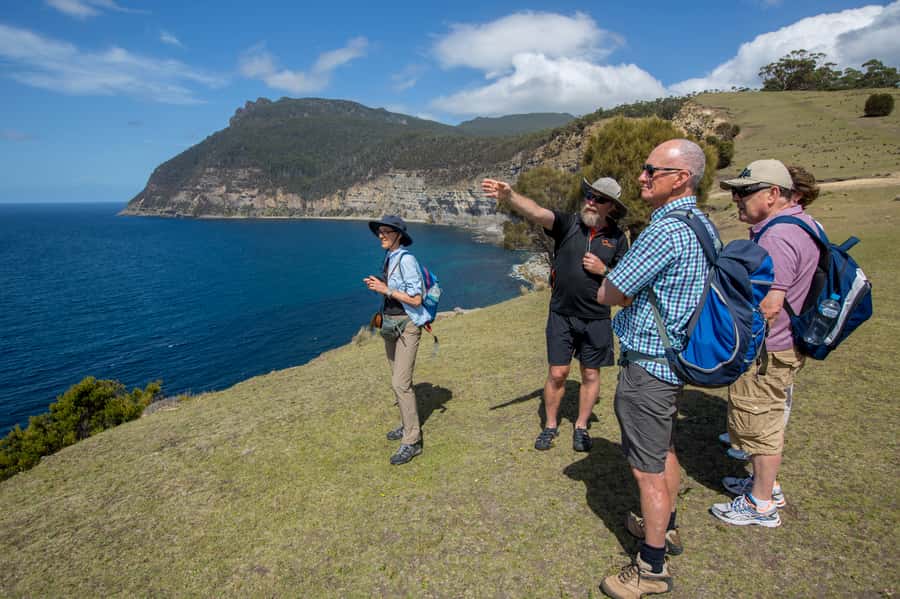
The Fossil Cliffs walk adds a different kind of interest. It is another easy circuit of about 4.5 kilometres, crossing the western side of the island over windswept hills and coastal cliffs.
Here the main attraction is not colour but exposed fossils. The fossils date back around 300 million years, giving you a direct look at the island’s geological past. Your guide helps explain what you are seeing and why these formations are important, which makes the walk more meaningful than a simple coastal stroll.
The Fossil Cliffs section is also where the weather may be felt most clearly. Wind can temper the views, and exposed hills offer little shelter. One group still had a fine day in rain, while another found strong wind affected the outing. I would pack layers rather than trust the morning forecast.
The two cliff walks are mostly easy, with some small inclines. One spring group described the route as manageable with only one short incline, but the total distance remains substantial. If you are comfortable walking 10 kilometres in a day and handling uneven ground, the program should be within reach. If you prefer short walks with long café breaks, this is the wrong tour.
Wildlife is the real star, but keep expectations sensible
Maria Island is famous for its animals, and the tour gives you many chances to see them. Wombats are often the emotional highlight. Several groups saw two, three, or even four wombats, sometimes close enough for excellent photographs. Baby wombats have also been spotted.
You may also see kangaroos, wallabies, pademelons, possums, Cape Barren geese, bandicoots, and a wide range of birds. Tasmanian devils live on the island as well, though a sighting is not assured. The guide’s sharp eyes help, especially when looking along the track edges, in open grass, around trees, or near the historic settlement.
I appreciate that the better guides treat wildlife as living animals rather than photo props. Ben, for example, has been praised for encouraging respect for the outdoors while still helping the group find wombats. Follow that approach: watch quietly, leave space, and do not chase an animal for a closer picture.
The quiet setting helps here. Without vehicle traffic, animals can appear beside paths and buildings. Still, do not measure the tour only by the number of species you see. The geology, history, and coastal scenery give the day value even if the wombats stay hidden.
How the small-group format affects the day
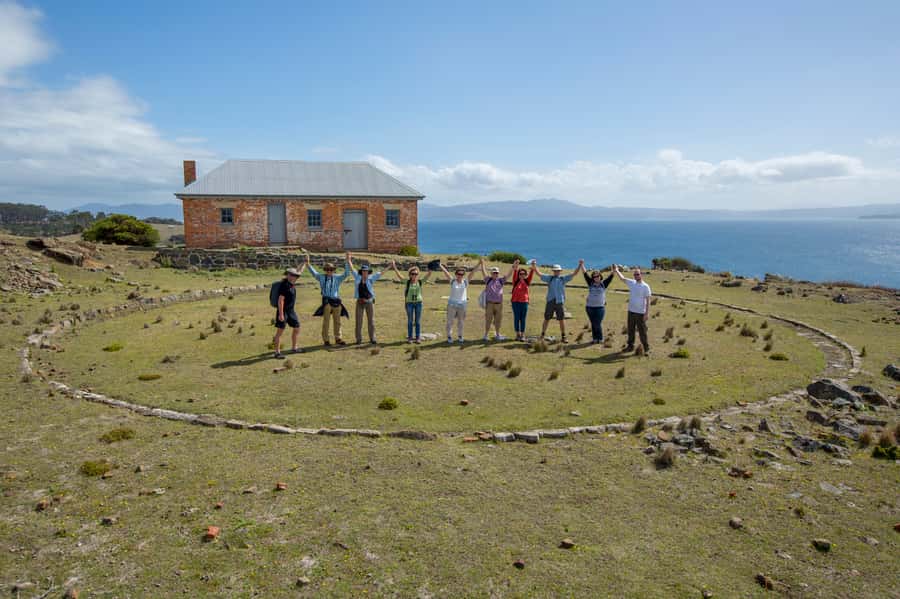
The tour is designed as a small-group experience. Group size can vary, but one January outing had only six people and felt almost private. A smaller group makes it easier to hear the guide, ask questions, stop for photographs, and move at a sensible pace.
It also allows the guide to offer choices. Hannah was praised for giving the group several options during the day, while the winter format is specifically designed to adjust to the group’s pace and weather. That flexibility is useful on an island where wind, rain, daylight, and wildlife sightings all affect the best plan.
There is one tradeoff. A group moves at the pace of its slowest member, and one spring departure lost some lunch time because a couple of people held everyone up. If you need a longer rest, tell the guide early. The day has ferry timings and two substantial walks to fit into roughly ten hours.
Food, water, and what to pack
Meals and drinks are not included. Bring lunch, snacks, and plenty of water in a reusable bottle. One person specifically wished that the tour supplied at least water, noting that carrying too much was inconvenient. That is a fair practical concern, but you should assume self-sufficiency for the day.
Take a small daypack, not luggage or a large bag. You will be walking across varied terrain, and anything bulky becomes a nuisance on the ferry and trails.
Your packing list should include:
- Comfortable closed-toe walking shoes
- Water and a reusable bottle
- Packed lunch and snacks
- Sunscreen and a hat
- A jacket and weather-appropriate layers
- Comfortable outdoor clothing
- A small daypack
Tasmanian weather can shift quickly, particularly on exposed coastal sections. Layers are more useful than one heavy item. Even in warmer months, keep a jacket handy.
Is $152 good value?
At $152 per person, this is not the cheapest way to visit Maria Island, but the cost covers the main pieces that make the day possible: return coach transport from Hobart, both ferry crossings, the national park fee, a guide, and guided walks with interpretation.
The value is strongest if you do not have a rental car, do not want to coordinate the ferry yourself, or want historical and wildlife context rather than simply arriving and walking alone. The guide also handles the day’s timing, which matters when a ferry and a 5:00pm return are involved.
The price feels less attractive if you already have transport and prefer to set your own pace. You also need to buy or bring your own food and drinks, so budget for that separately. Still, the combination of transport, access, wildlife spotting, Darlington, and two cliff walks makes the package reasonable for an active full-day outing.
The 4.8 rating from 166 reviews and the 88 percent perfect transport score point to a well-run operation, but I would focus less on the number and more on the tour’s clear strengths: guides, organisation, wildlife, and the amount covered in one day.
Who should book this tour?
I would recommend it to you if you want a full day outside and enjoy mixing nature with culture. It suits couples, solo visitors, families with children aged eight and over, and anyone visiting Hobart without a car.
It is especially good for wildlife seekers who also want a proper walk. The tour is not built around a quick animal sighting from a bus window. You walk through the places where animals live, then continue to cliffs, beaches, historic buildings, and exposed geology.
It is less suitable for anyone with a mobility impairment, wheelchair users, or people who find 10 kilometres of unpaved walking too demanding. Children under eight cannot participate. Older walkers may manage the route, but allow yourself to set a steady pace and tell the guide if you need a pause.
My verdict on the Maria Island day tour
Book this tour if your ideal Tasmania day includes wombats, quiet beaches, old convict buildings, colourful sandstone, ancient fossils, and a meaningful amount of walking. The island gives you several strong experiences in one place, and the small-group guide adds context that you would miss by rushing between viewpoints.
Skip it if you want a relaxed ferry ride with only a little walking, a guaranteed wombat sighting, or included meals. For everyone else, the mix is unusually good: the ferry gets you there, the guide brings the island into focus, and your feet take you through the best parts of Maria Island.
FAQ
How long is the Maria Island tour from Hobart?
The tour lasts about 10 hours and normally returns to the Tasmanian Travel and Information Centre around 5:00pm.
Where does the tour start?
The meeting point is the Tasmanian Travel and Information Centre at 20 Davey Street, Hobart.
What time does the tour leave in summer?
From October 1 through April 30, meet at 6:40am for a prompt 6:45am departure.
What time does the tour leave in winter?
From May 1 through September 30, meet at 7:55am for a prompt 8:00am departure.
How long is the ferry ride?
The ferry takes about 30 minutes each way.
How much walking is involved?
The tour includes approximately 10 kilometres of walking across varied, unpaved terrain. The Painted Cliffs and Fossil Cliffs walks are each about 4.5 kilometres.
What animals might I see?
Possible sightings include wombats, wallabies, kangaroos, pademelons, Cape Barren geese, possums, bandicoots, birds, and Tasmanian devils. Sightings are not guaranteed.
Are food and drinks included?
No. You need to bring your own food and drinks, including enough water for the walking day.
What is included in the price?
The $152 price includes the national park fee, return ferry tickets, transport, an English-speaking guide, a small-group experience, and guided walks with interpretation.
Can children join the tour?
Children must be at least eight years old. The tour is not suitable for children under eight, wheelchair users, or people with mobility impairments.
Just added around Australia
- 7-Day Super Value Tour of Tasmania: Explore Tasmania’s West and East Coasts★ 5.0 · 77 reviews
- Hobart: Bruny Island Adventure: Hiking, Highlights & Local tastes★ 4.0 · 23 reviews
- Cascades Female Factory Historic Site [official]★ 4.5 · 110 reviews
- A Day At Wineglass Bay★ 5.0 · 33 reviews
- 5-Day Best of Tasmania Tour from Hobart★ 5.0 · 184 reviews
- 6-Day Tasmanian Explorer Adventure Tour from Hobart★ 5.0 · 66 reviews
- 4 Day Wild Tasmania Tour / Wildlife, Nature, Hiking / Inc. Accom★ 5.0 · 126 reviews
- Bonorong Wildlife Park and Richmond Afternoon Tour from Hobart★ 4.5 · 113 reviews
National Parks, compared.
Litchfield National Park and Jumping Crocodile Cruise
Read our review →
Grampians National Park Small-Group Eco Tour from Melbourne
Read our review →
From Port Arthur: Tasman Island Wilderness Cruise
Read our review →
Blue Mountains National Park Tour with River Cruise
Read our review →
From Hobart/Adventure Bay: Bruny Island Wilderness Cruise
Read our review →
Port Arthur Full-day Guided Tour with Harbour Cruise and Tasman National Park
Read our review →
Bruny Island Wilderness Coast Eco Cruise with Lunch
Read our review →Browse the lists this tour appears in