
Review · CAIRNS TOURS
Cairns History Walking Tour
Cairns is more than a launch pad for reef trips. This compact walk traces the city from a meeting place used by Traditional Owners to a colonial port shaped by gold, shipping, Chinese workers, war, and tourism. You’ll hear about 40,000 years of human history, then connect it to buildings and street art you might otherwise pass without noticing.
I like the small maximum group of 12, which gives the guide room to answer questions, and I like the mix of subjects. Indigenous culture, architecture, the gold rush, pirates, the opium trade, World War II, and local food tips all enter the story. Guides Peter and Georgia are named in recent feedback, and both bring a personal, conversational approach.
The main drawback is the short length. With about 1.5 hours and several stops, each place receives only a brief explanation. This is an excellent introduction to Cairns, but not a substitute for a museum visit or a longer specialist history tour.
Key points to know before you book
- Cairns Museum is the starting point: Meet at 93/105 Lake Street, then finish back at the same place.
- The group is capped at 12 people: That makes questions and conversation easier than on a large coach tour.
- The route covers more than famous sights: Expect Indigenous art, colonial buildings, Chinatown, wartime history, old hotels, and reef and rainforest stories.
- The walk takes about 90 minutes: The pace is described as easy, but you’ll spend most of the time outdoors.
- Guides add practical local advice: Peter and Georgia have pointed people toward coffee, dining, and shopping spots as well as historical sites.
- Weather matters: Poor conditions can lead to a new date or a full refund, and you can cancel free up to 24 hours before the start time.
Why Cairns history makes a good first-day walk
Cairns is often treated as a jumping-off point for the Great Barrier Reef and the Wet Tropics. That is understandable, but it leaves out the city’s older and less obvious stories.
This walk gives you a useful base before you head offshore or into the rainforest. You learn how Traditional Owners and colonial settlers used the area, how government took shape, and how trade and migration changed the town. The focus is not only on grand buildings. It also includes street art, memorials, former hotels, and ordinary public places that still show how Cairns grew.
I especially like the way the route connects local history with larger Australian themes. The guide discusses colonialism directly, along with the Chinese role in Cairns, early government, wartime life, and the relationship between the reef and rainforest. The result is a broader view of the city than you get from simply walking the Esplanade.
The group size matters here. A maximum of 12 means you are not trying to hear a guide over a crowd. The format also suits questions, which can be useful when a subject such as the opium trade or Indigenous art raises issues you want explained in plain language.
More history-led days in Cairns:
- Snorkel & Dive the Reef: Sustainable, Scientific & Cultural Tour
★ 4.5 · 841 reviews - Entry Ticket at Historic Village Herberton
★ 5.0 · 114 reviews - Authentic Indigenous Cultural Tour Including Scenic River Cruise
★ 5.0 · 88 reviews
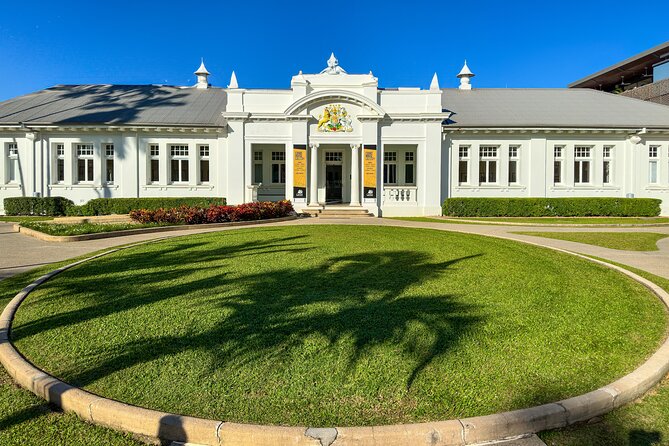
Starting at Cairns Museum and the first meeting place
The tour begins outside Cairns Museum on Lake Street. This is a practical meeting point in the city center, and the walk returns here at the end, so you do not need to arrange a second pickup.
The opening stop sets the tone. You’ll discuss the area as a meeting place for Traditional Owners and colonial settlers. That matters because it places Cairns in a human setting before the guide moves into buildings, trade, and civic history.
The stop lasts about 10 minutes, so expect an introduction rather than a full museum session. Admission to the stops is free, but the tour does not appear to include time inside the museum galleries. If you want the museum’s exhibits as well, plan a separate visit.
Starting here also helps you get your bearings. Cairns is easy to navigate in the central area, but a guide gives you an immediate sense of how the main streets and landmarks fit together.
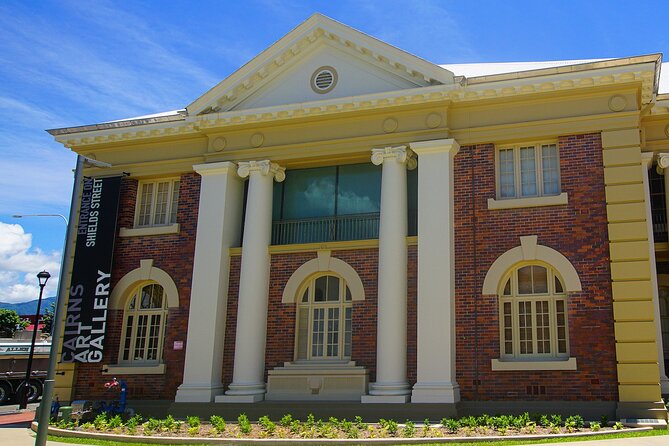
Cairns Art Gallery, Shields Street, and the colonial story
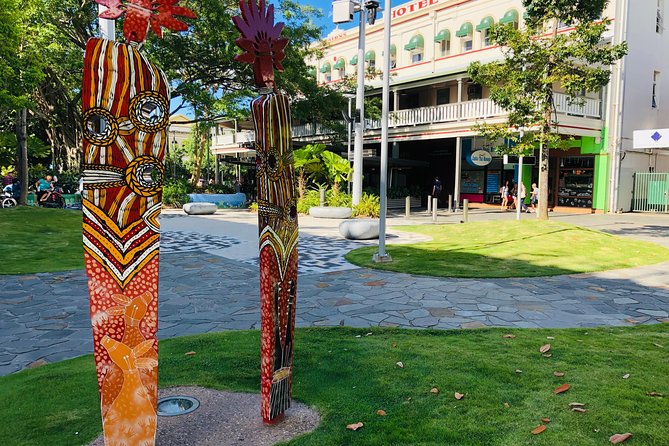
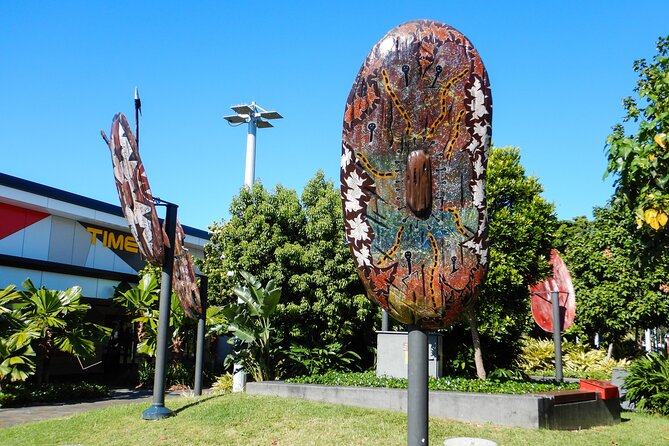
At Cairns Art Gallery, the guide points out the traditional Aboriginal shields street art on Shields Street by Paul Bong. This gives the tour a visible connection to Indigenous culture rather than treating it as a subject that exists only in the distant past.
The discussion then moves through the gold rush and the establishment of the colony. You’ll also hear about the Public Curators building, now associated with Cairns Regional Gallery. This is one of the stronger stops for architecture because the building itself becomes part of the explanation.
Ten minutes is enough to identify the key details and explain their place in Cairns history. It is not enough for a close study of the artwork or a full gallery visit. Still, the combination of public art, architecture, and colonial history gives you several ways into the subject.
I would pay close attention here if you care about how modern Cairns presents its past. The stop links contemporary Aboriginal artwork with the city’s older civic buildings, which helps avoid a narrow story based only on European settlement.
The Esplanade Lagoon and the story of reef and rainforest
The Esplanade Lagoon provides a change of setting and a chance to connect the city with the natural attractions that bring most people to Cairns.
Here, the guide discusses the Great Barrier Reef and the rainforest as World Heritage Sites. You’ll also hear about early settlers and pirates. That combination may seem unusual at first, but it shows that Cairns developed through both its natural setting and the people who passed through its port.
The lagoon is a public outdoor place, so this stop can feel more open and relaxed than the building-focused sections of the walk. It also helps explain why Cairns became important as a regional center. The tour does not take you onto the reef or into the rainforest, but it gives those places a human and historical context.
Because the stop lasts about 10 minutes, the treatment is necessarily broad. If you want detailed ecology or marine science, choose a dedicated reef or rainforest outing. For a city history walk, this is a useful bridge between Cairns itself and the wider tropical north.
More walking tours in Cairns:
- Night Walk in Cairns Botanic Gardens – Let’s Go Buggin
★ 5.0 · 153 reviews - Cairns: Night Walk in Cairns Botanic Gardens
★ 4.8 · 86 reviews - Sydney Opera House Official Guided Walking Tour
★ 4.5 · 3,770 reviews - From Sydney: Blue Mountains Tour with Waterfall Walk & Lunch
★ 4.8 · 2,400 reviews
Early government at the Mulgrave Shire building
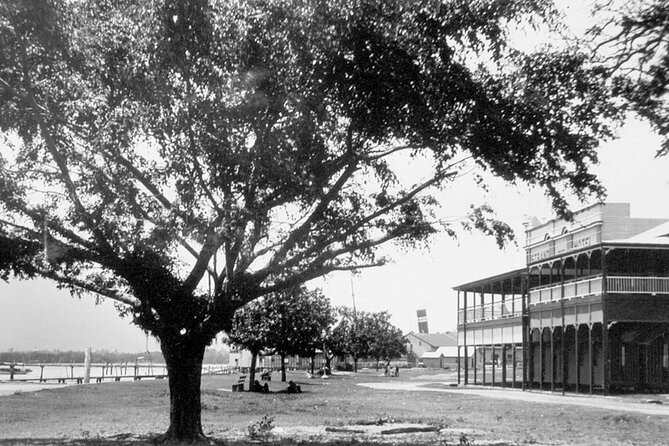
The next stop is outside the Cairns Tourist Information Centre, in front of the Mulgrave Shire building. This was the original local government headquarters for the colony.
This part of the route explains how early government operated in Cairns. The subject is less immediately colorful than pirates or Chinatown, but it is important. Local government shaped roads, public services, planning, and the basic form of the town you see today.
I find this kind of stop valuable because it explains why a building matters beyond its appearance. The guide is not simply pointing out an old facade. You are learning what happened there and how civic authority developed.
Again, expect a short explanation of around 10 minutes. The stop will suit you if you like the practical side of history, including how a settlement became an organized town. If you prefer only dramatic stories, this may be one of the quieter sections.
War memorials beside the Reef Hotel Casino
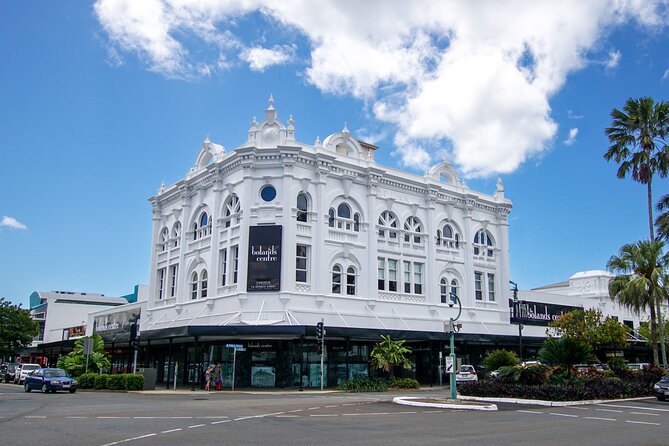
The route then reaches the war memorial beside the Reef Hotel Casino. Here the subject turns to the role of war in Cairns life, with special attention to World War II.
This is a useful reminder that Cairns was not shaped only by tourism and trade. Wartime events affected the city, its people, and its place in the region. The memorial offers a physical point for that discussion, while the nearby casino shows how the same part of town has changed over time.
The juxtaposition is part of what makes a walking tour work. You are not studying history in isolation. Old memories, later development, and present-day businesses occupy the same few streets.
The explanation lasts about 10 minutes. The guide can give you the local outline, but this is not a dedicated military history experience. If World War II is your main interest, treat this as an introduction and ask the guide questions while the group is there.
The Chambers, Bolands Centre, and old commercial Cairns
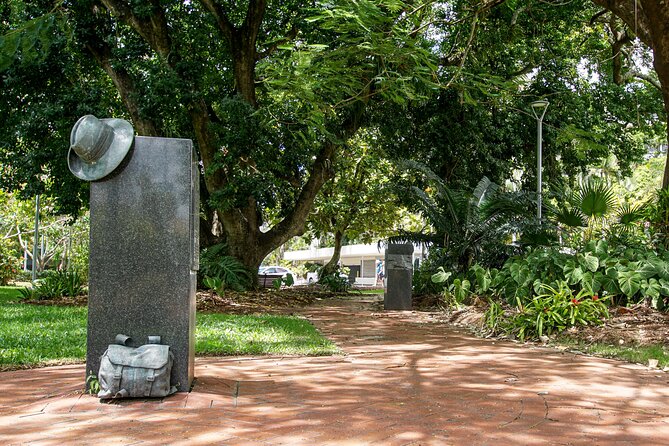
At The Chambers, the guide uses the view toward the Bolands Centre to explain Cairns’ first department store. You’ll also hear about the Adelaide Steamship Company and the Central Hotel.
This is one of the best stops for understanding commercial Cairns. Department stores, shipping companies, and hotels reveal how goods, people, and money moved through the young settlement. The stories help you picture a town that depended on trade and transport long before it became a base for reef excursions.
The Bolands Centre is especially useful as a reference point because it lets the guide bring several businesses into one explanation. You do not need to enter every building to understand the roles they played.
Allow about 10 minutes here. The information comes quickly, so listen for the links between shipping, retail, and accommodation. The guide’s job is to make these separate names part of one clear story about the town’s early economy.
Chinatown on Grafton Street
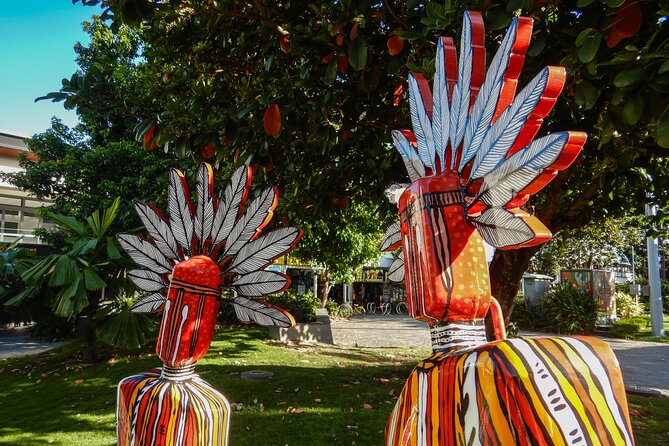
At Crystal Ball Bookstore, the walk pauses at the Chinatown exhibit in front of the shop. This section explores the important role of Chinese people in Cairns history and explains why Grafton Street was the heart of Chinatown.
For many people, this will be one of the most revealing stops. A city’s history can look mainly colonial when you focus only on government buildings and European businesses. The Chinatown exhibit widens the view and shows how migration, trade, and community life helped shape Cairns.
The stop lasts about five minutes, making it the shortest on the route. That is enough for a focused explanation, but not enough to cover every part of Chinese Cairns. If this subject interests you, note the location and consider returning later for a slower look.
The bookstore setting also gives the stop a different feel from the civic buildings and memorial. It is a small public exhibit rather than a large formal attraction, and that suits the walking tour’s approach: look closely at what is already in the street.
Hides Hotel and the return to the museum
The walk finishes near Hides Hotel and returns to the Cairns Museum meeting point. The final discussion covers the School of Arts, its role in the founding colony, and the history of Hides Hotel.
Early hotels were important meeting places in colonial towns. They were tied to travel, business, conversation, and public life, so this stop rounds out the tour’s picture of how Cairns functioned in its early years.
Ending at the starting point is convenient. You can continue into the museum, walk to a meal, or use the guide’s suggestions for coffee and shopping. One person specifically appreciated Georgia’s local recommendations, while comments about Peter describe him as clear, engaging, and well informed about Cairns and the Great Barrier Reef.
The final five minutes are brief, but they leave you with a practical sense of what to explore next. That is a good role for a city walk. It should not try to tell you everything. It should help you notice more once you continue on your own.
What the $37.98 price gives you
At $37.98 per person, this is not the cheapest way to walk around central Cairns. You could follow the same streets without a guide and pay nothing. The value comes from the explanations, the links between sites, and the chance to ask questions in a small group.
The price makes the most sense if you are new to Cairns or have only a short time in town. In 90 minutes, you cover eight locations and several major themes without committing half a day. You also get context that is hard to pick up from signs alone, especially around Indigenous culture, Chinese history, early government, and the city’s wartime role.
The value is less clear if you already know Cairns well or plan to spend substantial time in its museums. In that case, the tour may repeat some familiar material. Even then, the route can help connect separate buildings and exhibits into one story.
Because the walk is booked on average 34 days ahead, it is sensible to reserve early if your dates are fixed. The 98 percent recommendation rate and 4.9 rating from 52 reviews suggest a strong record, though the short format remains the main limitation.
Who will enjoy this walk most
I would choose this tour for a first visit to Cairns, especially if you want more than reef logistics. It suits couples, solo visitors, families with older children, and anyone who likes history explained while walking through the real city.
It is also useful at the start of a stay. The guide may point out places to eat, shop, or stop for coffee, and you finish back in the central area with a better sense of direction.
The walk is suitable for most people, and service animals are allowed. It is near public transportation, but no private transfer is provided or needed according to the stated meeting arrangement. You should be comfortable spending about 1.5 hours outdoors and moving between several central locations.
The compact schedule favors people who want a clear introduction. If you want long pauses, extensive museum time, or a specialist focus on one subject, choose a longer experience instead.
Weather, cancellation, and practical planning
This is an outdoor walking experience, so weather can affect the schedule. If poor weather causes cancellation, you’ll be offered another date or a full refund. The experience also requires a minimum number of participants, with the same choice of another date, another experience, or a refund if that minimum is not met.
You can cancel for a full refund up to 24 hours before the start time. Changes or cancellations inside that 24-hour window are not accepted for a refund, and the cut-off uses local Cairns time.
The mobile ticket keeps entry simple. There are no admission charges for the listed stops, but remember that this is a guided outdoor walk rather than a package including museum admission, food, transport, or reef activities.
Should you book the Cairns History Walking Tour?
Book it if you want to understand Cairns before heading to the reef, and if you value local stories over a checklist of sights. The strongest parts are the small group, the range of subjects, and the way the guide links Indigenous culture, colonial development, Chinatown, war, shipping, and old hotels.
Skip it if you want a long museum visit, detailed natural science, or a full-day history program. The explanations are short because the tour covers a lot of ground.
For most first-time visitors, I think the $37.98 is fair. You get a focused introduction, practical local pointers, and a better reason to look twice at the streets around you. Just keep your expectations in line with the 90-minute format: this is a smart orientation to Cairns, not the final word on its past.
FAQ
Where does the Cairns History Walking Tour begin?
The tour begins at Cairns Museum, 93/105 Lake Street, Cairns City, Queensland 4870.
Where does the tour finish?
The activity ends back at the Cairns Museum meeting point.
How long does the walking tour take?
Plan for approximately 1 hour and 30 minutes.
What is the maximum group size?
The tour accepts a maximum of 12 participants.
How much does the tour cost?
The listed price is $37.98 per person.
What places are visited?
The route includes Cairns Museum, Cairns Art Gallery, the Cairns Esplanade Lagoon, Cairns Tourist Information Centre, the Reef Hotel Casino, The Chambers, Crystal Ball Bookstore, and Hides Hotel.
Does the tour include museum admission?
The listed stops have free admission. The tour information does not state that museum entry or a separate gallery visit is included.
Are service animals allowed?
Yes, service animals are allowed.
Is the tour accessible by public transportation?
Yes, the meeting area is near public transportation.
Can I cancel for a refund?
Yes. You can cancel at least 24 hours before the start time for a full refund. Cancellations or changes made less than 24 hours before the start time are not accepted for a refund.
Just added around Cairns
- Ultimate Great Barrier Reef and Rainforest 45-minute Helicopter Tour★ 5.0 · 59 reviews
- Night Walk in Cairns Botanic Gardens – Let’s Go Buggin★ 5.0 · 153 reviews
- Paronella Park and Millaa Millaa Falls Full-day Tour from Cairns★ 5.0 · 47 reviews
- Port Douglas Sunday Markets Day Tour★ 4.0 · 25 reviews
- Full Day Tour to Sunlover Cruises Moore Reef and Fitzroy Island★ 4.0 · 31 reviews
- Full-day Tour at the Atherton Tablelands with Food Tasting★ 5.0 · 30 reviews
- Small-Group Afternoon Cairns City Tour with Harbour Dinner Cruise★ 4.5 · 32 reviews
- Skyrail Rainforest Cableway Day Trip from Cairns★ 4.5 · 228 reviews
Cairns Tours, compared.

Great Barrier Reef Snorkeling and Diving Cruise from Cairns
Read our review →
Great Barrier Reef Cruise by Premium Catamaran
Read our review →
Self-Guided Kuranda Trip with Train and Skyrail
Read our review →
Passions of Paradise Great Barrier Reef Cruise by Catamaran
Read our review →

Outer Edges of The Great Barrier Reef Scenic Flight
Read our review →
Cape Tribulation, Mossman Gorge, and Daintree Rainforest Day Trip
Read our review →
Ocean Freedom Great Barrier Reef Luxury Snorkel and Dive Cruise
Read our review →Browse the lists this tour appears in