
Review · SYDNEY TOURS
Australian National Maritime Museum: See It All Ticket
A submarine, a naval destroyer, and tall ships tied up beside Darling Harbour make the Australian National Maritime Museum more than a building full of display cases. You can walk through working vessels, study Australia’s connection to the sea, and then step into galleries ranging from naval history to ocean photography. I like the floating fleet because it turns maritime history into something you can feel under your feet. I also like that the $23 ticket covers the full day, including special exhibitions and Action Stations.
The main catch is time. The museum is large enough to fill a day, and the last vessel boarding is at 3:10pm, or 4:10pm during NSW school holidays. Comfortable shoes matter, and high heels are not allowed aboard. If you arrive late or try to squeeze the museum between other Darling Harbour plans, you may see only part of it.
Key points at a glance

- Board a Cold War submarine and see how tight life at sea could be.
- Explore a naval destroyer and learn more about the Royal Australian Navy through Action Stations.
- Step aboard HMB Endeavour and Duyfken, replicas tied to major moments in Australian maritime history.
- See six permanent galleries plus temporary exhibitions included in the ticket.
- Make time for Ocean Photographer of the Year, a visual look at the beauty and fragility of the oceans.
- Reach the museum easily from central Sydney, with a 20 to 30 minute walk, ferry access, and discounted all-day parking.
Darling Harbour gives the museum a useful setting
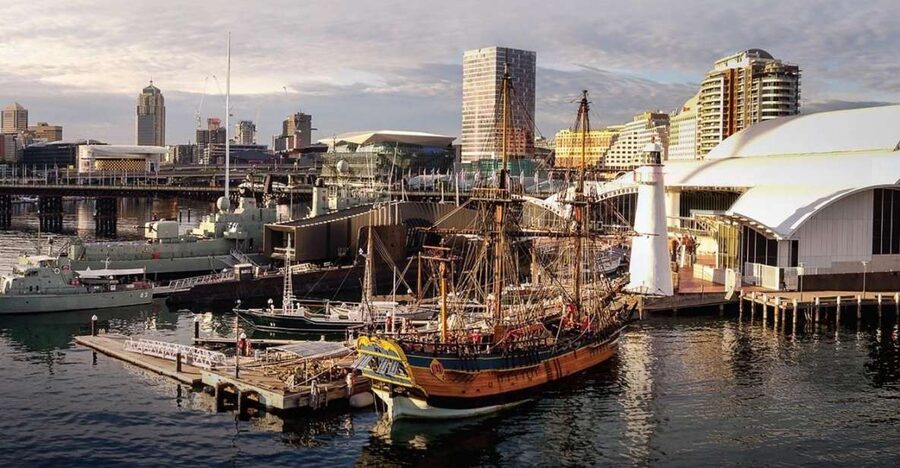
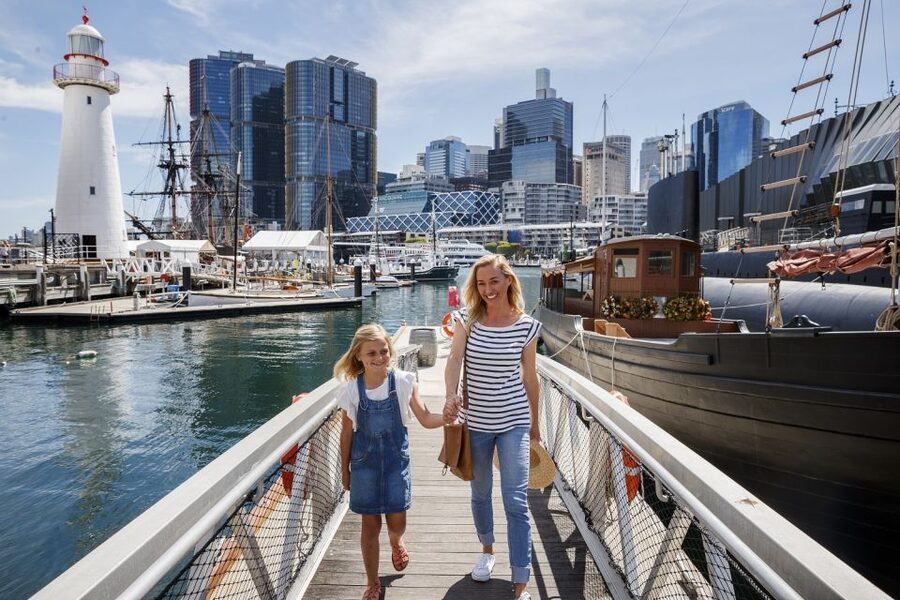
The museum sits at 2 Murray Street on the Darling Harbour waterfront, a short walk from Sydney’s CBD. That location helps you build a simple day around the visit. You can arrive on foot, look across the harbour toward the city, and stop at the waterfront café without adding another transfer to your schedule.
From Town Hall, allow 20 to 30 minutes on foot and cross Pyrmont Bridge. From Central Station, the walk takes you through Chinatown and Darling Harbour. The F4 Darling Harbour Loop ferry also stops at Pyrmont Bay Wharf beside the museum, with services running about every half hour. This is a pleasant option if you are already near Circular Quay, Barangaroo, Balmain, or the other stops on the route.
Drivers can use Harbourside Car Park at 100 Murray Street, Pyrmont. Museum visitors can park all day for $15, but you need to have your parking ticket stamped at museum reception. That makes the museum a practical choice for a family arriving by car, though public transport is likely simpler for most central Sydney stays.
More museums and galleries in Sydney:
- Sydney Cricket Ground (SCG) and Museum Walking Tour
★ 4.9 · 616 reviews - Bundaberg Rum Behind The Scenes Distillery Tour And Museum Experience
★ 5.0 · 724 reviews - ArtVo Immersive Gallery Experience
★ 4.5 · 423 reviews
Start with the vessels before the galleries
I would begin outside at the wharves, especially if you arrive in the morning. The museum’s fleet is one of the most varied in-water collections in the world, and the ships give you an immediate sense of the scale of maritime work.
The vessels are not just decoration around the museum. Each one tells a different story about travel, war, exploration, technology, and daily life at sea. You can move from a compact submarine to a much larger warship, then compare both with the tall ships that depended on wind and sail.
Plan around the boarding times rather than leaving the ships until the end. The regular last boarding time is 3:10pm, which can catch you out if you spend the first few hours in the galleries. During NSW school holidays, boarding runs later until 4:10pm. Even then, give yourself time for queues, narrow passageways, and the walk between vessels.
The submarine shows the cramped side of sea life
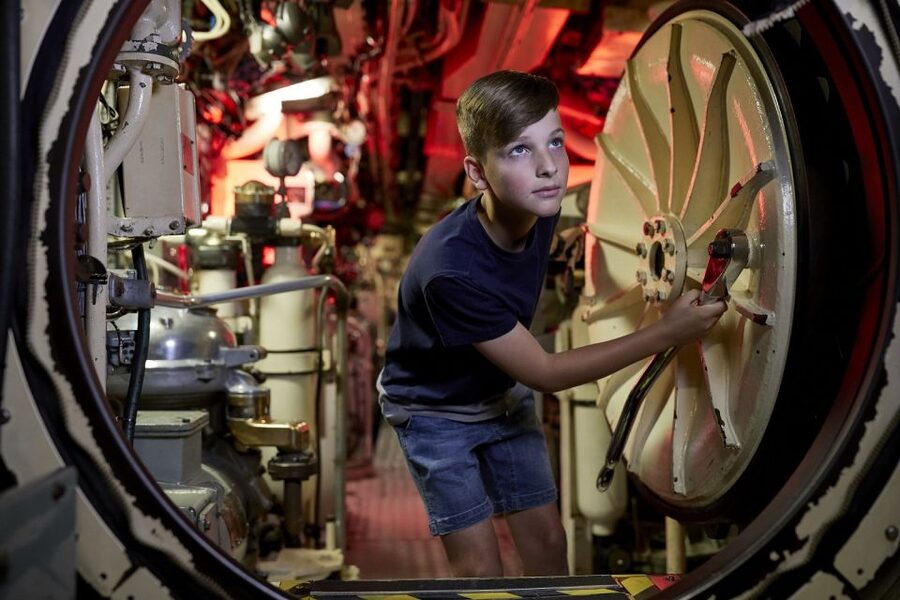
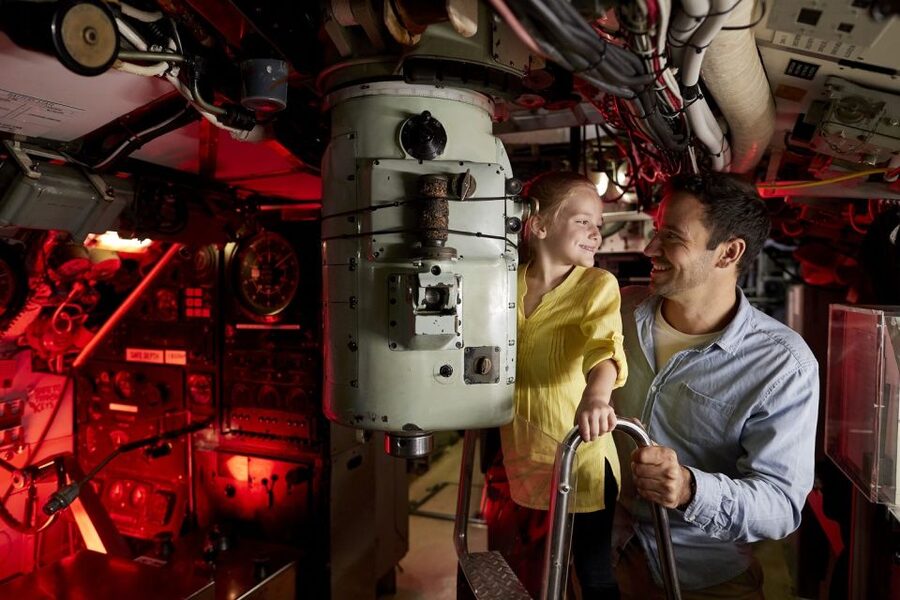
The Cold War submarine is likely to be one of the most memorable parts of the day. Its appeal is simple: you are not looking at a model behind glass. You are walking through the actual type of confined environment where crews worked and lived beneath the sea.
Expect narrow spaces and a layout that requires careful movement. The submarine is especially good for showing the practical side of naval service, where every corridor and piece of equipment had a purpose. If you dislike tight spaces, you may prefer to spend less time aboard and focus on the destroyer and galleries instead.
For families, the submarine can turn abstract history into a physical experience. Children can see how little room there was, while adults can better understand the demands placed on crews. Wear flat, comfortable shoes, and take your time rather than trying to rush through.
The destroyer and Action Stations add naval context
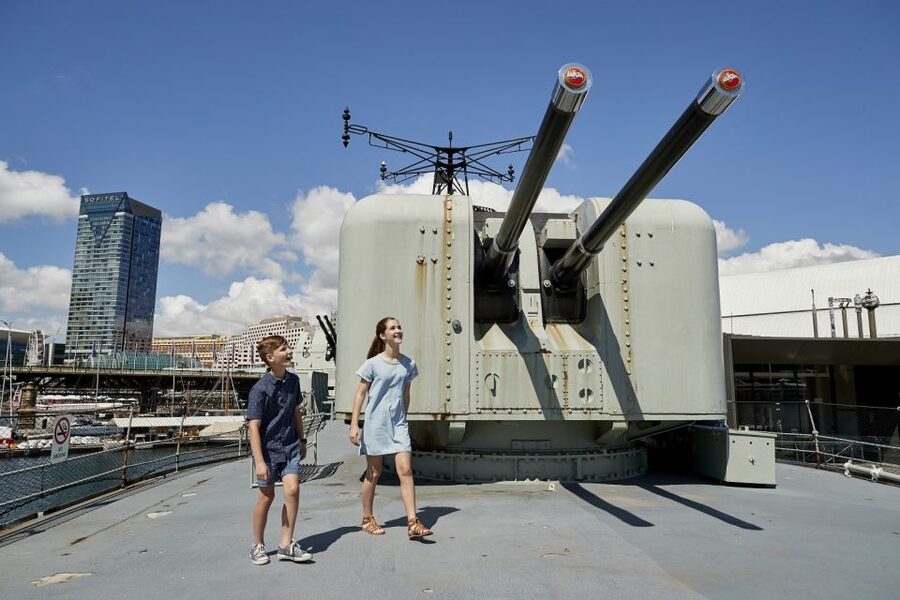
The naval destroyer provides a useful contrast to the submarine. It gives you more room to move and a different view of military life at sea, from the size of the ship itself to the systems needed to operate it.
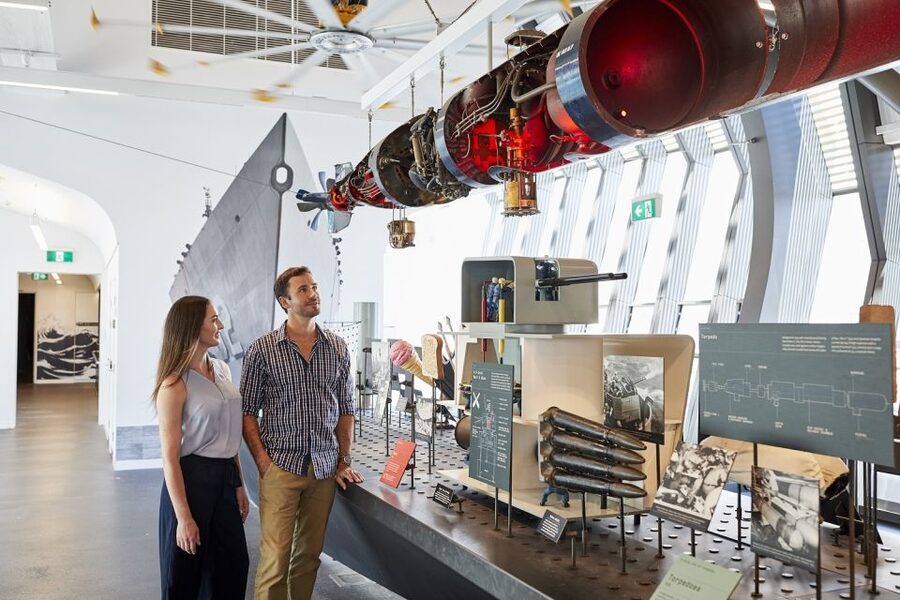
Action Stations adds an interactive layer focused on the Royal Australian Navy. This is a good stop if you want more than static displays and labels. It helps connect the vessel you are standing on with the people, technology, and decisions involved in naval service.
The museum includes access to Action Stations with this ticket, so you do not need to choose between the naval experience and the main collection. If your interest is military history, set aside a solid part of the day for these areas. If you are visiting with young children, Action Stations may hold their attention better than some of the quieter galleries.
A few more Sydney half-days to weigh up
- Sydney: Opera House Guided Tour with Entrance Ticket
★ 4.8 · 8,312 reviews - All Inclusive Blue Mountain,Scenic World,Lunch,Koalas,ferry
★ 5.0 · 7,832 reviews - From Sydney: Blue Mountains Full-Day Trip
★ 4.5 · 4,471 reviews - Sydney Opera House Official Guided Walking Tour
★ 4.5 · 3,770 reviews
HMB Endeavour and Duyfken connect Australia to sailing history
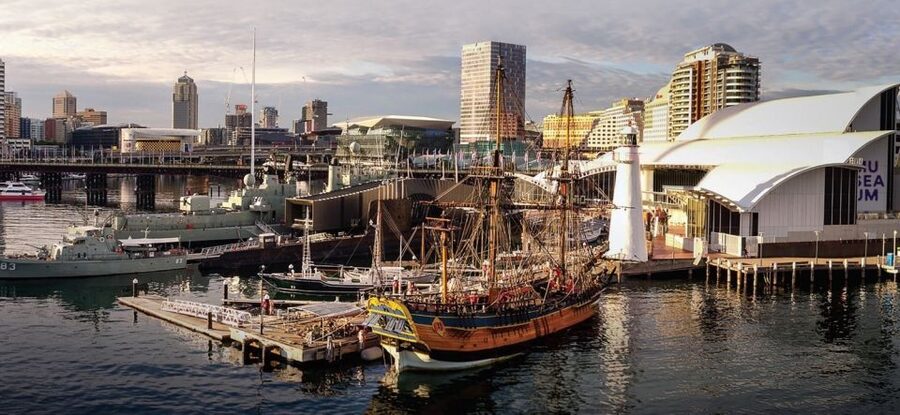
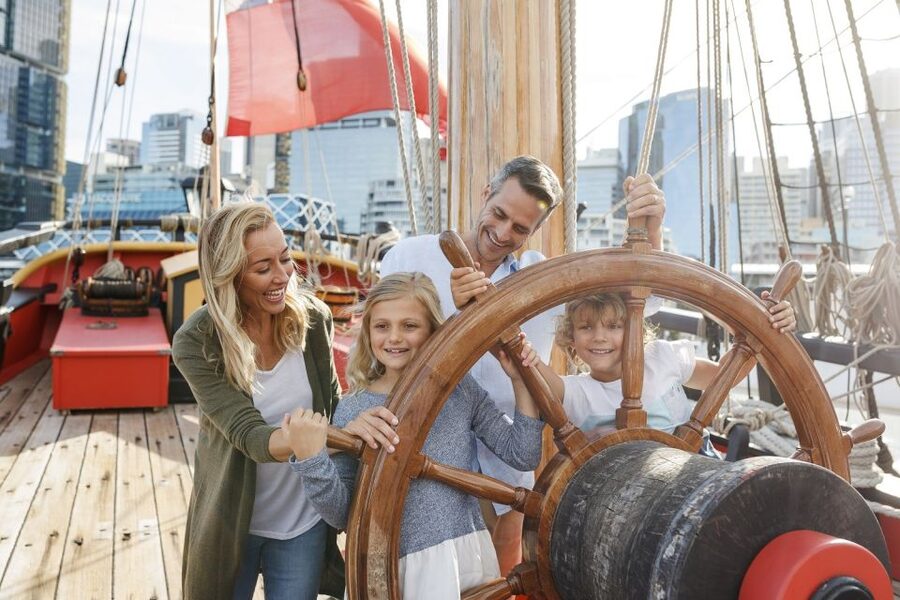
The replica of Captain Cook’s 18th-century tall ship HMB Endeavour gives you a chance to see how an age of ocean travel looked from the deck. Its tall masts, wooden structure, and sailing design offer a sharp contrast to the submarine and destroyer.
Duyfken adds another important chapter. The replica represents the first European ship to reach Australia in 1606. Seeing it alongside Endeavour allows you to compare two periods of maritime travel and consider how ship design changed over time.
These ships are valuable even if you are not a serious sailing enthusiast. You can better understand the risks of long voyages when you see the size of the vessel and the limited space available. The displays also give Australia’s maritime story a wider frame, linking exploration and contact with the practical business of getting people and goods across the sea.
The ships are among the museum’s strongest features, but they also require attention to access times. Do not assume you can board them at any point before closing. Check the day’s boarding details when you arrive and plan your route accordingly.
Six galleries cover more than naval history
Inside, six permanent galleries present objects from the museum’s historical collection. The subject is broader than warships. Australia’s relationship with the sea includes exploration, coastal life, trade, naval service, migration, and the technology that made ocean travel possible.
I would not treat the indoor section as a quick filler between ships. It supplies context that makes the fleet more meaningful. After seeing a vessel, the galleries can help explain why it mattered and how it fits into Australia’s wider story.
The museum also runs temporary exhibitions, and the See It All ticket includes special exhibitions. This is where the $23 price becomes more useful than a basic entry fee. You are paying for a full day of varied material, not only access to one ship or one room.
One caution: the amount on display can feel heavy if you try to read every label. Pick a few subjects that interest you, then allow time to move on. A focused visit usually works better than attempting to absorb every object.
Ocean Photographer of the Year changes the pace
The Ocean Photographer of the Year exhibition gives the day a different tone. Instead of focusing on ships, crews, or maritime technology, it presents the beauty and fragility of the oceans through photography.
This is a strong choice when your group has mixed interests. A naval enthusiast can spend time with Action Stations, while someone more interested in wildlife, conservation, or photography can enjoy the ocean exhibition. The visual format also offers a break after the tighter spaces aboard the vessels.
Do not rush this section simply because the ships seem more dramatic. The photographs can help you think about the ocean as a living environment rather than only a route for transport or a setting for naval action. The exhibition is also one of the areas praised most strongly in the available feedback, alongside the ships and submarine.
Temporary exhibitions change, so the exact content can vary. The ticket includes access to the special exhibition program, which adds value if you are making the museum part of a Sydney itinerary rather than visiting only for the fleet.
A practical one-day plan at $23
At $23 per person, this is good value if you stay for several hours and board multiple vessels. A short stop of one or two hours would not make as much sense, since the museum’s main strength is the mix of outdoor ships, indoor galleries, Action Stations, and special exhibitions.
Here is a sensible order:
- Arrive in the morning and check vessel boarding times.
- Board the submarine and destroyer while you have plenty of time.
- Explore HMB Endeavour and Duyfken.
- Take a break at the waterfront café.
- Visit the six galleries and Action Stations.
- Finish with Ocean Photographer of the Year and any temporary exhibitions.
You can reverse the indoor and outdoor sections if the weather is poor, but keep an eye on the final boarding time. The ticket is valid for one day, so you have freedom to take a meal break and return to the galleries during the same visit if the admission arrangement allows it at the entrance.
Food and drinks are not included. The café overlooks Darling Harbour toward the city, making it a useful place to pause rather than leave the area for lunch. You should still budget separately for the meal.
Who will get the most from this visit
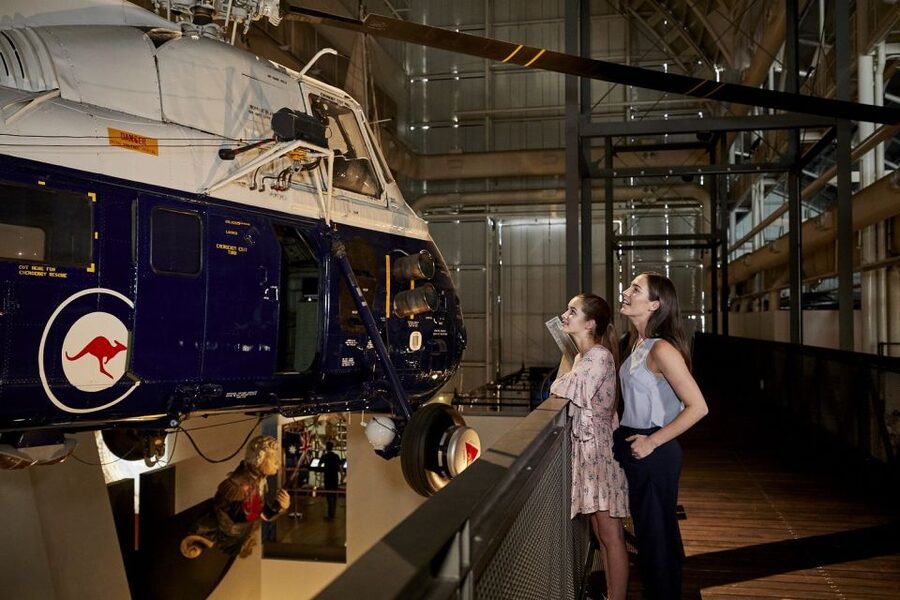
The museum works particularly well for families because it offers movement, ships, hands-on material, art and craft activities for children, and subject matter that can be approached at different levels. A child may remember the submarine, while an adult spends more time with naval displays or maritime objects.
It also suits anyone interested in shipping, naval vessels, exploration, or Australian history. The visit received especially strong praise for its detailed historical presentation, volunteer guides, ships, and submarine. The volunteer guides can add helpful explanations and personal detail, so take advantage of them when available.
Couples can enjoy the museum too, particularly if they like a relaxed waterfront setting and want an attraction that does not require a fixed tour schedule. Photography fans should allow extra time for the ocean exhibition.
The museum may be less satisfying if you want a fast, highly interactive attraction from start to finish. One piece of feedback found some gallery areas less engaging and wished for more interactive material. The ships and Action Stations carry much of the hands-on appeal, while some indoor sections rely more on objects, text, and displays.
Accessibility, footwear, and timing notes
The museum is wheelchair accessible, but the individual vessels may have different physical layouts. The supplied information confirms general wheelchair access, not access details for every ship, so check with reception if boarding a particular vessel is important to your visit.
Wear comfortable shoes. You will walk between galleries and wharves, and ship interiors can include narrow or uneven areas. High-heeled shoes are not allowed, so choose practical footwear from the start.
English is the listed language for the live guide support. No named guide is specified, but volunteer guides are part of the museum experience and are praised for clear, helpful explanations.
Free cancellation is available up to 24 hours before the visit for a full refund. The ticket is valid for one day, and you should check availability for the starting times offered on your chosen date.
Is the See It All ticket worth booking?
I would book it if you want a substantial Sydney attraction with real vessels, indoor displays, and a good waterfront setting. At $23, the price is fair when you use the full day and board the submarine, destroyer, and tall ships rather than treating the museum as a quick photo stop.
Book with a morning arrival if the fleet is your priority. Families, naval history fans, shipping enthusiasts, and anyone who enjoys ocean photography should find plenty to hold their attention. If your schedule allows only four hours, choose your must-see areas in advance. The museum can easily take longer, and trying to see every gallery and vessel in a rushed visit is the main way to reduce its value.
FAQ
Where is the Australian National Maritime Museum?
The museum is at 2 Murray Street, Darling Harbour, Sydney NSW 2000, Australia.
How long is the ticket valid?
The See It All ticket is valid for one day.
How much does admission cost?
The listed price is $23 per person.
What does the ticket include?
It includes all galleries and exhibitions, special exhibitions, Action Stations, the submarine, the destroyer, HMB Endeavour, Duyfken, and art and craft activities for children.
Can I board a submarine and warship?
Yes. The ticket includes access to the Cold War submarine and the naval destroyer.
Can I board HMB Endeavour and Duyfken?
Yes. The ticket includes access to the replica of Captain Cook’s tall ship HMB Endeavour and the replica of Duyfken, identified as the first European ship to reach Australia in 1606.
What time is the last vessel boarding?
The last boarding time is 3:10pm. During NSW school holidays, it is 4:10pm.
How do I reach the museum from central Sydney?
The museum is about a 20 to 30 minute walk from Town Hall and Central Stations. From Town Hall, you can cross Pyrmont Bridge. From Central, you can walk through Chinatown and Darling Harbour. The F4 Darling Harbour Loop ferry stops at Pyrmont Bay Wharf beside the museum.
Is parking available?
Yes. Museum visitors can park all day for $15 at Harbourside Car Park at 100 Murray Street, Pyrmont. You need to have your parking ticket stamped at museum reception.
Just added around Sydney
- Taronga Zoo Sydney Wild Australia Experience★ 4.8 · 64 reviews
- Sydney Harbour: Tall Ship Lunch Cruise★ 4.8 · 69 reviews
- Sydney: Spirits of the Rock and Dark Past Walking Tour★ 4.0 · 144 reviews
- Taronga Zoo Aussie Backyard Adventure★ 4.8 · 85 reviews
- Sydney Whale Watching Cruise with Breakfast or Lunch★ 4.4 · 340 reviews
- Sydney: Whale Watching Cruise and Taronga Zoo Package★ 4.2 · 37 reviews
- Sydney: Whale Watching Adventure Cruise – Whales Guaranteed!★ 4.4 · 76 reviews
- Sydney: The Rocks Pub Tour★ 4.8 · 60 reviews
Sydney Tours, compared.

All Inclusive Blue Mountain,Scenic World,Lunch,Koalas,ferry
Read our review →
Sydney Opera House Official Guided Walking Tour
Read our review →

Blue Mountains Day Trip from Sydney Including Scenic World
Read our review →
Blue Mountains Tour with Waterfall Walk & Lunch
Read our review →Browse the lists this tour appears in