
Review · CANBERRA TOURS
Australian Institute of Sport: The AIS Tour
The Australian Institute of Sport gives you a look at the real working world behind Australia’s medals. You walk through a 65-hectare campus, see training facilities and athlete spaces, and may spot people practising in the halls. The final Sportex session lets you trade watching for doing, with tests of speed, strength, accuracy, and reaction time.
I like the mix of behind-the-scenes access and hands-on play. I also like the chance to learn from a guide who may be an active AIS athlete, rather than hearing only a polished museum script. The main caution is simple: some Sportex equipment has been out of order, and you cannot count on seeing a famous athlete train.
Key points
- A 90-minute guided walk through one of Australia’s best-known elite sports campuses
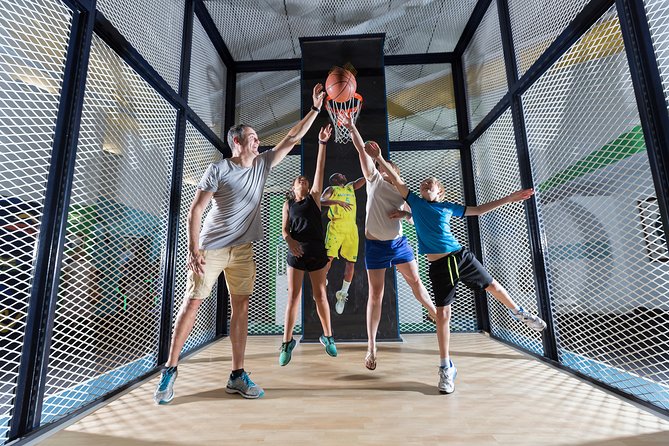
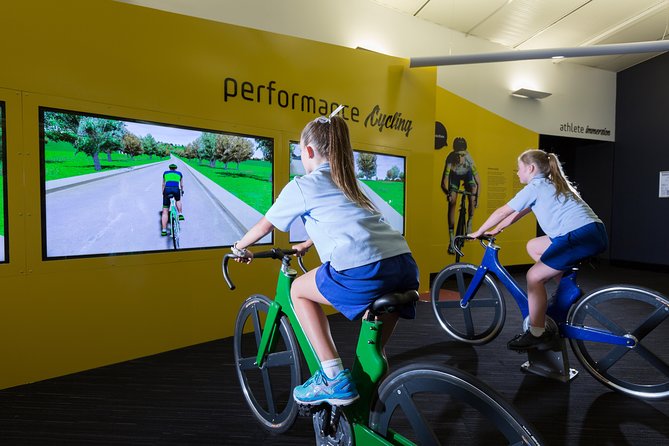
- Sportex challenges including wheelchair basketball, rock climbing, penalty shootouts, virtual downhill skiing, and reaction tests
- A small group capped at 15 people, which helps the guide keep the tour personal
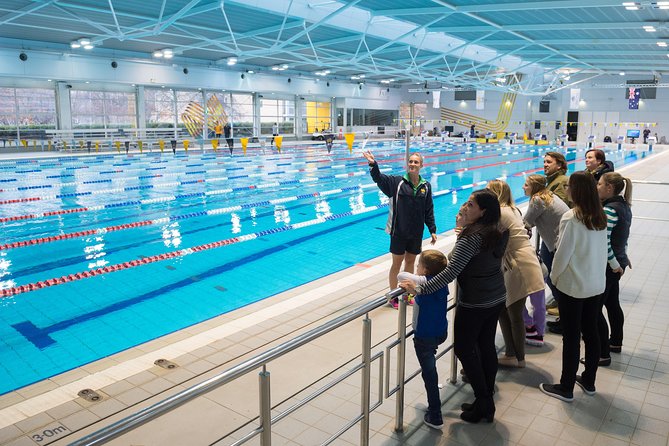
- Real training areas, including aquatic, gymnastics, basketball, and volleyball spaces
- Sports exhibits covering Sydney 2000, Australian sporting heroes, legends, and sports science
- Good value at $14, especially for families and sports fans who will use the interactive zone
Entering the AIS at Canberra’s Visitor Centre
You begin at the AIS Visitor Centre at 26 Leverrier Street in Bruce. The activity returns you to this same meeting point, and your mobile ticket makes arrival fairly straightforward. You need to arrange your own transport, food, and drinks, but the site is near public transport.
The tour lasts about two hours in all, with roughly 90 minutes spent on the guided visit. That leaves time for the Sportex activities and exhibits, though the exact flow can vary. With a maximum of 15 people, you are not being herded through in a huge crowd. That matters here because a good part of the experience depends on asking questions and having a turn at the equipment.
Your guide sets the tone. The best guides connect the buildings and machines to the lives of the athletes who use them. One guide described in the supplied information was a current AIS athlete and a middle-distance swimmer from Western Australia. A guide with that kind of direct experience can explain training in a way a display panel cannot.
You should still keep your expectations realistic. The AIS is a working sports campus, not a guaranteed athlete-sighting tour. You might see gymnastics, basketball, volleyball, swimming, or another sport in action, but training schedules change and famous competitors are not put on display for visitors.
A few more Australia half-days to weigh up
- Highlights of Canberra Full Day Tour
★ 5.0 · 406 reviews - Canberra: City Highlights Day Tour with Entrance Fees
★ 4.8 · 114 reviews - Badass Women of Canberra: Meet the Women Who Shaped the Nation
★ 5.0 · 112 reviews
Walking through a 65-hectare training campus
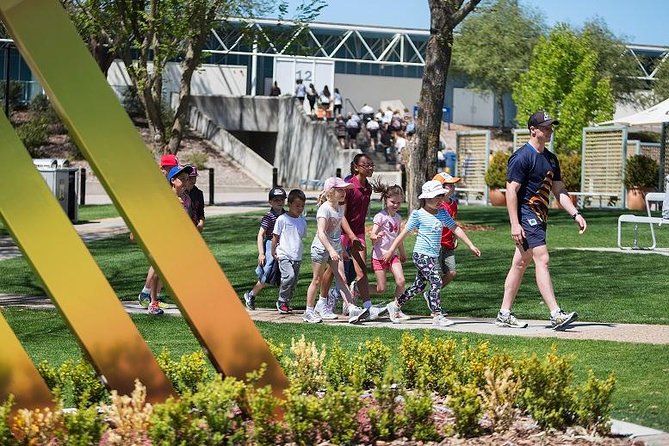
The AIS covers about 65 hectares, so the first surprise is its scale. This is not just a small sports museum with a few trophies. It includes high-level sports facilities, accommodation, training camps, and areas used by athletes preparing for national and international competition.
The guided walk gives you a sense of how those pieces fit together. You see the places where athletes train and hear how the institute supports Australian sport. The value is less about one spectacular room and more about understanding the daily setting behind elite performance.
You may pass facilities being used during your visit. That possibility gives the walk some life, especially if you see a gymnast working through a routine or people using the basketball and volleyball halls. One family visit included a chance to watch training in those areas, while another visitor saw Australian gymnast Georgia Goodwin practising.
Those moments are luck, not a promise. If the halls are quiet, the tour can feel more like an architectural and institutional visit. A guide who explains the purpose of each space helps greatly, especially for people who do not follow every Australian sport.
The tour also gives you a better idea of the demands placed on athletes. You are not only looking at a pool, gym, or court. You are seeing a purpose-built setting where strength, technique, recovery, and repetition all matter.
Sportex turns spectators into participants
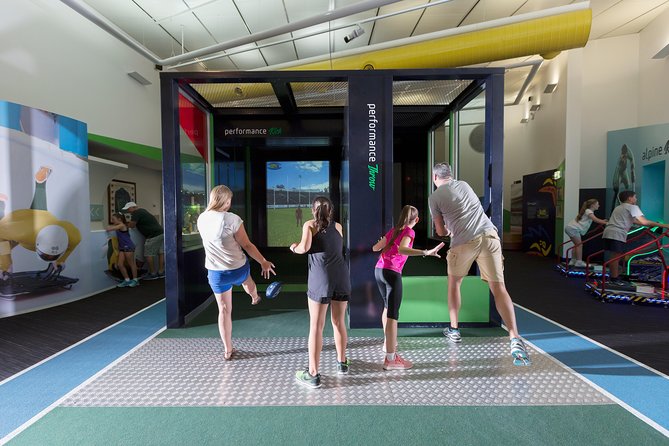
Sportex is the most playful part of the visit. It is an educational sports area where you can try a selection of physical and skill-based challenges. This is where the AIS works best for families, children, and adults who want more than a guided walk.
You can try wheelchair basketball, virtual downhill skiing, rock climbing, football penalty shootouts, and other activities. The ball-skills tester measures accuracy, while the reaction timer focuses on speed and response. Other challenges let you test strength and endurance.
I like this section because it gives you a physical reference point. After watching elite athletes train, you can try a small version of the skills they practise. The comparison is humbling in a useful way. A penalty shot or reaction test looks easy until the timer starts.
The activities also make the tour easier for children to enjoy. A six-year-old can take part without needing much sporting knowledge, while older children and adults can compete among themselves. Wheelchair basketball is particularly valuable because it offers more than a quick game. It gives you a small sense of how movement and control change when you play from a chair.
The Sportex area has had some maintenance problems. Several activities have been reported as unavailable, with one visitor finding about half of the opening challenges out of order. You should treat the zone as a strong part of the tour, but not assume every machine will work on the day.
Sportex is scheduled to close for refurbishment from 23 June to 3 August 2025. If you are visiting during those dates, check the current operating details before booking, since this hands-on area is included in the normal tour and its closure changes the experience considerably.
Sydney 2000, sporting heroes, and sports science
The exhibits add context to the facilities. A display about the Sydney 2000 Olympics connects the institute to a major period in Australian sporting culture. The Heroes and Legends section recalls athletes from earlier generations, while the Sports Science material shows the role of testing and research in modern training.
I find these displays useful because they keep the tour from becoming a walk past anonymous rooms. The names, images, and stories give meaning to the buildings. You can see how athletes from earlier eras became part of the country’s sporting memory, then consider how current athletes train with different tools and methods.
The exhibits are especially useful if you have children with you. They provide a break from the physical challenges and give younger visitors something to look at while a guide explains the wider role of the institute.
Still, the display areas are not the whole reason to come. If you want a large museum packed with medals and long biographies, this may feel modest. The AIS tour works best as a combination of guided access, working facilities, and interactive exhibits.
Same base, a completely different day out:
- Sydney: Opera House Guided Tour with Entrance Ticket
★ 4.8 · 8,312 reviews - All Inclusive Blue Mountain,Scenic World,Lunch,Koalas,ferry
★ 5.0 · 7,832 reviews - Great Ocean Road Small-Group Eco Tour from Melbourne
★ 5.0 · 6,607 reviews - From Melbourne: Great Ocean Road, 12 Apostles, Wildlife Tour
★ 4.7 · 6,020 reviews
What makes the guide important
The guide can make or break this experience. The buildings are impressive, but a quiet sports hall does not explain itself. You want someone who can tell you what happens there, who uses it, and why the facility matters.
The strongest guide reports describe people who were friendly, clear, and well informed. An active athlete can add useful detail about training routines and life at the AIS. You may hear more about the practical side of sport, rather than only the official history.
A guide can also help you notice things you might otherwise miss. That could be a particular training area, a display tied to Olympic competition, or a sport that is unfamiliar to you. Ask questions if you are curious. The small group limit gives you a better chance to do so.
The guide cannot control who is training. I would not book this expecting a meet-and-greet or a guaranteed sighting of an Olympic star. Book it to understand the campus, then treat any live training you see as a bonus.
Is the $14 price good value?
At $14, this is one of Canberra’s easier attractions to justify. You receive a guided visit, access to the AIS facilities shown during the walk, Sportex activities, and the sports exhibits. Food, drinks, and transport cost extra, but you do not need to add another ticket for the interactive zone when it is operating.
The value is strongest for families. A museum visit can lose younger children after 30 minutes, but Sportex gives them physical tasks to try. Adults can join in, too, and the activity works well as a shared family outing rather than something parents simply watch.
Sports fans also get good value from the access to training areas. If you follow swimming, gymnastics, basketball, athletics, or other competitive sports, the chance to see the facilities used by top Australian athletes adds interest that a standard exhibition cannot provide.
The value is weaker if the Sportex equipment is partly closed or if you want a guaranteed look at active athletes. One disappointed visitor felt the quiet halls made the tour feel thin. That criticism is fair under those conditions. The $14 price is modest, but your enjoyment still depends on the guide, the working equipment, and what the campus is doing that day.
Planning your visit around the two-hour format
Allow about two hours from arrival to finish. The guided portion is around 90 minutes, with the Sportex activities and exhibits forming a major part of the visit. The end point is back at the AIS Visitor Centre, so you do not need to arrange a separate pickup location.
Wear something that lets you move comfortably. The tour includes walking, and Sportex invites you to test your body rather than only read about sport. You can choose how much effort to put in, but comfortable clothing will make the activities more enjoyable.
Children must be accompanied by an adult. Service animals are allowed, and most people can participate. The activity is near public transport, but transportation to and from the AIS is not included, so leave time to reach Bruce before the start.
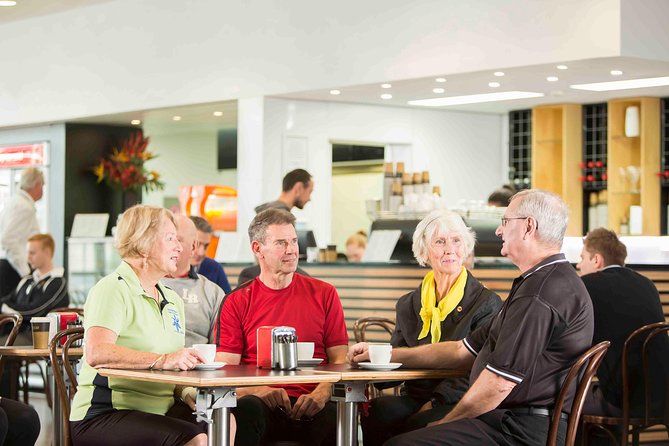
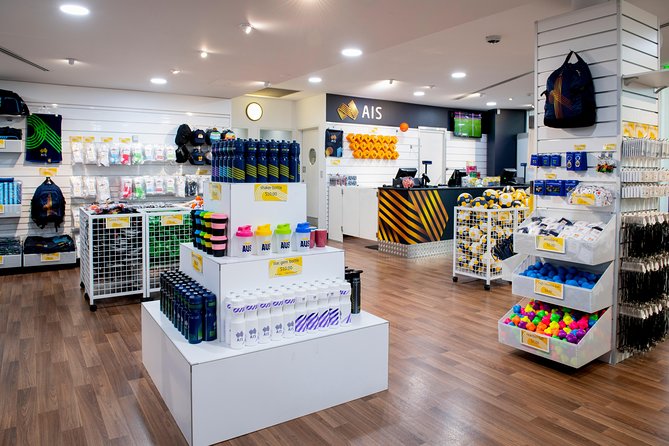
The AIS café is available for refreshments after the tour, and the shop sells souvenirs. The AIS Arena also hosts concerts and shows, including Cirque du Soleil productions, though those events are separate from the tour. If you already have an event planned there, the tour can make the wider complex more meaningful.
The ticket is mobile, and booking confirmation is issued at the time of booking. The experience is non-refundable and cannot be changed, so check your date carefully before paying.
Who will enjoy the AIS Tour most?
I would recommend this for sports enthusiasts, active families, and anyone curious about how elite athletes train. It also suits visitors who want a Canberra attraction that feels different from the city’s political and national institutions.
Children are likely to enjoy the interactive tests most. The hands-on section gives them a reason to pay attention during the guided walk, and the range of challenges means they do not all need to be good at the same sport.
Swimmers may particularly enjoy seeing the aquatic facilities. Gymnastics fans may be lucky enough to see routines in progress. People interested in disability sport should look closely at the wheelchair basketball activity, which adds an important practical element to the visit.
I would be more cautious if you are not interested in sport, do not want to participate, or expect constant action. Some parts of the campus can be quiet, and you may see no athletes training. The tour gives you access and context, not a staged show.
My verdict on the Australian Institute of Sport
I like the AIS Tour because it connects national sporting success to ordinary places: courts, pools, gyms, testing rooms, and long hours of practice. The best moments come when a guide explains what you are seeing and you then try a Sportex challenge for yourself.
Its weaknesses are clear. The tour cannot promise live training, and broken equipment can reduce the fun. The displays may feel limited if you want a full Olympic museum. Even so, $14 is a fair price for a small-group guided visit with access to an active sporting campus.
Book it if you want a practical, family-friendly look at Australian sport and you will enjoy taking part. If Sportex is closed during your dates, or if you need guaranteed athlete sightings, choose another Canberra activity instead. For most sports fans, though, this is an easy addition to a Canberra visit.
FAQ
Where does the AIS Tour start?
The tour starts at the AIS Visitor Centre, 26 Leverrier Street, Bruce, ACT 2617, Australia.
Where does the tour finish?
The activity finishes back at the AIS Visitor Centre, the same place where you meet your guide.
How long does the AIS Tour take?
Allow about two hours in total. The guided tour itself lasts about 90 minutes.
Is Sportex included in the tour?
Yes. Sportex is included as part of the AIS Tour when it is operating.
What can you do at Sportex?
Activities include wheelchair basketball, virtual downhill skiing, rock climbing, football penalty shootouts, ball-skills testing, reaction timing, and other challenges involving accuracy, speed, and strength.
Is Sportex open throughout 2025?
Sportex is scheduled to close for refurbishment from 23 June to 3 August 2025. Check the operating details for your date before booking.
Just added around Australia
- Shore Excursion-Hobart Wanderer★ 5.0 · 87 reviews
- Old Hobart Pub Walking Tour★ 4.5 · 91 reviews
- kunanyi/Mt Wellington Tour and MONA Admission★ 4.5 · 69 reviews
- kunanyi/Mt Wellington Ultimate Experience Tour from Hobart★ 4.5 · 83 reviews
- Hobart: Mt. Field, Mt Wellington & Wildlife – Active Day Tour★ 5.0 · 112 reviews
- Mt Field National Park and Russell Falls from Hobart★ 5.0 · 49 reviews
- Maria Island Ferry – Hobart Bus Connection (Return Service)★ 5.0 · 23 reviews
- Hobart Sightseeing Cruise including Iron Pot Lighthouse★ 5.0 · 184 reviews
Canberra Tours, compared.
Badass Women of Canberra: Meet the Women Who Shaped the Nation
Read our review →


Browse the lists this tour appears in