
Review · PERTH TOURS
Fremantle: Convicts, Culture, and Street Art
Fremantle’s best stories are not all inside museums. They are tucked into the old port, narrow West End streets, the Roundhouse, and even the street art you pass on the way. This two-hour walking tour links those places with tales of convicts, whalers, migrants, sailors, and Indigenous people forced to Rottnest Island.
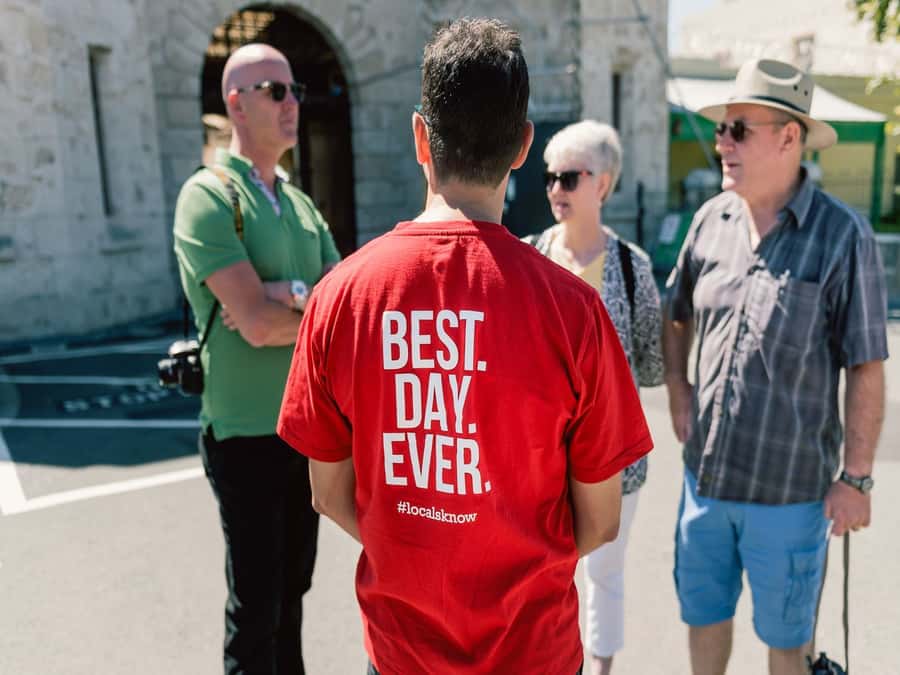
I like the route for two reasons. First, it gives you a useful introduction to Fremantle before you explore on your own. Second, the local guides adjust the talk to the group, rather than delivering a stiff script. Winona, Vaughan, Joanie, and Daniel have each been praised for their warmth and strong command of local stories.
The main consideration is simple: you walk outdoors for the full tour, and Fremantle weather can turn cold and wet from April through August. The advertised price is $46 per person, fair value if you enjoy history told through characters and places, though it may feel high if you want only a quick look at the main sights.
Key points to know before you book
- Convict-built Fremantle: Learn why almost 10,000 men were transported from Great Britain and Ireland and how convicts helped build their own prison.
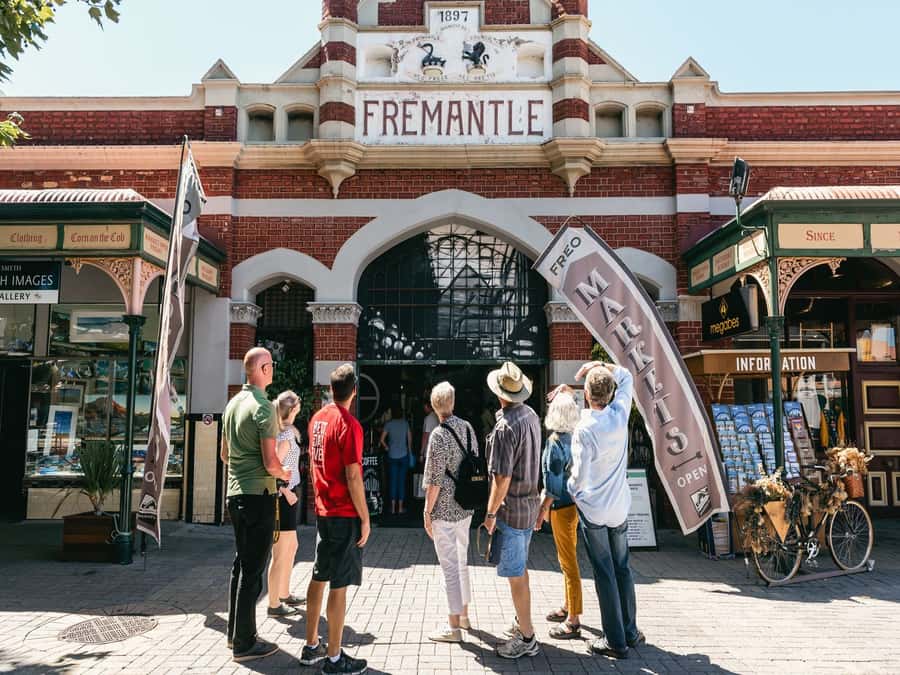
- A port-town route: Walk from the Visitors Centre through Kings Square, the cappuccino strip, boat harbour, West End streets, High Street, and the Roundhouse.
- Stories beyond the postcard view: Hear about prisoner escapes, convict antics, whaling, migration, and the forced removal of Indigenous people to Rottnest Island.
- Guides who adapt: Winona, Vaughan, Joanie, and Daniel have been praised for relaxed delivery, personal attention, and answers to questions.
- Street art with context: See Fremantle’s art and public spaces as part of its wider cultural story, not as isolated photo stops.
- Good first-day timing: The tour lasts two hours and offers local tips that can help you plan museums and further walks afterward.
Starting at Kings Square with a local storyteller
Meet your guide at the Fremantle Visitor Information Centre in Kings Square. This is a practical starting point because you are already in the centre of town, close to shops, cafés, and the main walking streets.
The tour does not treat Fremantle as a list of dates to memorize. Instead, it uses the town itself as the classroom. As you move between streets and landmarks, your guide explains how a working port became a place shaped by whaling, migration, imprisonment, trade, and many different cultures.
That approach matters. A guide can point out the physical remains of the past, then explain the human story behind them. You may hear about a prison escape near the same streets where you are now looking at cafés and shops. You may learn how newly arrived immigrants lived alongside hard-working sailors and port communities.
The exact guide can vary. Winona has been praised for asking what a small group wanted to learn, while Vaughan has been described as offering a relaxed pace and strong local insight. Joanie and Daniel have also received praise for friendly, informative hosting. If you have a particular interest, it is worth raising it at the start.
More street art walks in Fremantle:
- Melbourne Street Art Tour
★ 5.0 · 378 reviews - Melbourne: Street Art Walking Tour with a Street Artist
★ 4.9 · 147 reviews - Brisbane Small Bars and Street Art Tour
★ 5.0 · 34 reviews
Fremantle’s cappuccino strip and changing town life
From Kings Square, the route moves through Fremantle’s central streets and the well-known cappuccino strip. This part helps you see the contrast between the town’s older working identity and its present-day café culture.
The streets are now easy places to pause for coffee, browse, and watch local life. Yet the tour keeps bringing you back to the people who made Fremantle what it is. The port drew sailors, workers, migrants, prisoners, and business owners, and those groups did not always share the same interests or opportunities.
I like this part because it gives the town a human scale. You are not simply told that Fremantle was an important port. You hear about the characters who made a living there, the troublemakers who tested the law, and the newcomers who helped shape Western Australia.
The tradeoff is that this is a walking talk, not a museum visit. You will not spend long inside one exhibition or receive a full academic account of every event. The reward is movement, atmosphere, and the ability to connect several areas of Fremantle in one outing.
Convicts, escapes, and the making of Western Australia
Convict history is one of the main reasons to choose this tour. Almost 10,000 men were transported from Great Britain and Ireland, and their forced labour played a major part in the early development of Western Australia.
Your guide explains how convicts helped build their own prison and contributed to the growth of Fremantle. That detail gives the subject an uncomfortable edge. These were not simply builders in a heroic town story. They were prisoners transported far from home, working under a system of punishment and control.
You will also hear about prisoner escapes and convict antics. These stories help break up the formal account of transportation. They show how people resisted, misbehaved, adapted, and tried to make lives within a harsh system.
I find this style useful for first-time visitors because it avoids turning convict history into a dry paragraph on a sign. The stories give you something to remember when you later see the old buildings and streets.
At the same time, you should expect a broad introduction rather than a detailed study of the prison system. If you want a longer visit focused only on convict life, you will need to add a museum or another historic site to your Fremantle plans. This tour gives you the setting and the key themes.
The Roundhouse and the oldest layers of Fremantle
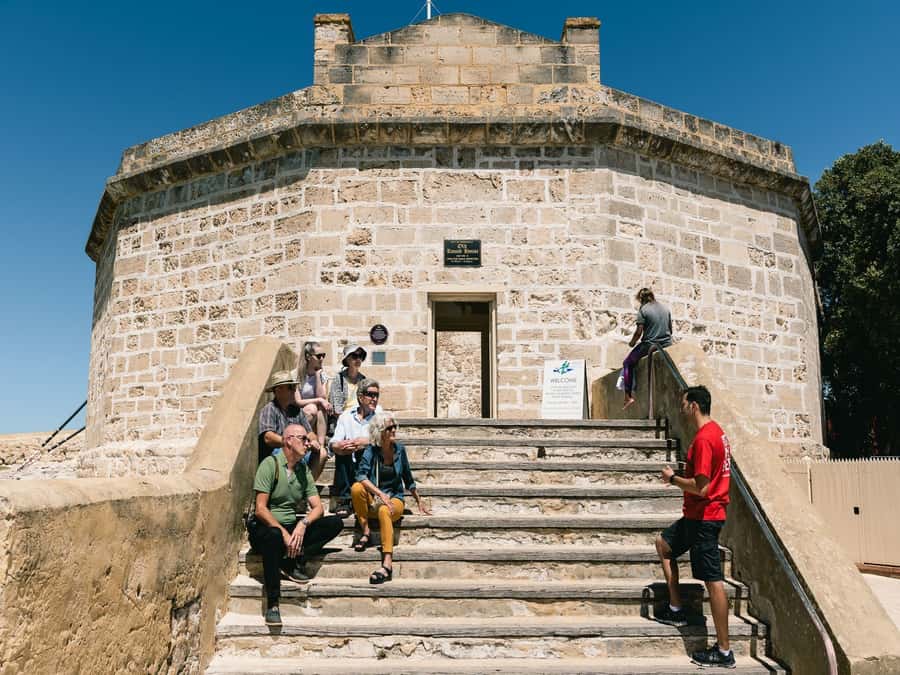
The Roundhouse is one of the route’s key landmarks. It connects the town’s early colonial period with its later role as a port and centre of movement.
Your guide uses the site to explain Fremantle’s early history and the people connected with it. The building is more meaningful when you know how it fitted into the town’s system of control and settlement. Rather than seeing it as an old structure for a quick photograph, you begin to understand why it mattered.
The walk toward the Roundhouse also helps you read Fremantle’s layout. Streets, slopes, old buildings, and harbour views are part of one story. The town’s position beside the water shaped its work, its visitors, and its conflicts.
There is no promise of a long interior visit or a separate ticketed attraction within the two-hour tour. The value here is the guide’s explanation and the connection between the Roundhouse and the rest of the route. If you want to explore every landmark at length, plan extra time after the walk.
A few more Fremantle half-days to weigh up
- From Fremantle: Rottnest Island Ferry and Bike Day Tour
★ 4.6 · 805 reviews - Discover Rottnest with Ferry & Bus Tour
★ 4.5 · 743 reviews - From Fremantle: 2-Hour Luxury Whale-Watching Cruise
★ 4.8 · 455 reviews - Rottnest Grand Island Package with Ferry, Tour & Light Lunch
★ 4.5 · 445 reviews
Whaling, the harbour, and Fremantle’s salty past
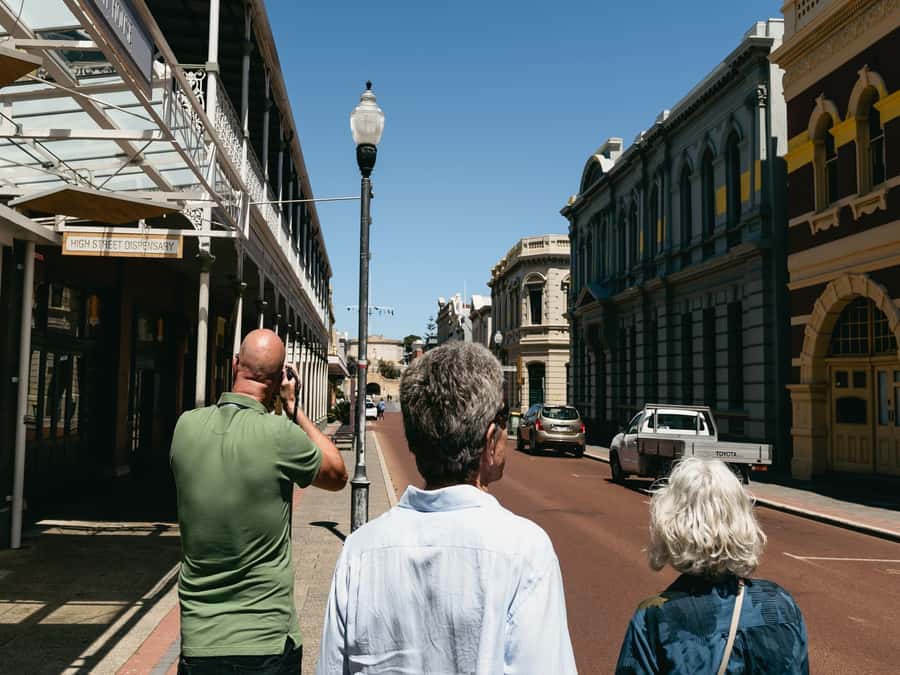
Fremantle was once home to whaling stations, and the tour brings that maritime past into focus. You walk toward the boat harbour and hear about the sailors and workers who made port life possible.
The whaling stories add a rougher side to the town’s character. Fremantle was not always the relaxed place of cafés, markets, and public art that you see today. It was also a demanding working port, filled with people whose jobs were tied to the sea.
The Whaler’s tunnel is another unusual feature along the route. Set among streets that now feel social and festive, it offers a reminder of the industries that once shaped the area. A tunnel is easy to pass without context. With a guide, it becomes part of the town’s working story.
This section should suit you if you like maritime history but do not want a specialist boat tour. You get the broad story of whaling and harbour life while continuing through the centre of Fremantle.
Do not expect a full technical account of whaling methods or a long stop at each harbour site. The tour has a lot to cover in two hours, so the guide must keep moving. Comfortable shoes are essential.
West End streets and the migrant gateway
Fremantle’s West End gives the tour another change of mood. The narrow streets and old buildings show how the port functioned as a gateway for migrants and a point of arrival for people from many places.
Your guide explains how new arrivals met long-established port communities. That mix helped create Fremantle’s multicultural character, but the story was not always easy or fair. Migration, work, law, and belonging shaped the town in different ways for different groups.
I like this part because it takes you beyond the standard colonial story. You hear about sailors and pioneers, but also about people arriving with little certainty about what came next. The route makes it easier to picture Fremantle as a place of movement rather than a town frozen in the past.
The phrase gateway to migrants can sound neat and simple, but the guide’s anecdotes add the human detail. You may hear stories that are funny, unsettling, or surprising. This is one reason the tour works better with a local host than with a map and a list of building names.
Indigenous history and the hard questions
The tour also addresses the forced removal of Indigenous people to Rottnest Island. This is an important part of Fremantle’s past, and it changes the way you understand the town’s colonial story.
The subject needs care, and it should not be treated as a colourful side note. The tour places it alongside convict transportation, migration, and settlement, showing that Fremantle’s development involved severe loss and injustice as well as ambition and growth.
For me, this is one of the tour’s most valuable promised themes. A pleasant walking route can make it easy to admire old buildings without asking who paid the cost of colonial expansion. A good guide helps you hold both parts of the story at once.
Because the experience covers many subjects, this section is an introduction rather than a complete account of Indigenous history. You should see it as a reason to keep learning, not as the final word on the subject.
Street art, markets, and modern Fremantle
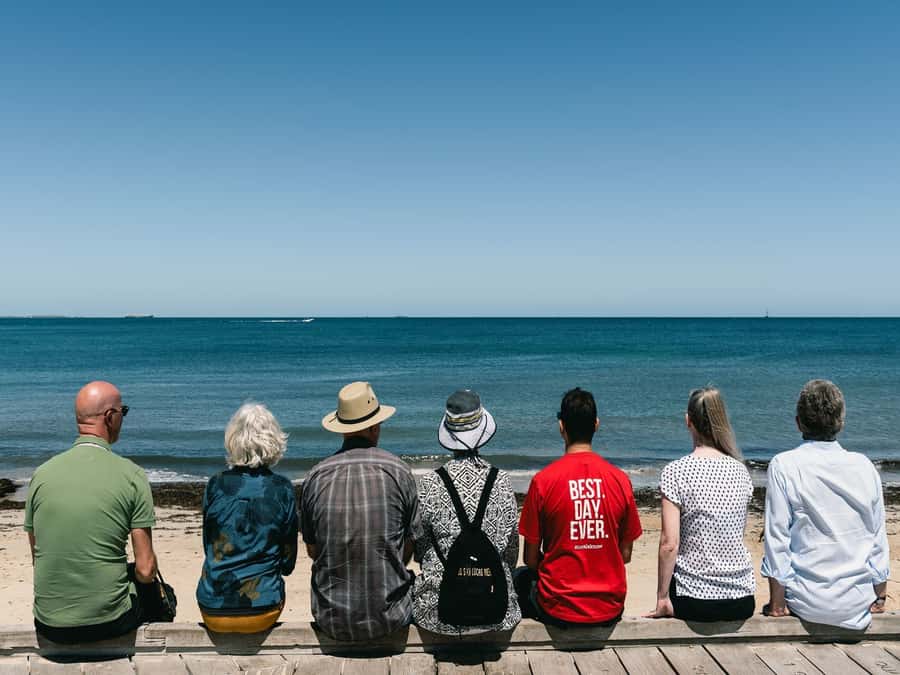
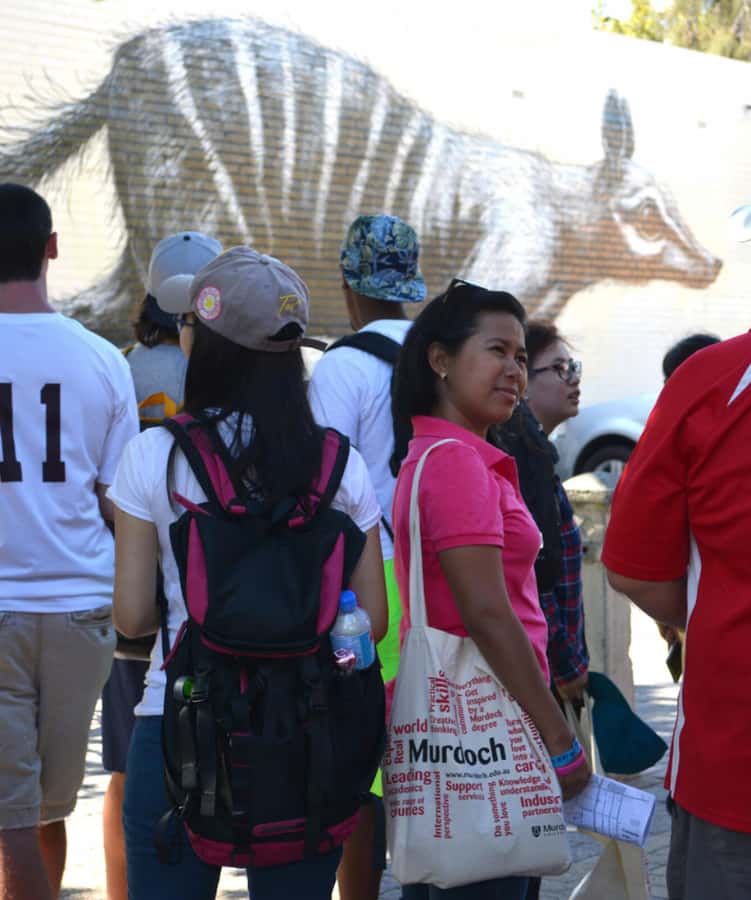
Street art is part of the tour’s appeal, especially if you want more than convict buildings and port history. Your guide points out public art and explains the stories or local character connected with what you see.
The art gives the walk a present-day layer. Fremantle’s culture is not only preserved in old stone and timber. It also appears in murals, creative spaces, markets, cafés, and the way people use the streets.
The route’s mix is its strength. One moment you are considering a prison escape or a whaling station, and the next you are looking at contemporary art in a busy town centre. The changes help you see Fremantle as a living place rather than an open-air relic.
Details about specific artworks can vary, so do not book this expecting a dedicated mural crawl. The tour is best for people who want street art included in a wider cultural walk. If art is your main interest, ask your guide which locations deserve a second look after the tour.
Pace, group feel, and guide style
The official duration is two hours, with a live English-speaking guide. The pace is intended to be relaxed, and that matters because the route covers several parts of Fremantle rather than staying in one square.
Small groups can make the experience more personal. Winona’s approach with a small group included asking what people wanted to learn, rather than delivering only her regular talk. That kind of flexibility can make a real difference if you are interested in migration, convict history, street art, or maritime life.
Vaughan’s style has also been described as relaxed and informative. One tour extended close to three hours, with the group stopping for coffee before saying goodbye. That is not the advertised duration, so allow some flexibility if the conversation is lively or the group wants more questions answered.
You should still plan around two hours. The longer account suggests that the experience can become less rigid, not that every departure runs for three hours. If you have a ferry, train, meal booking, or another timed activity, leave a buffer.
Is $46 fair value for two hours?
At $46 per person, this is not the cheapest way to walk around Fremantle. You can see the streets and many exterior landmarks without paying for a guide.
The value comes from the interpretation. You are paying for a local host who can connect the Whaler’s tunnel, harbour, West End, High Street, Roundhouse, convict stories, migration, Indigenous history, and street art. That is a lot of context to gather on your own in a short visit.
I think the price works best for a first visit or a short stay. You get your bearings, learn which places deserve more time, and receive local tips for the rest of your day. One guide directed the group toward two museums that they then enjoyed on the following day, which shows how the walk can shape a wider itinerary.
The value is weaker if you prefer to read quietly at your own pace or already know Fremantle well. It is also not a substitute for spending half a day inside a major museum or historic site. Think of it as a lively orientation with substance.
Practical details for a comfortable walk
The meeting point is the Fremantle Visitor Information Centre at Kings Square, Fremantle WA 6160. Hotel pickup and drop-off are not included, except for group bookings by request.
Wear comfortable shoes. The route includes several areas of town and is outdoors, so sandals or shoes that are poor for walking could make the experience less pleasant.
Weather matters. From April through August, cold conditions and rain are possible. Check the forecast the day before and bring suitable clothing. Bottled water is not included, so carry your own.
The tour is listed as wheelchair accessible. If you have specific mobility needs, contact the local partner before departure so the route and conditions are clear for your group.
You should contact the local partner to confirm the trip 24 hours before departure. The tour is conducted in English, and starting times depend on availability.
Free cancellation is available up to 24 hours in advance for a full refund. You can also reserve now and pay later, which helps if your Western Australia plans are still changing.
Who will enjoy this Fremantle walk?
I would choose this tour for a first-time visitor who wants to understand Fremantle before deciding which museums and landmarks deserve a longer visit. It is also a good fit if you prefer stories, local characters, and short stops over a formal lecture.
History-minded families may like the prisoner escapes and convict antics, while adults interested in migration and colonial policy will appreciate the harder subjects. Street-art fans should enjoy the modern layer, though they should not expect a tour devoted only to murals.
The walk suits you if you can manage two hours outdoors and enjoy asking questions. It may not suit you if you need a seated experience, want hotel transport, or prefer a tightly timed itinerary with no chance of a longer conversation.
Should you book it?
Book this Fremantle walking tour if you want the town explained by a local guide rather than simply photographed. The strongest reasons are the broad route, the mix of convict and maritime stories, the attention to migration and Indigenous history, and the chance to see street art within the town’s larger culture.
The best guide experience will depend on who leads your departure, but Winona, Vaughan, Joanie, and Daniel have all shown the kind of relaxed, personal style that makes a walking tour work. Allow more than the basic two hours if you like questions and conversation.
At $46, I see it as good value for a first look at Fremantle, especially when you use the local tips to plan the rest of your stay. Bring good shoes, prepare for the weather, and book it early in your visit. You will understand the streets better afterward, and that is the real point of the walk.
FAQ
Where does the Fremantle walking tour start?
Meet your guide at the Fremantle Visitor Information Centre in Kings Square, Fremantle WA 6160.
How long does the tour last?
The advertised duration is two hours. One group spent close to three hours with the guide, so you may want to leave extra time if you expect a lot of questions or conversation.
What language is the tour conducted in?
The tour is conducted in English with a live guide.
What places does the route include?
The walk includes Fremantle’s cappuccino strip, boat harbour, narrow West End streets, High Street, the Roundhouse, Kings Square, and the Whaler’s tunnel.
Does the tour cover convict history?
Yes. You will learn why almost 10,000 men were transported from Great Britain and Ireland, how convicts helped build their own prison, and hear stories of escapes and convict antics.
Does the tour discuss Indigenous history?
Yes. The tour includes the forced removal of Indigenous people to Rottnest Island.
Is street art included?
Yes. Street art is part of the route and the cultural stories discussed during the walk.
Is the tour wheelchair accessible?
The tour is listed as wheelchair accessible.
Is hotel pickup included?
Hotel pickup and drop-off are not included. Group bookings may request this service.
What should I bring or wear?
Wear comfortable shoes and dress for the weather. Cold conditions and rain are possible from April through August. Bottled water is not included, so bring your own if needed.
Just added around Fremantle
- Scuba Dive The Beautiful Rottnest Island for Certified divers★ 5.0 · 65 reviews
- Educational Whale Watching Tour from Perth★ 5.0 · 160 reviews
- Rottnest Island scuba dive tour★ 5.0 · 25 reviews
- Rottnest Island Round Trip Ferry from Fremantle★ 4.0 · 51 reviews
- Rottnest Island Deep Dive Day Trips★ 5.0 · 29 reviews
- Rottnest Island Bayseeker Day Trip from Fremantle★ 4.5 · 50 reviews
- Rottnest Island Boat Dive Day Trip including Lunch★ 4.5 · 77 reviews
- Rottnest Island All-Inclusive Grand Island Tour from Fremantle★ 4.5 · 93 reviews
Perth Tours, compared.

From Perth or Fremantle: Rottnest Island Ferry and Bus Tour
Read our review →
Pinnacles Desert Sunset Dinner and Stargazing Tour
Read our review →

Swan Valley Winery Experience – Full Day Coach Tour
Read our review →

Ultimate Swan Valley Food and Wine Day Trip from Perth
Read our review →Browse the lists this tour appears in