
Review · BLUE MOUNTAINS TOURS
Stargazing with an Astronomer in the Blue Mountains
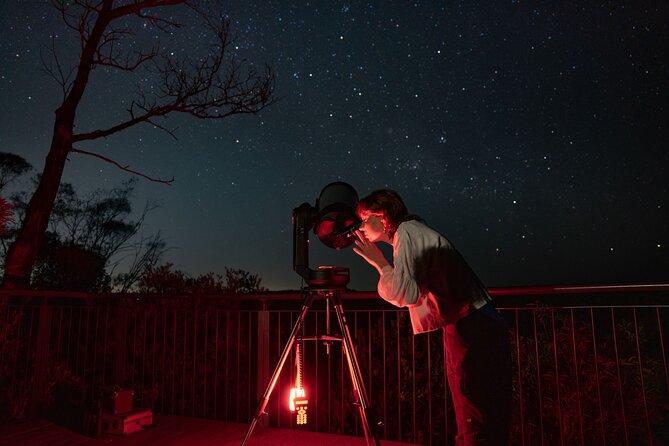
The best part of this Blue Mountains evening is the chance to see the Southern Hemisphere sky with an astrophysicist guiding you through it. You’ll learn to spot constellations without equipment, then use a professional telescope to view objects such as the Moon, planets, star clusters, and the Orion Nebula. I like the laser-guided storytelling and the easy question-and-answer format. I also like that the group is capped at 20, so this is more personal than a large coach outing.
The main drawback is simple: clear skies control the evening. Wind or cloud can change the viewing spot, and the experience is non-refundable if you cancel. The operator gives weather instructions at 1 pm, with a rescheduling credit or indoor planetarium option offered if conditions are poor, but the indoor tour needs at least eight people to run.
Key points to know before booking
- You spend 90 minutes with an astrophysicist, rather than simply looking through a telescope without context.
- The Southern Cross is a highlight, especially if you have never seen it before.
- The telescope targets change with the season, time, and conditions. You might see the Moon, planets, galaxies, nebulae, or double stars.
- Hot chocolate and warm blankets make the cold easier to handle, though drinks depend on the weather.
- The group maximum is 20 people, with English and French available.
- Bad weather needs careful planning: you can accept a transferable credit or attend an indoor planetarium session if enough people are booked.
Reading the Southern Hemisphere sky at Wentworth Falls
This experience begins at the Wentworth Falls Lookout Track in the Greater Blue Mountains, a World Heritage-listed setting where the evening sky is the main attraction. You return to the same meeting point after the session, so you do not need to arrange a second pickup location.
The precise viewing point can change. Wind has sometimes pushed the session from the lookout into a nearby park. That matters because the lookout is part of the appeal, but the astronomy lesson remains the heart of the experience. If you are booking mainly for a dramatic lookout setting, keep your expectations flexible.
The evening is designed as a 90-minute guided sky-watching session, not a long astrophotography expedition. You have enough time to move from sunset and twilight into a darker sky, though the exact objects visible will depend on the date and conditions.
That changing sky is part of the fun. You may begin by learning the first bright stars as daylight fades. As darkness settles, more stars appear and the guide can connect them into recognizable patterns. One especially memorable target for first-time visitors from the Northern Hemisphere is Crux, better known as the Southern Cross.
The Southern Cross is not just another constellation on a chart. It is one of the clearest visual markers of the southern sky, and learning to identify it gives you a new point of reference for the rest of your trip in Australia. The guide can show you how the stars fit together, rather than leaving you to search for a faint shape on your own.
More Blue Mountains days from Sydney:
- All Inclusive Blue Mountain,Scenic World,Lunch,Koalas,ferry
★ 5.0 · 7,832 reviews - From Sydney: Blue Mountains Full-Day Trip
★ 4.5 · 4,471 reviews - Blue Mountains Small-Group Tour from Sydney with Scenic World,Sydney Zoo & Ferry
★ 5.0 · 3,709 reviews
From naked-eye stars to a professional telescope
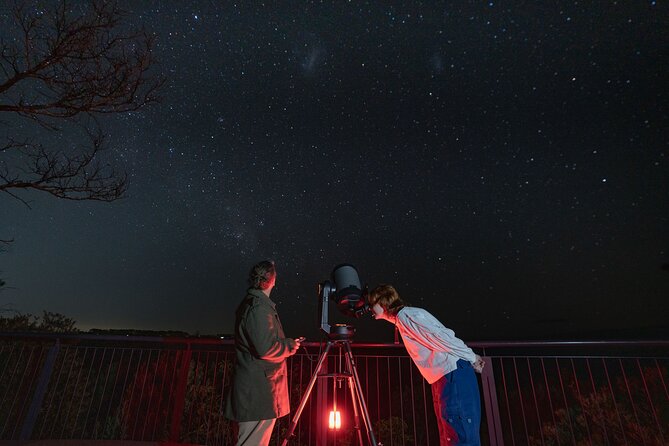
The session begins with the sky as you can see it without equipment. This is a smart order. If you look straight through a telescope first, you may see a fascinating object but have little sense of where it sits in the wider sky.
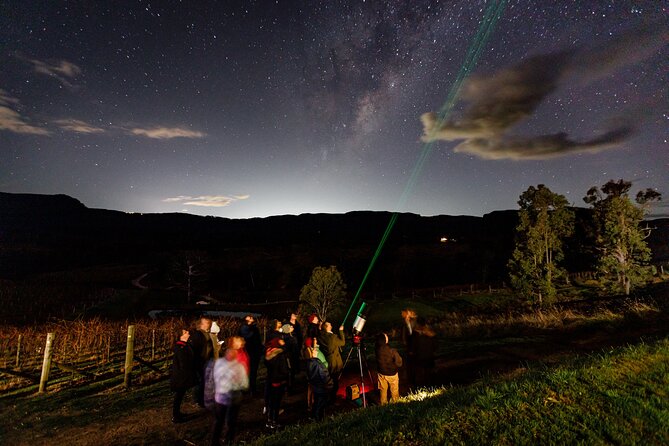
The guide uses a laser to point out constellations and tell their stories. You learn the basic pattern first, then use astronomy binoculars and the telescope to look more closely. This mix keeps the evening active. You are not standing in one line for 90 minutes, waiting for a turn at a single eyepiece.
The astrophysicist leading the activity has more than ten years of experience. Guides named in the experience feedback include Nathan, Tom, and Alka. Nathan was singled out for making the session interesting despite windy conditions, while Tom and Alka were praised for answering questions and engaging with the group. Guide assignments can vary, so do not book expecting a particular person unless the operator confirms it.
The question period is useful for both beginners and serious space fans. You can ask about what you are seeing, how the telescope works, or why certain stars and planets appear at different times of year. The explanations are intended to be digestible rather than a technical lecture, which suits a mixed group.
What you might see through the telescope
The object list is broad, but it is not a promise that everything will appear during your visit. The Moon, planets, star clusters, double and triple stars, nebulae, galaxies, and the Milky Way are all possible targets.
The Moon is often an excellent telescope subject because its craters can be seen in sharp relief. The viewing angle and lunar phase affect the detail. A partly lit Moon can show crater edges and shadows especially well, while a very bright full Moon can wash out some of the surrounding stars.
Planets bring a different kind of excitement. Depending on the season and the night, you might view Mars, Venus, Saturn, or Jupiter. Saturn’s rings are the classic prize, while Jupiter’s moons give you a quick lesson in how the solar system changes from night to night.
The Orion Nebula is another possible target. This glowing cloud is a favorite because it looks different from a planet or star. Instead of a bright point, you see a hazy region of gas and dust where stars are forming. Star clusters and double stars are also on the possible list, offering simpler but often striking views through the telescope.
Deep-space targets such as galaxies may appear as faint smudges rather than large, colorful images. This is worth knowing in advance. Telescope viewing is not like a space photograph from a magazine. The reward comes from seeing a real object with your own eyes, even when it is subtle.
The guide can also point out satellites and galaxies. The experience feedback specifically notes satellites passing overhead, which adds an unexpected moving element to an otherwise still sky. You might see one crossing the stars during the session, but it cannot be guaranteed.
Why the guide makes the difference
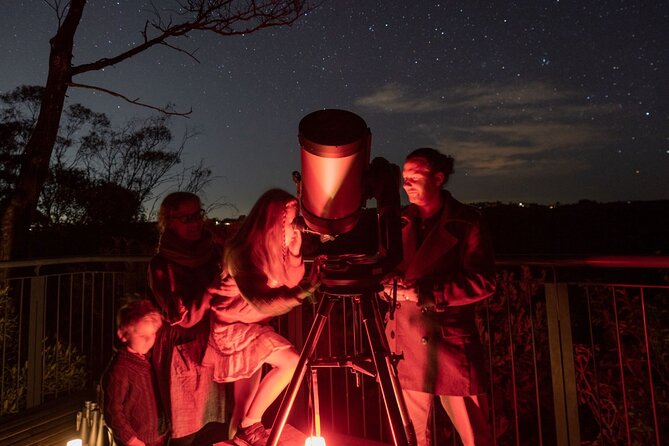
A telescope alone does not automatically create a good astronomy evening. You need someone to choose useful targets, explain what you are seeing, and keep the group involved while the equipment is adjusted.
That is where the astrophysicist-led format earns its price. The guide gives you a way to understand scale and position. You are not only told that a faint patch is a galaxy. You can ask where it is, why it is visible, and how it relates to the Milky Way.
I also like the balance between facts and storytelling. Constellation stories help you remember shapes that might otherwise blur together. The laser-guided approach is particularly practical for beginners because everyone can look toward the same part of the sky at once.
The group limit of 20 is another quiet advantage. It is not a private tour, but it is small enough to support questions and give people a fair chance at the telescope. If the group reaches the maximum, you should still expect some waiting while others take their turn. The binoculars and naked-eye sections help prevent that wait from becoming dead time.
French and English are available. That makes the session more welcoming for mixed-language groups, though the supplied information does not specify whether every session has two guides or how translation is handled. If language support is important to your booking, confirm the arrangement ahead of time.
Same base, a completely different day out:
- Blue Mountain: Small-Group Tour with Lunch & Scenic World
★ 4.8 · 3,009 reviews - Blue Mountains Day Trip from Sydney Including Scenic World
★ 4.5 · 2,420 reviews - From Sydney: Blue Mountains Tour with Waterfall Walk & Lunch
★ 4.8 · 2,400 reviews - Blue Mountains Adventure: Scenic World, Zoo & Koala Photo
★ 4.7 · 2,062 reviews
Hot chocolate, blankets, and the Blue Mountains cold
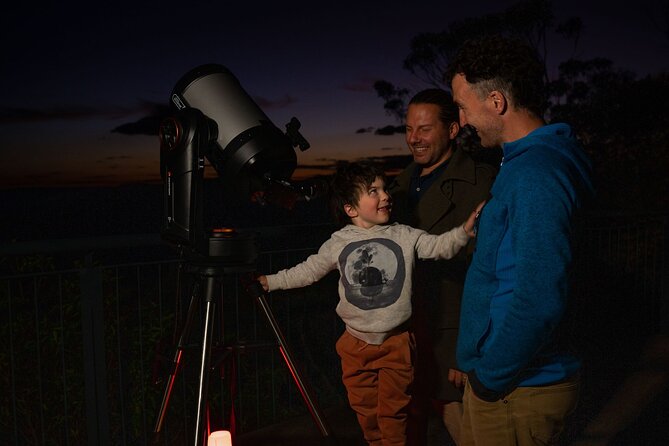
Night air in the mountains can feel sharp, even when the day was mild. Complimentary hot chocolates are provided, with warm or cold drinks depending on the weather. Warm blankets have also been part of the setup.
These touches are more than decoration. A cold person stops enjoying the telescope quickly. You should still dress for an outdoor evening, since the drink and blanket supply is a comfort measure, not a replacement for suitable clothing.
The experience ends at the same meeting point. Public transportation is nearby, and service animals are allowed. Wheelchair and stroller access is listed, which makes the activity workable for many families and visitors with mobility needs. The details of the exact surface and telescope viewing position are not provided, so anyone needing specific access information should ask before booking.
Weather decisions at 1 pm
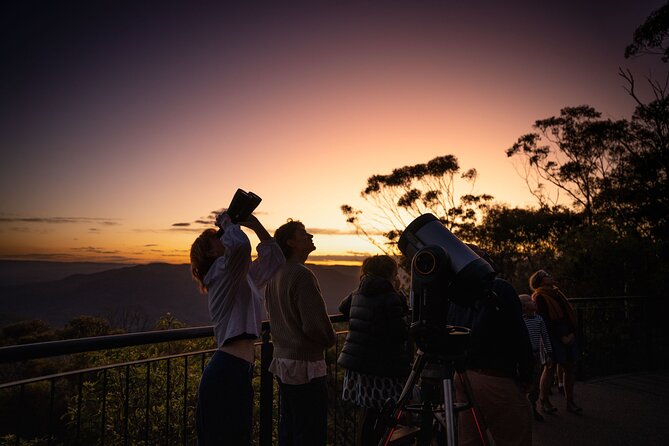
Clear weather is essential for an outdoor astronomy session. The operator sends a weather decision at 1 pm on the day of the tour. If you do not receive an email by that time, the stargazing session is confirmed.
If poor weather cancels the outdoor tour, you are offered two choices. You can take a gift voucher or credit to reschedule, and that credit is transferable and valid for three years. Or you can attend an alternative 90-minute indoor planetarium astronomy tour.
The indoor option uses a dome, a powerful projector, and a cinema-style presentation. It can preserve the astronomy content when clouds spoil the real sky. It is not the same experience, though. You will not be looking through the outdoor telescope at the Moon or a planet.
The indoor session needs a minimum of eight people. If that number is not reached, the credit or rescheduling choice becomes the practical alternative. The terms also say no refund is offered if you simply cancel because of bad weather. Separate cancellation terms state that if the operator cancels because of poor weather or because the minimum group size is not met, you will be offered another date or experience, or a full refund.
That distinction is important. Check the weather email, but do not assume you can wait until evening and then receive your money back if you decide not to attend.
Is $60.97 a fair price?
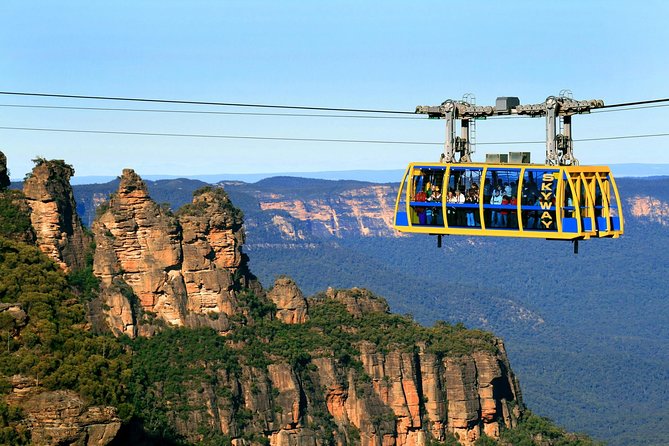
At $60.97 per person, this is not a casual free look at the stars. You are paying for an astrophysicist, a professional-grade telescope, astronomy binoculars, guided constellation instruction, a question period, and a 90-minute organized session.
I think the price makes sense if you want interpretation and equipment. Buying access to a dark sky without knowing where to look can leave you seeing only a scatter of stars. Here, the guide gives structure to the evening and helps you make sense of objects that may be faint or unfamiliar.
The value is strongest for first-time stargazers, families, and visitors who want to understand the Southern Hemisphere sky. The Southern Cross alone can make the session special for someone who has never seen it. The price is less compelling if you already own strong astronomy equipment and prefer to observe alone, or if you are mainly seeking a guaranteed view of one specific planet.
Book about 24 days ahead if your schedule is fixed. That average lead time suggests that popular dates can fill well before the visit, especially during school holidays or periods of clear weather. The maximum group size is 20, so this is not designed as a huge mass outing.
Who will enjoy this most?
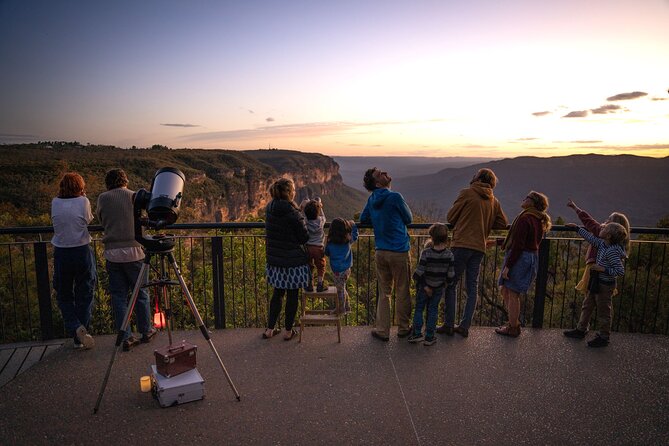
I would choose this for you if you are curious but not highly technical, or if you want an evening activity that feels different from another restaurant or scenic stop. You do not need prior astronomy knowledge. The guide starts with objects you can see with your own eyes and builds from there.
It also suits families, provided children can manage a 90-minute outdoor session and follow the guide’s instructions around the equipment. The hot chocolate and storytelling help, but the night can still feel long for very young children if the weather turns cold.
Couples and small groups will find it easy to share the experience, while solo visitors can join a small public group. English and French language options make it useful for more than one kind of group.
I would be cautious about booking this as the main reason for a tightly planned Blue Mountains day. Weather can change the format, and the exact celestial targets are never fixed. Treat the astronomy as a flexible evening highlight, not a guaranteed appointment with Saturn.
Should you book Stargazing with an Astronomer?
Book it if you want a guided introduction to the Southern Hemisphere sky, access to serious equipment, and a chance to ask an astrophysicist questions in a small group. The combination of laser constellation stories, telescope viewing, hot chocolate, and possible views of the Southern Cross gives the evening real character.
Think twice if you need a guaranteed outdoor session, a guaranteed planet, or a fully refundable booking. The weather policy requires flexibility, and a windy night may move the activity away from the lookout.
For most visitors, I would consider this a strong Blue Mountains evening choice. Plan for cold air, keep your date flexible, and arrive ready to look first with your own eyes. The telescope is the tool, but learning where to look is the lasting part.
FAQ
Where does the stargazing experience start?
It starts at the Wentworth Falls Lookout Track in New South Wales, Australia.
Where does the activity finish?
The activity ends back at the same meeting point.
How long is the tour?
The stargazing session lasts approximately 1 hour and 30 minutes.
What equipment is provided?
The experience includes a professional-grade telescope and astronomy binoculars. The guide also uses a laser to point out constellations.
Which celestial objects might I see?
Depending on the time of year and conditions, you might see the Moon, Mars, Venus, Saturn’s rings, Jupiter’s moons, the Orion Nebula, star clusters, double or triple stars, galaxies, and the Milky Way.
Is the experience available in French?
Yes. English and French languages are available.
Is the tour accessible for wheelchairs and strollers?
The experience is listed as wheelchair and stroller accessible. Service animals are also allowed.
What happens if the weather is bad?
At 1 pm on the day of the tour, you will be offered a transferable credit to reschedule or the option of a 90-minute indoor planetarium astronomy tour. The indoor tour requires at least eight people to run.
Can I cancel for a refund?
The experience is non-refundable if you cancel or request an amendment. If the operator cancels because of poor weather or because the minimum number of participants is not reached, you will be offered another date or experience, or a full refund.
Just added around Blue Mountains
- Army Truck Adventures – 3 Hour Guided Tour★ 5.0 · 50 reviews
- Blue Labyrinth PRIVATE Tour: Sydney Blue Mountains by E-Bike★ 5.0 · 29 reviews
- sydney underwater scooter tours★ 4.5 · 74 reviews
- Blue Mountains Day Tour with Wildlife and Scenic World Entry★ 4.0 · 51 reviews
- Private Blue Mountains Escape The Crowds Mercedes Tour★ 5.0 · 72 reviews
- Full-Day Canyoning Experience at Stunning Empress Canyon★ 5.0 · 87 reviews
- Blue Mountains Day Tour With Bushwalks, Waterfalls & Featherdale★ 5.0 · 305 reviews
- Blue Mountains Hop On Hop Off Tour★ 4.5 · 293 reviews
Blue Mountains Tours, compared.
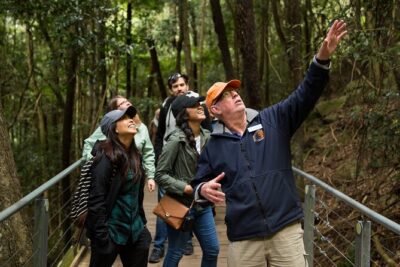
All Inclusive Blue Mountain,Scenic World,Lunch,Koalas,ferry
Read our review →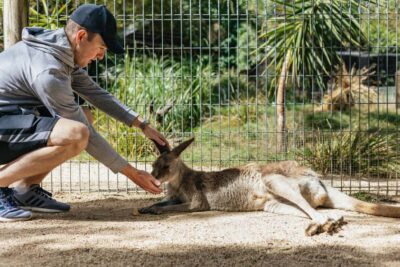
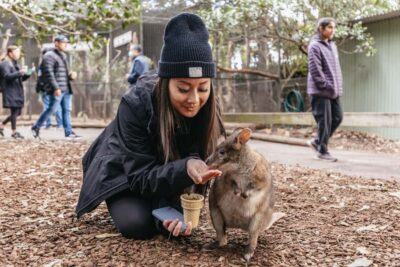
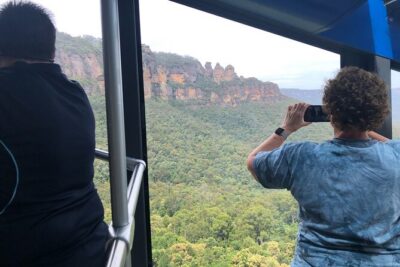
Blue Mountains Day Trip from Sydney Including Scenic World
Read our review →
Blue Mountains Tour with Waterfall Walk & Lunch
Read our review →
Blue Mountains Adventure: Scenic World, Zoo & Koala Photo
Read our review →
Blue Mountains Day Tour Including Parramatta River Cruise
Read our review →
Blue Mountains, Scenic World, Zoo, & Ferry Ride
Read our review →Browse the lists this tour appears in