
Review · ADELAIDE TOURS
Around the Square Adelaide Walking Tour
Adelaide’s central square is more than an open patch of lawn. It is a compact stage for the city’s political, religious, legal, and colonial past, and this walk brings those layers together through buildings and statues. Guide Graeme, also written as Graham in some booking details, leads the tour with local stories, anecdotes, and a clear sense of how Adelaide grew.
I like two things here: the short, useful route gives you your bearings early in a visit, and the focus on buildings makes the city easier to read afterward. I also like that Graeme may take you inside historic buildings when access allows, including the State Library’s Mortlock Library, an unexpected extra noted by past participants.
The main consideration is the walking itself. Two hours on foot, outdoors and in all weather, calls for comfortable shoes and suitable clothing. The tour is easy paced, but it is not a seated sightseeing ride, and food, drinks, transport, and hotel pickup are not included.
Key points at a glance
- Victoria Square’s Indigenous name: Learn about Tarntanyangga, the square’s development, and its links to Adelaide’s earlier story.
- Graeme’s local storytelling: Expect history tied to real people, including Mary MacKillop, John McDouall Stuart, Charles Cameron Kingston, and Sir Richard Torrens.
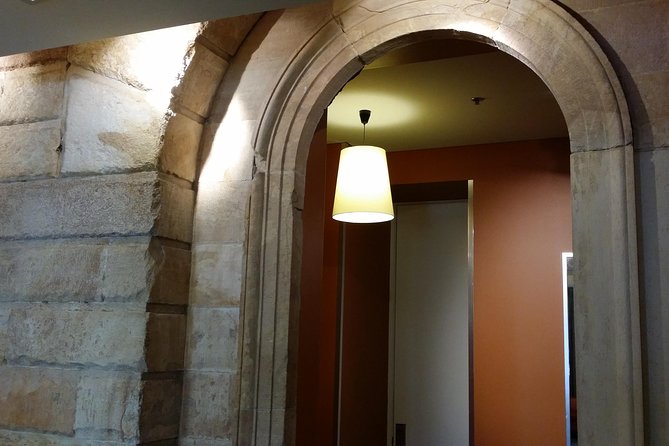
- Historic interiors when possible: The route can include surviving features inside buildings, with the Mortlock Library called out as a memorable bonus.
- A compact city introduction: In about two hours, you cover religious, civic, legal, commercial, and government buildings around Adelaide’s core.
- A relaxed small-group format: Bookings are limited to 15 people, with a stated overall maximum of 20.
- Good first-day timing: The 10:00 am start leaves most of the afternoon for Adelaide’s museums, markets, shops, and other sights.
Why this Adelaide walk works as a first introduction
I find a walking tour most useful when it teaches you how to understand a city, not just where to point your camera. This one does that by using Victoria Square and the nearby streets as a single outdoor classroom.
You will hear how Adelaide’s early local government developed, how legal and land systems shaped South Australia, and how public buildings changed use over time. The route also introduces people who helped form the colony and state, along with figures whose reputations were less polished than the statues might suggest.
That human element matters. The walk is not only a parade of dates and architectural labels. Graeme’s style, based on the available tour details and participant comments, includes amusing stories, personal anecdotes, and answers to questions from the group. Several people found that the two hours passed quickly because the facts were tied to characters and events.
The tour starts at Adelaide Town Hall, at 128 King William Street, at 10:00 am. It finishes in front of the Queen Victoria statue in Victoria Square. That is a practical ending point because you finish near the heart of the route rather than being returned to a hotel or suburban pickup point.
More walking tours in Adelaide:
- Ultimate Adelaide Walking Tour
★ 5.0 · 222 reviews - Cultural Caper Adelaide Walking Tour
★ 5.0 · 122 reviews - Welcome to Adelaide Walking Tour
★ 5.0 · 119 reviews
St Francis Xavier Cathedral and Mary MacKillop
The cathedral section begins with St Francis Xavier Cathedral, one of Adelaide’s major Catholic landmarks. Your guide covers its significance, history, architecture, and continuing relevance, giving you a useful way to look at the building rather than simply passing its facade.
The adjoining Mary MacKillop statue adds a personal and social side to the stop. You hear about MacKillop’s path to sainthood, the order of nuns she founded, and its charity work. This is a short five-minute portion, but it connects religious history with education, service, and daily life.
The cathedral and statue together show how Adelaide’s story includes more than government and business. If you enjoy architecture, faith, or the lives of people who shaped Australian institutions, this is a strong opening section.
Admission is free at the stops listed for the tour. Still, the route is mainly an exterior walk, and entry into buildings depends on what access is possible on the day. That distinction is worth keeping in mind if you are hoping to see every interior.
Adelaide Town Hall and the civic story
Adelaide Town Hall is both the meeting point and an important early stop. Here you receive an introduction to Adelaide, its development, the planned route, and basic tour information.
The guide also explains early local government in South Australia. That context helps make sense of the buildings you see later, especially the courts and government offices around the square. You are not just looking at handsome stonework. You are learning how authority was organised and where decisions were made.
The town hall section lasts about 10 minutes. Starting here is convenient, but it also means you should arrive ready to walk. The tour does not include transportation between stops, and the guide does not provide hotel pickup or drop-off.
Victoria Square, Tarntanyangga, and its public statues

Victoria Square is the centrepiece of the experience. The guide discusses the square’s development, its history, and its Indigenous connections, including the name Tarntanyangga.
This is where the tour’s different threads meet. Public space, colonial planning, Indigenous presence, government, ceremony, and civic memory all sit within the same square. You also examine the Queen Victoria statue and the Charles Cameron Kingston statue, with their significance explained rather than left as anonymous monuments.
The square section takes about 23 minutes, making it one of the longer stops. That time is useful because a large public space can seem simple until you understand why it was designed, altered, and named as it is.
The tour ends at the Queen Victoria statue, but you encounter the square earlier as part of the broader circuit. If you plan to continue sightseeing afterward, this is a good place to pause and decide where to go next. The guide’s orientation can help you connect the square with nearby streets and buildings.
A few more Adelaide half-days to weigh up
- Barossa Premium Wine Tasting Tour & lunch Departs 7 days a week
★ 5.0 · 1,475 reviews - Adelaide: Barossa Premium Wine Tasting tour & Winery Lunch
★ 4.8 · 1,452 reviews - Discover Barossa: 4 Wine Tastings, Gourmet Lunch, and Hidden Gems
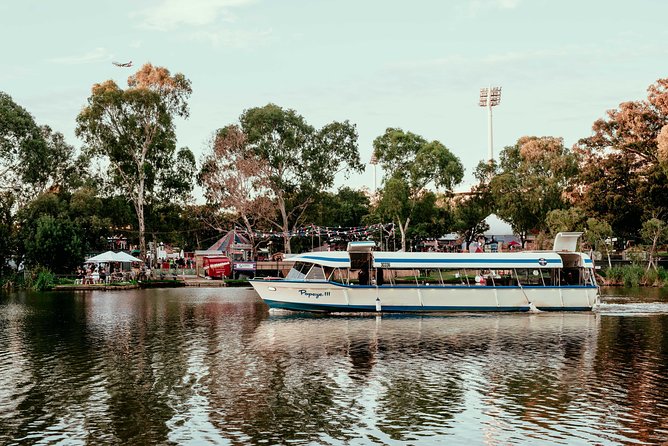
★ 5.0 · 1,027 reviews - Adelaide: River Torrens Popeye Sightseeing Cruise
★ 4.6 · 949 reviews
The Torrens Building and Adelaide’s land system
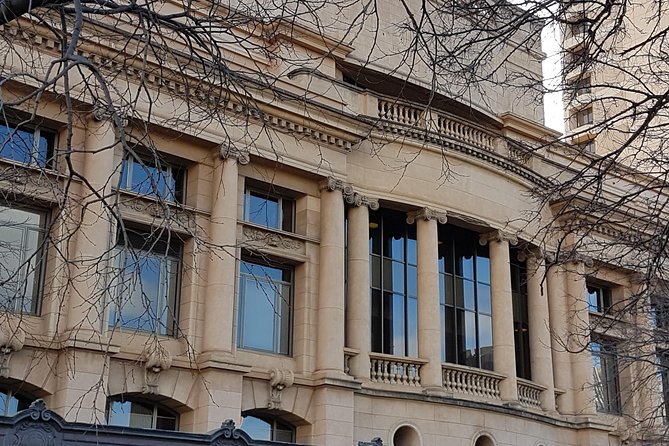
The Torrens Building receives a shorter, four-minute explanation, but the subject is important. You hear about the building’s history, its occupants, and Sir Richard Torrens, whose name is linked to the land title system.
This stop is a good example of the tour’s value. A building that might look like another government-era structure becomes tied to a system that shaped property ownership and administration. You may not remember every date, but you will understand why the building matters.
The brief timing also keeps the walk moving. Not every stop receives a long lecture, which helps the tour fit its two-hour schedule.
The former Treasury Building and Adelaide’s political machinery
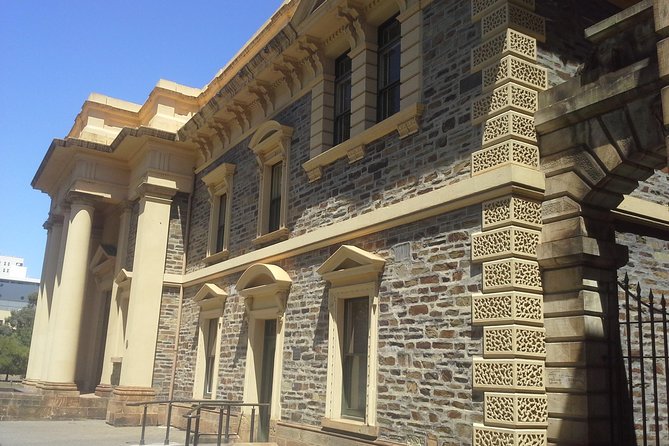
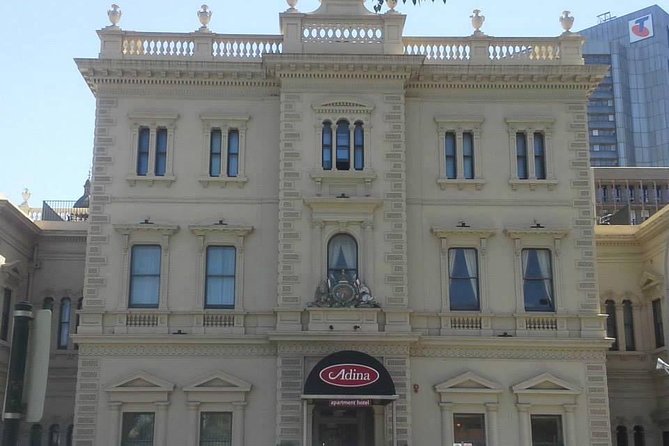
The Adina Apartments, formerly the Treasury Building, opens a different window onto Adelaide’s past. The guide discusses the building’s history, tunnels, courtyard, famous visitors, and the role of Cabinet before 1968.
This section is especially useful if you like the practical side of history. Government is often presented through leaders and elections, but buildings reveal how decisions were actually handled. The former Treasury Building links administration, finance, security, and political routine.
Allow about 10 minutes here. If access to internal areas is possible, you may see features that are easy to miss from the street. The available experience details stress that the guide sometimes takes people inside historic buildings, but interior access is not guaranteed, so treat it as a possible bonus rather than a promise.
John McDouall Stuart and the State Administration Centre
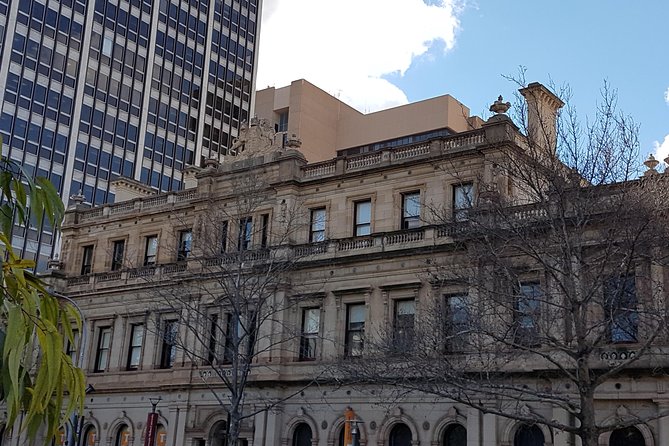
The John McDouall Stuart statue shifts the story from city government to exploration. Graeme explains Stuart’s role, his journeys, and his legacy. The statue gives you a physical focus for a story that could otherwise feel remote.
You then hear a brief account of the State Administration Centre and its current use by state government ministers and staff. The contrast is neat: one stop recalls exploration and expansion, while the next points to the modern machinery of government.
Together, these sections show how the tour moves across time without leaving the city centre. You do not need a separate museum visit to encounter these themes, though a museum would naturally offer more detail than a 5-minute statue stop and a 2-minute building overview.
Courts, education, and the Sir Samuel Way building
The SA Water Building introduces the educational use of a city building, while the Dame Roma Mitchell Commonwealth Law Courts brings attention to the courts and the people who use them. The guide outlines the buildings’ purposes and the types of courts contained within the law courts complex.
The legal buildings are valuable stops because they show Adelaide as a working capital, not simply a historic centre. You see where public institutions still operate, alongside structures that have changed function over time.
The Sir Samuel Way Court Building gets about 10 minutes. Its former life as a department store and its marble staircase give the building a memorable twist. A former retail space becoming part of the legal world is the sort of change that makes a city feel lived in rather than frozen in one era.
The Three Rivers Fountain and the buildings around it
The Three Rivers Fountain is one of the route’s longer stops, with about 19 minutes devoted to its story, construction, and significance. Public fountains can be easy to overlook, so it is helpful to learn why this one was erected and what it represents.
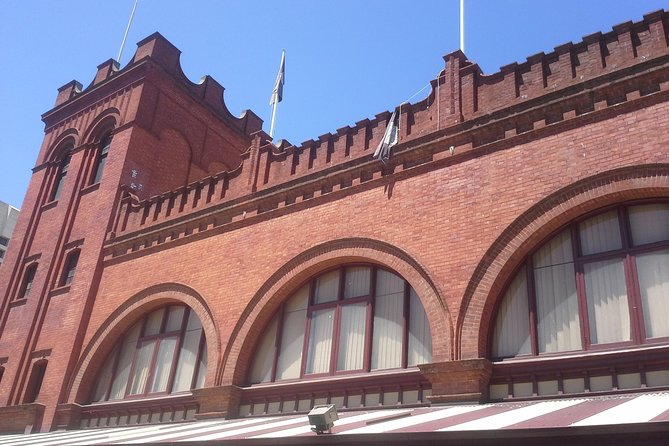
The surrounding stops continue the theme of changing city functions. You hear about the former SGIC Building, including its architecture and associated stories, then the former Harbour Board Building, its engineering achievement, design, and place in Adelaide’s development.
The former MLC Building completes this part of the route with its own historical importance. These buildings may not be the headline attractions in a standard Adelaide itinerary, but that is precisely why a local guide helps. Without explanation, you may walk past them. With context, the street becomes a series of clues.
What the guide adds to the buildings
The strongest thread through the experience is Graeme’s storytelling. The supplied comments repeatedly describe him as friendly, well prepared, articulate, and passionate about Adelaide. One person who joined alone said he still took time to show the city around, while another valued how he adapted to the group’s questions and energy.
That matters in a group walk. A guide can either rush through prepared facts or respond to what people want to know. Here, the available details point to a more flexible approach, with humorous tales mixed into the historical account.
You should also expect a local rather than a purely academic tone. The stories include early founders and explorers, but they do not present every figure as spotless. One account specifically appreciated learning that some early figures drank to excess. That kind of detail gives the past a little grit and keeps the tour from sounding like a polished civic brochure.
The strongest praise centres on three things: Graeme’s command of Adelaide’s past, his entertaining delivery, and the relaxed pace. The 5-star rating from 50 reviews and 100 percent recommendation figure support the view that the guide is the main reason this short walk works so well. Still, the format will suit you best if you enjoy listening to stories and asking questions. If you want a fast photo tour with little commentary, this is not the right match.
Price, pace, and practical value
At $36.93 per person, the tour costs more than walking the square alone, but the comparison is not really between a paid walk and a free stroll. It is between seeing a set of buildings without context and spending two hours with someone who connects them to Adelaide’s people, laws, politics, and changing uses.
I consider the price fair for a first visit, especially if you use the tour to plan the rest of your stay. The guide can help you recognise which buildings and streets deserve another look, and the tour’s central finish leaves you free to continue exploring.
The 10:00 am start is also useful. You get your orientation early, then have the rest of the day available. The tour lasts about two hours and involves a moderate amount of walking at an easy pace.
The practical details are simple:
- Meet at Adelaide Town Hall, 128 King William Street.
- Start time is 10:00 am.
- Finish at the Queen Victoria statue in Victoria Square.
- A local guide is included.
- Food, drinks, transport, and hotel pickup are not included.
- The tour operates in all weather, so dress for the conditions.
- Comfortable shoes are a sensible choice.
- Children must be accompanied by an adult.
- A moderate level of physical fitness is expected.
- The booking information allows a maximum of 15 people per booking, with an overall maximum of 20 people.
- Mobile ticketing is provided.
The tour has free cancellation up to 24 hours before the start time. Cancellations or changes made less than 24 hours ahead are not accepted for a refund.
Who should book this Adelaide walking tour
I would choose this for a first morning in Adelaide, particularly if you want a clear introduction before tackling museums and galleries on your own. It also suits repeat visitors who have seen the central streets but never learned why the buildings and statues are there.
History fans will get the most from it, but you do not need specialist knowledge. The route covers religion, Indigenous connections, local government, land titles, exploration, courts, education, finance, and architecture in plain terms.
It can work for a range of ages and abilities if you are comfortable with two hours of moderate walking. The relaxed pace makes it more approachable than a hard-charging city walk, but the tour still takes place outdoors and in all weather.
I would be more cautious if you have very limited walking ability, need guaranteed indoor access, or prefer a tour built around major ticketed attractions. This experience is about the city’s public spaces and buildings, with interiors included only when possible.
Should you book it?
Book the Around the Square Adelaide Walking Tour if you want local stories attached to ordinary-looking buildings and a calm way to get your bearings. Graeme’s personal delivery, the historic interiors that may be available, and the range of figures tied to the route give the walk more substance than its modest two-hour length suggests.
Skip it if you want a broad vehicle tour of all Adelaide or a ticketed attraction with guaranteed indoor viewing. For most first-time visitors who like history, architecture, and a guide who can answer questions, $36.93 is a sensible use of your morning.
FAQ
Where does the Around the Square Adelaide Walking Tour start?
The tour starts at Adelaide Town Hall, 128 King William Street, Adelaide, South Australia.
What time does the tour begin?
The start time is 10:00 am.
Where does the tour finish?
The tour finishes in front of the Queen Victoria statue in Victoria Square, Adelaide.
How long does the walking tour last?
The experience lasts approximately two hours.
What is included in the price?
A local guide and mobile ticket are included. Food, drinks, hotel pickup and drop-off, and transportation to or from attractions are not included.
What should I wear, and does the tour operate in bad weather?
Wear comfortable shoes and dress appropriately for the weather. The tour operates in all weather conditions and requires a moderate level of physical fitness.
Just added around Adelaide
- d’Arenberg Cube / McLaren Vale Regional Tour★ 4.5 · 26 reviews
- Ultimate Adelaide City and Hahndorf Tour★ 4.5 · 45 reviews
- Welcome to Adelaide Walking Tour★ 5.0 · 119 reviews
- Victor Harbor and Southern Highlights from Adelaide★ 4.0 · 47 reviews
- Victor Harbor and Fleurieu Peninsula Tour★ 4.5 · 145 reviews
- Ultimate Adelaide Walking Tour★ 5.0 · 222 reviews
- Adelaide Twilight Cruise from Glenelg★ 4.5 · 94 reviews
- Wild Dolphin Swim Cruise★ 5.0 · 55 reviews
Adelaide Tours, compared.

Barossa Premium Wine Tasting Tour & lunch Departs 7 days a week
Read our review →
Barossa Premium Wine Tasting tour & Winery Lunch
Read our review →
Discover Barossa: 4 Wine Tastings, Gourmet Lunch, and Hidden Gems
Read our review →



Browse the lists this tour appears in