
Review · ULURU TOURS
7 Day Adelaide to Uluru Adventure and Cultural Tour
Uluru is the grand finale, but the real surprise is how much comes before it. This seven-day trip moves from the rugged Flinders Ranges to underground Coober Pedy, across salt plains and red desert, then into the sacred country around Uluru and Kata Tjuṯa. You get a proper outback journey, not just a quick photo stop.
I like the small maximum group of 20, which keeps the long drives and campfire evenings more social than a large coach trip. I also like the mix of walks and cultural visits, especially Arkaroo Rock, the Old Timers Mine, and the Aṉangu Cultural Centre. The trade-off is simple: you must be comfortable with a 5:30 am start, long road days, camping, and several solid hikes.
Key points at a glance
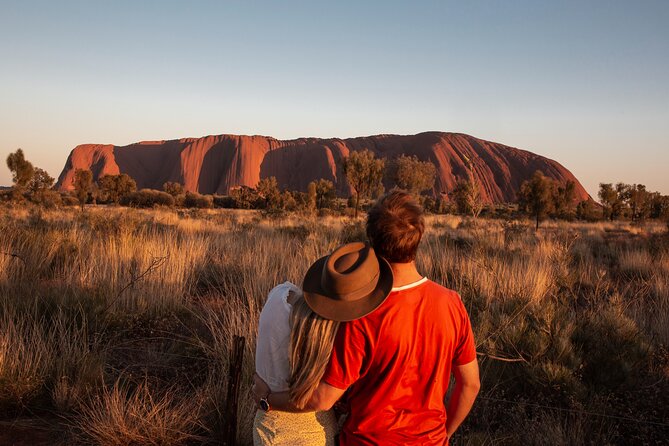
- Sleep in a swag under the stars near Uluru: Camping here makes the Red Centre feel close and immediate.
- Walk through four very different outback settings: Expect the Flinders Ranges, Coober Pedy, Kings Canyon, and Kata Tjuṯa.
- Meet Aboriginal culture on Country: A Yura guide introduces you to Wilpena Pound, while the Cultural Centre explains Aṉangu connections to Uluru.
- Go underground in Coober Pedy: The Old Timers Mine and Radeka Downunder show how people adapted to desert heat and opal mining.
- Take on the 6 kilometre Kings Canyon Rim Walk: This is the trip’s most demanding hike and one of its biggest rewards.
- Plan your finish in Yulara: An onward transfer to Alice Springs is not included, so arrange it before you leave Adelaide.
Why this Adelaide to Uluru route works
Many trips to Uluru begin and end at the rock. This one earns the arrival. You spend the opening days crossing South Australia by road, watching the country change from settled farmland to dry ranges, saltbush plains, red dirt, and open sky.
The route also gives you useful context. The Flinders Ranges introduce ancient Aboriginal stories and mountain country. Coober Pedy shows the practical, sometimes eccentric side of outback life. Kings Canyon adds a major walk before Uluru brings the trip to its spiritual centre.
The vehicle time is a real part of the experience. Day 3 includes a long run toward Lake Hart, and Day 4 is another major transfer through remote country. If you enjoy watching a place change slowly, these hours are rewarding. If you need constant activity, they may feel tiring.
The group limit of 20 is a sensible size for this route. You have enough people for a lively campfire, but not so many that every stop becomes a queue. A storyteller guide leads the trip, and guide names associated with this departure include Eli and Brandon. The strongest guide experiences described for this tour point to people who combine practical trip management with stories, humour, and a clear interest in local culture.
More history-led days in Adelaide:
- Ultimate Melbourne Walking Tour: History, Laneways & Culture
★ 5.0 · 1,451 reviews - Puffing Billy Railway: Heritage Steam Train Journey
★ 4.6 · 1,195 reviews - Morning World Heritage Cruise on the Gordon River from Strahan
★ 5.0 · 1,193 reviews
Day 1: Arkaroo Rock and a Yura welcome at Wilpena Pound
The alarm rings early. Pickup is at YHA Adelaide Central on Waymouth Street at 5:30 am, so you should stay in central Adelaide the night before or allow plenty of time to reach the meeting point.
The first brief stop is Wirrabara, a small town where you can grab a coffee and reset before the long run north. It is not a major attraction, but it breaks up the opening drive and marks the point where city routines begin to fall away.
Arkaroo Rock is the first substantial stop. The 3.2 kilometre trail passes through native bush to a rock shelter with ochre and charcoal art. This is an important early lesson in how to approach the trip: the walk is not only about scenery. You are visiting Adnyamathanha Country, and the rock art gives the place cultural weight.
Allow about an hour here. Wear shoes suitable for an uneven trail, carry water, and use the stop to settle into the walking rhythm. The hike is moderate rather than extreme, but the heat can make a short route feel longer.
By evening, you reach Wilpena Pound, the dramatic ring of mountains that becomes your base for the night. A local Yura guide welcomes the group to Country and shares stories first spoken in Yura Ngawarla before explaining them in English. That local voice matters. It gives the next day’s walks more meaning than a simple geology talk would.
Day 2: The Wangara Lookout hike and Old Wilpena Station
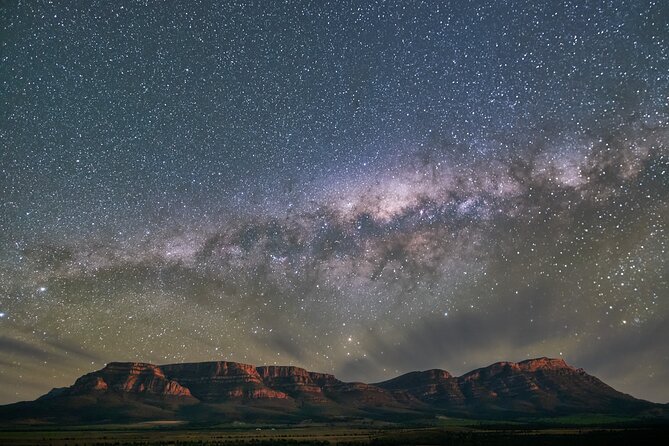
Day 2 begins with the 7 kilometre return walk to Wangara Lookout. The trail starts at the Wilpena Pound Visitor Centre and passes through Pound Gap, with river red gums along the route. The climb leads to wide views over the surrounding ranges.
Three hours are set aside for this hike. You need a moderate level of fitness, but the key issue is not speed. Take your time, drink regularly, and be ready for a warm, exposed walk. The payoff is a broad view of the Flinders Ranges rather than a single framed viewpoint.
The day continues at Old Wilpena Station, where pastoral history meets the older cultural story of Adnyamathanha Country. This combination is one of the tour’s strengths. You are not shown only the famous natural sights. You also see how European settlement changed the area and how those stories sit alongside Aboriginal connections to Country.
There is time in Hawker for lunch and a short stop at the local gallery. The itinerary then carries you to Warren Gorge and onward through the Flinders area. With about 13 hours allocated to this portion of the day, expect a full schedule rather than a relaxed resort-style stopover.
Day 3: Salt plains, Lake Hart, and underground Coober Pedy
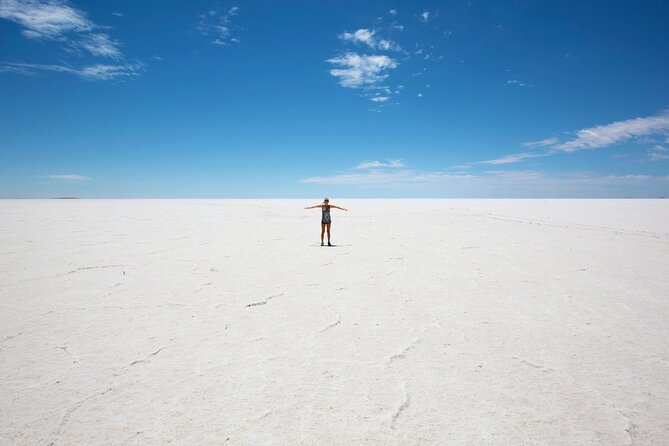
The Flinders Ranges give way to long stretches of saltbush and open plain as you travel north. Port Augusta provides a refreshment break before Lake Hart, a salt lake that can look stark, bright, and almost unreal under the large South Australian sky.
Five hours are allocated around this part of the journey. This is where you need to appreciate the road trip for what it is. The attraction is not a packed sequence of sights. It is the changing texture of the country, the silence, and the sense of distance.
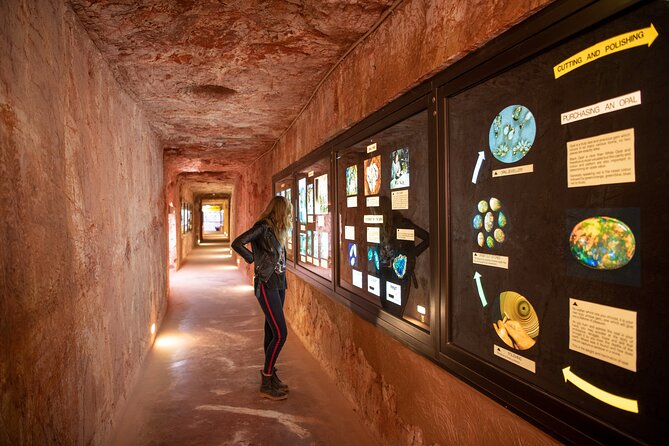
By late afternoon, Coober Pedy offers a sharp change of mood. The Old Timers Mine explains how opals formed and takes you through original underground workings. The visit adds a practical layer to the town’s story: underground rooms are not just a novelty here. They help people escape the desert heat.
You spend the night at Radeka Downunder, where the rooms are carved into the rock. This is one of the most distinctive accommodations on the route. It is not a hotel experience, and you should expect a simple underground stay rather than polished luxury.
Coober Pedy is yours to explore in the evening. The schedule allows time for options such as pizza in a cave, though the cost of your evening meal is not included. Bring some spending money and enjoy the town’s odd, inventive character.
A few more Adelaide half-days to weigh up
- Barossa Premium Wine Tasting Tour & lunch Departs 7 days a week
★ 5.0 · 1,475 reviews - 7 Day Uluru to Adelaide Cultural and Adventure Tour
★ 5.0 · 30 reviews - Perth: 7 Day Exmouth Explorer & Ningaloo Reef Return Perth
★ 4.5 · 119 reviews - Tasmania: 7-Day West to East Tour
★ 4.8 · 115 reviews
Day 4: The Breakaways, the Dingo Fence, and the long run to Kings Canyon
Day 4 is the biggest road day. You pass the Dingo Fence, described as the world’s longest dog barrier, and continue to Kanku-Breakaways Conservation Park. The Breakaways are known for their striking bands of colour and unusual rock forms, a strong contrast with the flatter country around Coober Pedy.
The itinerary does not give a precise duration for the early part of this day, but the overall schedule makes the message clear: pack patience. You will spend many hours on the road before crossing into the Northern Territory and reaching Watarrka National Park.
Kings Creek Station is your desert base for the night. This is a useful staging point for the next morning’s major walk. By this stage, you will have covered a great distance, so an early night is sensible even if the group is tempted to stay up around the fire.
Day 4 tests your tolerance for transit more than your legs. That is the cost of connecting Adelaide with the Red Centre overland. The reward is arriving at Kings Canyon with the journey itself still part of the story.
Day 5: Kings Canyon’s 6 kilometre rim walk
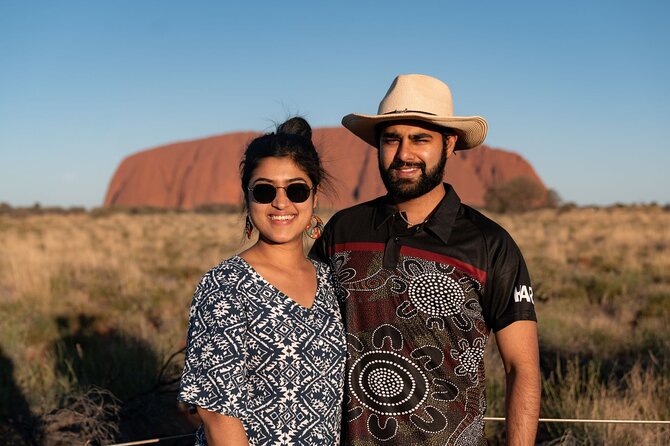
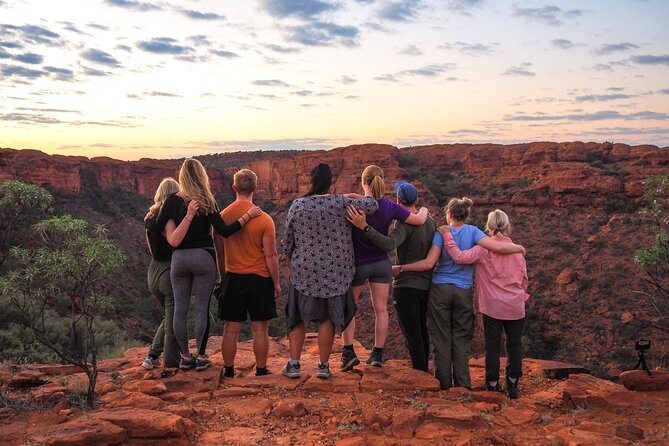
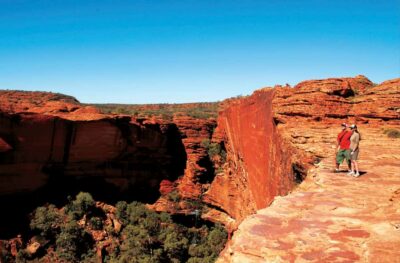
Start early for the Kings Canyon Rim Walk. The 6 kilometre loop climbs through sandstone cliffs, rounded domes, and high viewpoints across Watarrka National Park. Three and a half hours are allowed, which gives you time to handle the climb without treating it as a race.
This is the hike to take seriously. You need moderate fitness, good footwear, water, and a willingness to manage heat and uneven ground. The opening climb can feel demanding, but the views and rock formations make the effort worthwhile.
The walk is also a good reason to pack light for the day. Keep your camera, water, and essentials close, but avoid carrying a heavy bag. The tour includes several walks, yet Kings Canyon is the one most likely to expose any weakness in your preparation.
After lunch, you continue toward Uluru-Kata Tjuṯa National Park. The road time gives you a chance to rest before the evening’s main event: sunset at Uluru.
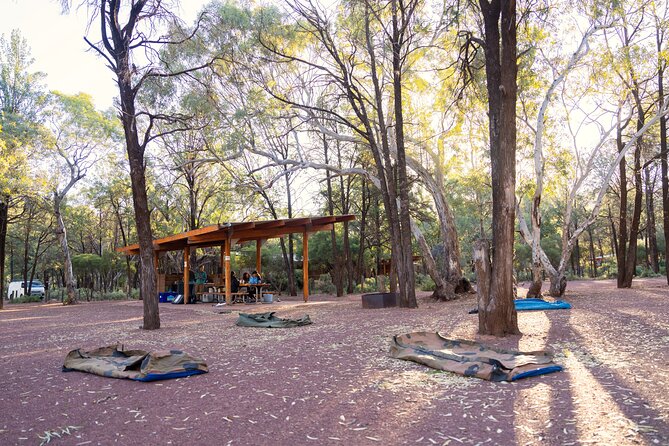
At Ayers Rock Campground, you set up for the night, eat dinner, and sleep in a swag beneath the stars. A swag is a compact bedroll used for outdoor sleeping. This is more basic than a cabin, but it puts you directly into the desert night. If you enjoy campfires, big skies, and a little dust, it can become one of the trip’s defining moments. If you prefer privacy and a firm indoor bed, this is the point to think carefully about your choice.
Day 6: Kata Tjuṯa, the Cultural Centre, and a desert barbecue
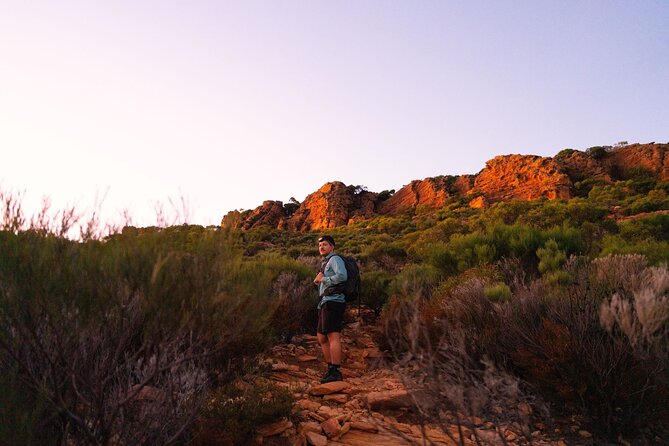
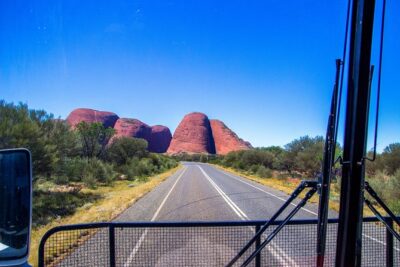
The morning walk at Kata Tjuṯa follows the 2.6 kilometre Walpa Gorge trail. Walpa means wind in the local language, and the route leads between towering red rock domes. The walk is shorter than Kings Canyon’s rim circuit, but the enclosed rock walls create a different mood.
Three hours are set aside for Kata Tjuṯa. Use the time to look up as well as ahead. The scale comes from the domes rising around you, not simply from distance covered.
Before lunch, you visit the Cultural Centre in Uluru-Kata Tjuṯa National Park. This is essential time, not filler between scenic stops. It helps explain Aṉangu life, cultural responsibilities, and the meaning of Uluru. The cultural material gives you a better way to look at the rock and the surrounding sites.
The evening includes an optional Outback BBQ at your own cost. Dinner, drinks, and stories with the group can be a pleasant final social night, but remember that this expense is separate from the included meals.
You can also choose the Field of Light as an optional extra for A$50 per person. It is not part of the main package, so check your budget before booking. The tour already gives you sunset, sunrise, and several walks around the park, meaning the add-on is a choice, not a requirement.
Day 7: Sunrise at Uluru and the end at Yulara
The final morning starts early again, this time for sunrise over Uluru. The rock changes colour as the light moves across it, and the quiet at this hour is part of the appeal.
The final visit brings you close to Uluru and allows time to understand the site beyond its famous outline. The park is a sacred place for Aṉangu people, so listen carefully to the cultural guidance and follow local rules. The value here is not only the photograph. It is the chance to see the rock in its cultural setting after spending a week approaching it by land.
The trip ends in Yulara, not Adelaide. This matters when you plan flights and accommodation. A transfer bus from Yulara to Alice Springs is not included, so you need to arrange that separately by contacting the operator or making your own onward plans.
What the $1,108.14 price gives you
At the quoted price per person, the tour offers solid value if you want transport, guiding, park access, walks, and camping handled in one booking. Included are all listed activities, national park and entrance fees, a storyteller guide, six breakfasts, and three dinners.
The price does not cover every meal. Coober Pedy’s evening food, the Outback BBQ, drinks, and the A$50 Field of Light option require extra money. The Yulara to Alice Springs transfer is also outside the package.
You are paying for access to a demanding route that is difficult to organize independently in seven days. The value rises if you want the logistics simplified and appreciate having a guide explain Aboriginal culture and outback places along the way.
Who should book this outback trip?
I would recommend it to you if you want a social, active route with real camping and long road sections. It suits people who are happy to trade comfort for access, especially those keen on walking, photography, Aboriginal culture, and the odd corners of inland Australia.
It is less suitable if you need a slow pace, private rooms every night, or short transfer times. The early Adelaide pickup, the 7 kilometre Wangara hike, the 6 kilometre Kings Canyon walk, and the overnight swag all require preparation.
Pack sturdy walking shoes, sun protection, a refillable water bottle, comfortable outdoor clothing, and a small amount for meals and optional extras. You should also leave room in your schedule after Day 7 for the onward transfer from Yulara.
Should you book the Adelaide to Uluru adventure?
Book this trip if you want the road to Uluru to matter as much as the destination. The strongest parts are the local welcome at Wilpena Pound, the underground night in Coober Pedy, the Kings Canyon hike, and sleeping under the desert sky.
Skip it if long drives and basic camping sound like chores rather than part of the adventure. For an active visitor with moderate fitness who wants culture, wilderness, and a small-group feel in one seven-day route, this is a well-priced way to reach the Red Centre.
FAQ
Where does the tour start?
The tour starts at YHA Adelaide Central, 135 Waymouth Street, Adelaide. Pickup is scheduled for 5:30 am.
Where does the tour finish?
The tour finishes in Yulara, Northern Territory. The transfer bus from Yulara to Alice Springs is not included.
How long is the experience?
The trip lasts approximately seven days.
What meals are included?
Six breakfasts and three dinners are included. The Outback BBQ on Day 6 is at your own cost.
Is the Field of Light included?
No. Field of Light is an optional extra costing A$50 per person.
What fitness level is required?
You should have a moderate level of physical fitness. The itinerary includes the 7 kilometre Wangara Lookout hike, the 6 kilometre Kings Canyon Rim Walk, and the 2.6 kilometre Walpa Gorge Walk.
Just added around Adelaide
- d’Arenberg Cube / McLaren Vale Regional Tour★ 4.5 · 26 reviews
- Ultimate Adelaide City and Hahndorf Tour★ 4.5 · 45 reviews
- Welcome to Adelaide Walking Tour★ 5.0 · 119 reviews
- Victor Harbor and Southern Highlights from Adelaide★ 4.0 · 47 reviews
- Victor Harbor and Fleurieu Peninsula Tour★ 4.5 · 145 reviews
- Ultimate Adelaide Walking Tour★ 5.0 · 222 reviews
- Adelaide Twilight Cruise from Glenelg★ 4.5 · 94 reviews
- Wild Dolphin Swim Cruise★ 5.0 · 55 reviews
Uluru Tours, compared.

Ayers Rock Day Trip from Alice Springs Including BBQ Dinner
Read our review →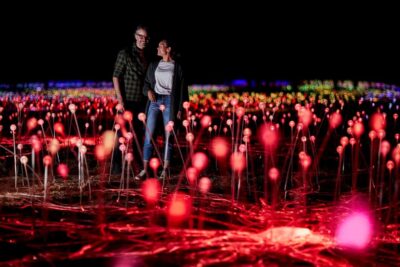
Kings Canyon: Full-Day Tour from Ayers Rock Resort
Read our review →
Uluru & Kata Tjuta 25-Minute Helicopter Experience
Read our review →
Sacred Sites & Sunset Tour with Wine & Cheeseboard
Read our review →Browse the lists this tour appears in